


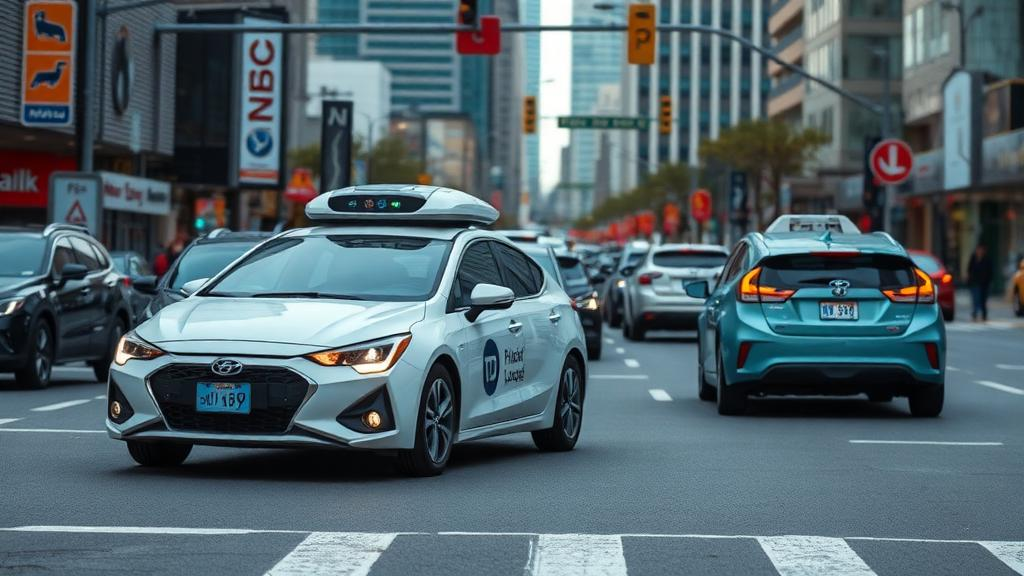
Autonomous vehicles promise to reshape transportation, but the safety of those vehicles depends on where and how they learn to drive. A new analysis published in AI & Society by researchers at Kettering University takes an unusually concrete look at that question, examining the documented sites across the United States where automated vehicles have been tested on public roads. Rather than treating testing as a purely technical exercise, the team synthesizes demographic, infrastructural, environmental, and behavioral dimensions of diversity and asks whether the places where self-driving cars accumulate real-world experience actually resemble the places where those cars will eventually operate. The answer, according to the study, is a persistent no: testing remains concentrated in a small set of urban environments, leaving rural roads, under-represented populations, and less common traffic behaviors underexposed in the data that shapes how autonomous systems perceive the world.
The researchers assembled a baseline of 33 U.S. testing locations known to be in use in 2019, then added six additional cities documented as automated vehicle testing sites in 2025. Comparing the two snapshots allowed them to track how the geography of testing has evolved over a period when the industry matured dramatically. Using U.S. Census Bureau QuickFacts data and other public sources, they characterized each site by racial and ethnic composition, disability prevalence, poverty rates, age structure, gender balance, bicycling rates, and economic context. The goal was not simply to map where testing happens but to quantify what kinds of people and conditions the vehicles encounter during the millions of miles that feed their development.
Several trends emerged from the comparison. The share of residents identifying as White alone declined across many testing cities, a shift the authors note is consistent with changes in how the 2020 Census measured and processed race data, including a marked increase in multiracial reporting. Disability shares rose modestly in the tested locations, reflecting both demographic reality and improved measurement. Poverty rates declined modestly in many of the cities studied. None of these shifts, however, altered the study’s central finding: the sites where autonomous vehicles gain public-road experience remain overwhelmingly urban, even though roughly one in five Americans lives in a rural area and rural roads carry a disproportionate share of fatal crashes.
That urban bias matters for reasons that go beyond fairness optics. Rural driving presents conditions that city miles rarely supply: high-speed two-lane roads with narrow or absent shoulders, unmarked lanes, gravel surfaces, wildlife crossings, infrequent lighting, and long stretches with no cellular coverage. Emergency response times are longer, and the consequences of a perception failure can be more severe. The study’s reference literature documents these challenges in detail, including reviews of autonomous vehicle deployment in rural areas and federal initiatives such as the U.S. Department of Transportation’s Rural Autonomous Vehicle research program launched in April 2025. A vehicle trained and validated almost exclusively on dense urban grids may simply lack the exposure needed to handle a deer at dusk on a farm road.
The demographic dimension is equally consequential. Modern perception systems are built on machine learning, and machine learning inherits the biases of its training data. The study cites a growing body of fairness research showing that object detection systems can exhibit predictive inequity across demographic groups, and that pedestrian detection performance can degrade depending on pose, occlusion, and skin tone. Pedestrians who use wheelchairs face documented disparities in road crash mortality, yet they remain rare in typical training and testing exposure. If a vehicle’s sensors and decision algorithms are tuned primarily on the populations of a handful of tech-friendly cities, the safety case for deployment elsewhere rests on assumptions the data may not support.
What distinguishes this analysis is its insistence that diversity in testing must extend beyond geography and demographics into behavioral and data-pathway domains. Behavioral diversity means ensuring that vehicles encounter the full range of road user conduct: bicyclists commuting in large numbers, pedestrians with varied gait patterns and mobility aids, drivers who behave in ways that differ from the norms of San Francisco or Phoenix. Data-pathway diversity addresses a subtler problem: it is not enough for a vehicle to physically pass through a community. The system must actually record and learn from its interactions with under-represented groups, so that those encounters flow into the development pipeline rather than vanishing as unlogged miles.
The authors also introduce the idea of public-exposure diversity, arguing that trust in autonomous vehicles is built through visible, repeated, equitable contact with the technology. Communities that never see a self-driving car during its formative testing years may be asked to accept a system they had no role in shaping, a dynamic the study links to research on public perception and adoption. Perception studies cited in the paper show that people’s comfort with automated vehicles is influenced by demographic and contextual factors, and that automation itself can alter how pedestrians judge safety. Exposure, in other words, is not just a data collection strategy; it is a social contract that determines who benefits from and who trusts the technology.
To make the framework actionable, the researchers propose practical criteria for diversified pilot programs, spanning rural share of vehicle miles traveled, racial and ethnic representation, disability visibility, gender balance, bicycling prevalence, and economic context. These metrics give operators, regulators, and municipalities a common vocabulary for evaluating whether a testing program is genuinely broadening its exposure or simply accumulating more miles in familiar territory. The framework is explicitly complementary to simulator-based and dataset-driven testing, which can scale virtually but cannot guarantee that the underlying data reflects the full population. Where and how exposure occurs, the authors argue, provides a population-level foundation for safety, trust, and equity that no simulation alone can supply.
The study’s own data caveats are worth noting. The apparent decline in White alone shares across testing sites partly reflects Census measurement and processing changes rather than dramatic demographic turnover, and the modest trends in disability and poverty shares are sensitive to how those categories are defined and reported. The authors are transparent that their location list, drawn from public documentation including the Bloomberg Philanthropies AVs in Cities guide and Census QuickFacts, captures documented testing rather than every mile driven by every operator. Still, the pattern is robust enough to support the central claim: the industry’s real-world learning environment is narrower than the population it intends to serve.
The stakes of this gap are not hypothetical. The 2018 fatality involving a self-driving Uber test vehicle in Arizona remains a defining moment for the field, and subsequent research on crash injury trends has emphasized how occupant and road user characteristics shape outcomes. As autonomous vehicles move from pilots toward commercial deployment, the question of whose streets, whose bodies, and whose behaviors are represented in their training and validation becomes a matter of public health and social justice, not merely engineering. This analysis offers a measurable way to hold the industry accountable, arguing that the road to trustworthy autonomy must be paved with testing that looks like America in all its demographic, geographic, and behavioral variety, and that the miles a self-driving car logs should count only if the people it encounters are the people it will one day carry and protect.
Subject of Research: Diversity of autonomous vehicle testing sites in the United States
Article Title: An analysis of autonomous vehicle testing site diversity
Article References: Gettel, O., Gates, C. W., Gettel, C. D., Huggins, J., & Peters, D. (2026). An analysis of autonomous vehicle testing site diversity. AI & SOCIETY. https://doi.org/10.1007/s00146-026-03269-2
Image Credits: AI Generated
DOI: 10.1007/s00146-026-03269-2
Keywords: autonomous vehicles, testing sites, diversity, rural roads, algorithmic bias, pedestrian detection, public trust, equity, Census data, vehicle miles traveled, machine learning, transportation safety
Cite Scienmag News
Blake Davidson. (October 7, 2026). Self-Driving Cars Learn Mostly in Cities, and That Gap Is Now Measurable. Scienmag. https://scienmag.com/self-driving-cars-learn-mostly-in-cities-and-that-gap-is-now-measurable/
Blake Davidson. "Self-Driving Cars Learn Mostly in Cities, and That Gap Is Now Measurable." Scienmag, 7 October 2026, https://scienmag.com/self-driving-cars-learn-mostly-in-cities-and-that-gap-is-now-measurable/. Accessed 7 October 2026.
Blake Davidson. "Self-Driving Cars Learn Mostly in Cities, and That Gap Is Now Measurable." Scienmag. October 7, 2026. https://scienmag.com/self-driving-cars-learn-mostly-in-cities-and-that-gap-is-now-measurable/


