


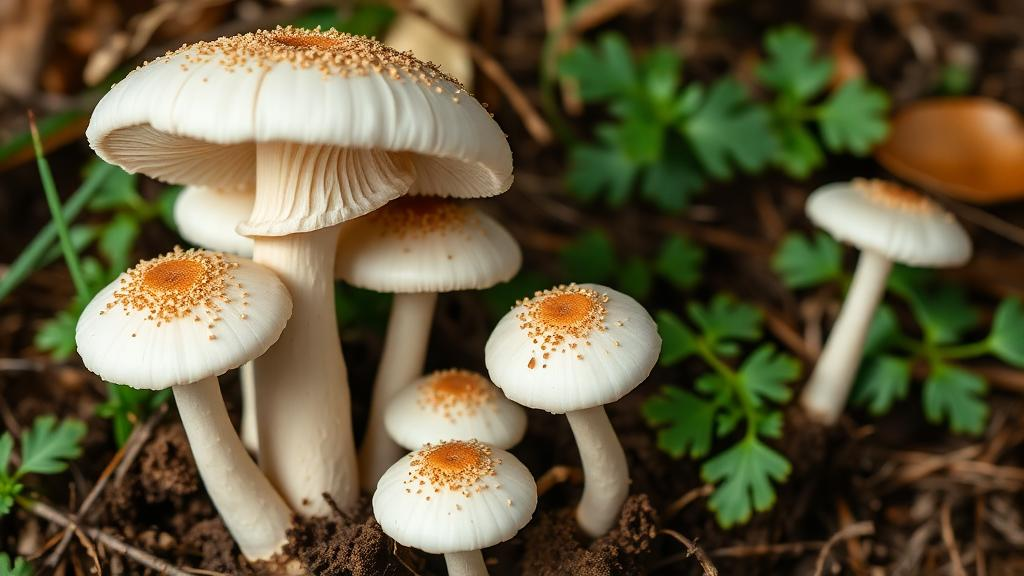
A humble mushroom that has long lived in the shadow of its more famous relatives is now at the center of a remarkable scientific comeback story. Agrocybe cylindracea, known in China as the tea tree mushroom, has been cultivated for decades almost exclusively as a brown-capped variety. But a newly recognized white strain, officially identified only in 2022 and only recently brought into industrial cultivation, has now been put through one of the most comprehensive quality evaluations ever attempted for this species. The verdict, published in Food Chemistry: X, is striking: the white strain outperforms the established brown strain on nearly every measure that matters, from nutritional density and umami intensity to texture and anticancer activity.
The research team, led by Chengzhen Gu and colleagues, compared two commercially cultivated strains grown under identical controlled conditions: the white Baicha No. 1 and the brown Gucha No. 2. Mycelia of both strains were inoculated into mushroom bags, incubated at 20 to 22 degrees Celsius until fully colonized, and then transferred to a fruiting chamber at 25 degrees Celsius. After primordia emerged and matured over two days, the fruiting bodies were harvested and frozen at minus 80 degrees Celsius, ensuring that any differences measured in the laboratory reflected genuine strain-level biology rather than environmental or handling variation.
The nutritional comparison was unambiguous. The white strain contained significantly higher levels of crude polysaccharides, soluble protein, and crude fiber than its brown counterpart. Polysaccharide content reached 0.5038 grams per 100 grams in the white strain versus 0.3984 grams in the brown, soluble protein measured 4.0894 milligrams per gram against 3.5188, and crude fiber came in at 2.6001 percent versus 1.7724 percent. These are not trivial differences. Polysaccharides are recognized immunological components, protein content is a direct index of nutritional value, and crude fiber is associated with intestinal health, so the white strain leads on all three fronts simultaneously.
Texture analysis told a similar story. Using Texture Profile Analysis with a flat disk probe deforming samples by 60 percent, the researchers measured hardness, cohesiveness, springiness, gumminess, and chewiness in both caps and stems. The white strain’s caps registered a hardness of 5.96 newtons compared with 3.99 for the brown, and its stems reached 40.50 newtons against 33.92. Chewiness, which integrates hardness, springiness, and cohesiveness into a single measure of the energy needed to make food swallowable, was nearly double in the white strain’s caps. In practical terms, the white mushroom resists mechanical stress better during handling and processing while delivering a firmer, richer mouthfeel that demands more satisfying mastication.
Flavor is where the comparison becomes genuinely dramatic. An electronic tongue mimicking human gustation revealed that the white strain scored significantly higher on sourness, bitterness, sweetness, and umami, with only saltiness comparable between the two. Multivariate statistical modeling separated the two strains cleanly, with the model explaining a cumulative 87.4 percent of variance and validation statistics confirming robust reliability. Behind those sensor readings lay hard chemistry: total free amino acids in the white strain reached 15.18 milligrams per gram versus 10.78 in the brown, and every individual amino acid detected was significantly more abundant in the white variety. Seven amino acids exceeded their taste activity thresholds in the white strain, compared with five in the brown, meaning the white mushroom delivers more compounds at concentrations high enough for human palates to register.
Umami, the savory fifth taste that makes mushrooms so prized in cuisine, depends on the synergy between umami amino acids such as glutamic and aspartic acid and 5′-nucleotides produced by enzymatic degradation of nucleic acids. The white strain’s total 5′-nucleotide content was 1.39 milligrams per gram against 0.93 for the brown, and its equivalent umami concentration, expressed as monosodium glutamate equivalents, came to 7.5681 grams per 100 grams, significantly higher than the brown strain. Re-addition experiments, in which key taste compounds were spiked back into mushroom extracts at double their original concentrations and re-analyzed electronically, confirmed that aspartic acid, glutamine, tryptophan, lysine, and 5′-cytidylic acid drive sourness while glutamine and tryptophan drive umami. The researchers caution that final taste perception arises from synergistic and antagonistic interactions among many compounds rather than any single molecule, which is precisely why the multi-technique approach matters.
Aroma proved more nuanced. Gas chromatography-mass spectrometry identified 41 volatile compounds in the white strain and 37 in the brown, with 23 shared. The white strain was dominated by aldehydes, which accounted for 41.26 percent of its volatile content, while the brown strain leaned on ketones at 48.15 percent. Relative odor activity value analysis identified 1-octen-3-one, the compound responsible for the classic mushroom-like, earthy odor of edible fungi, as the single most significant aroma contributor in both strains. But the white strain carried twelve significant aroma contributors compared with eight in the brown, including high levels of hexanal, which imparts fresh, green notes, and unique contributors such as 3-methylpentanal and 2-methylbutanal. The brown strain, by contrast, derived much of its aroma from 1-octen-3-ol and 3-octanone, producing a softer, more herbal-fresh profile.
Perhaps the most consequential findings concern anticancer activity. The researchers tested ethanol extracts against two human cancer cell lines: HCT116 colon cancer cells and HGC27 gastric cancer cells. Against HCT116 cells, the white strain extract achieved a half-maximal inhibitory concentration of 1141 micrograms per milliliter, whereas the brown strain required 5334 micrograms per milliliter, nearly five times the dose for the same effect. Against HGC27 cells, the white strain’s IC50 was 707.9 micrograms per milliliter versus 1655 for the brown. Both extracts inhibited proliferation in a concentration-dependent manner, and both were more potent against gastric cancer cells than colon cancer cells. Flow cytometric measurements of reactive oxygen species suggested a plausible mechanism: cancer cells are highly sensitive to fluctuations in ROS levels, and both extracts significantly elevated intracellular ROS relative to untreated controls, consistent with ROS-mediated induction of DNA damage and apoptosis. The researchers note that the decline in ROS at the highest extract concentrations in HCT116 cells may reflect activation of cellular antioxidant defenses that prevent ROS from surpassing the cytotoxic threshold.
The superior bioactivity of the white strain may stem from its higher polysaccharide content or from structural differences in its polysaccharides and proteins. Previous work has shown that a fucoglucogalactan from A. cylindracea induces lysosome-mediated apoptosis in colorectal cancer cells through an H3K27ac-regulated cathepsin D pathway, and a ubiquitin-like peptide from the same species stimulates nitric oxide production by macrophages while directly suppressing proliferation. Whether the white strain’s polysaccharides share these structures, or possess distinct architectures that make them even more potent, remains an open question the team intends to pursue through isolation and mechanistic studies of the specific active components.
Beyond the laboratory, the implications reach into the economics of mushroom farming. The brown strain dominates both cultivation and the commercial market, and the industry’s dependence on a single strain creates structural homogeneity that leaves producers vulnerable. The white strain is not being proposed as a replacement but as a supplement, a diversification of the germplasm pool that gives growers and food manufacturers new options for condiments, mushroom sauces, and instant soup bases. For consumers, the message is even simpler: the pale newcomer on the shelf packs more protein, more fiber, more immune-relevant polysaccharides, a bolder umami punch, and demonstrably stronger anticancer activity in cell models than the familiar brown variety. If human studies and larger-scale cultivation trials bear out these results, the white strain of Agrocybe cylindracea may soon be doing for this species what premium varieties have done for other mushrooms, transforming a commodity crop into a functional food with genuine nutraceutical potential as an adjunct in cancer supportive care.
Subject of Research: Comparative nutritional, flavor, and anticancer evaluation of white and brown strains of the edible mushroom Agrocybe cylindracea
Article Title: White agrocybe cylindracea outperforms the brown strain in nutritional value, flavor profile, and anticancer activity
Article References: Gu, C., Lin, Y., Hao, M., Lin, Z., Fang, J., Luo, J., & Sun, S. (2026). White agrocybe cylindracea outperforms the brown strain in nutritional value, flavor profile, and anticancer activity. Food Chemistry: X, Article 104579. https://doi.org/10.1016/j.fochx.2026.104579
Image Credits: AI Generated
DOI: 10.1016/j.fochx.2026.104579
Keywords: Agrocybe cylindracea, mushroom nutrition, umami, polysaccharides, anticancer activity, reactive oxygen species, electronic tongue, electronic nose, GC-MS, food chemistry, functional food, strain comparison
Cite Scienmag News
Daisy Hatcher. (October 7, 2026). New white strain of Agrocybe cylindracea beats the brown classic on nutrition, taste, and anticancer power. Scienmag. https://scienmag.com/new-white-strain-of-agrocybe-cylindracea-beats-the-brown-classic-on-nutrition-taste-and-anticancer-power/
Daisy Hatcher. "New white strain of Agrocybe cylindracea beats the brown classic on nutrition, taste, and anticancer power." Scienmag, 7 October 2026, https://scienmag.com/new-white-strain-of-agrocybe-cylindracea-beats-the-brown-classic-on-nutrition-taste-and-anticancer-power/. Accessed 7 October 2026.
Daisy Hatcher. "New white strain of Agrocybe cylindracea beats the brown classic on nutrition, taste, and anticancer power." Scienmag. October 7, 2026. https://scienmag.com/new-white-strain-of-agrocybe-cylindracea-beats-the-brown-classic-on-nutrition-taste-and-anticancer-power/


