


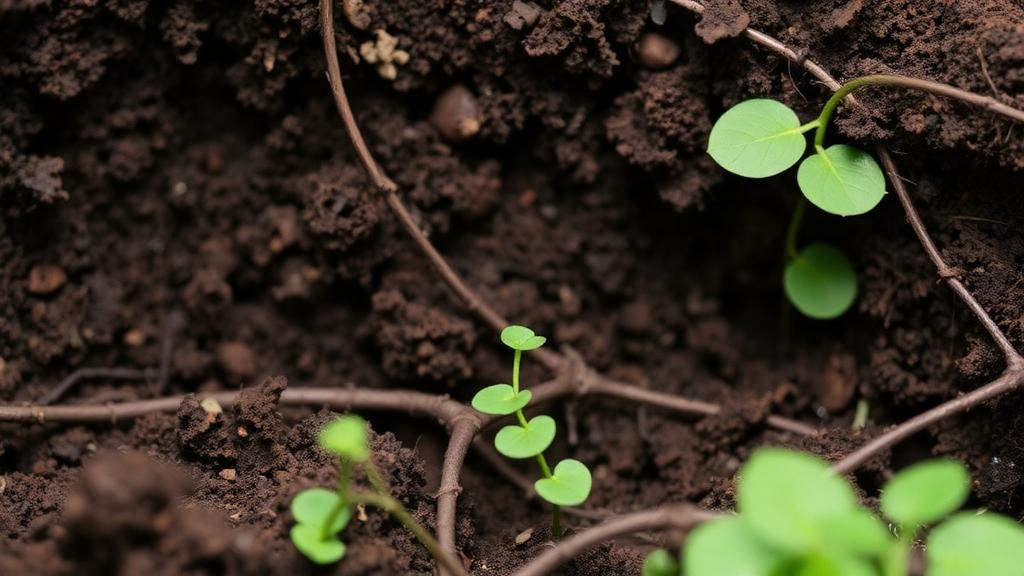
Beneath every field, forest, and rice paddy lies a bustling marketplace of chemical trades. Plants leak sugars and other compounds from their roots, and in exchange, an astonishing cast of bacteria, fungi, and archaea helps them capture nutrients, resist stress, and grow. A new systematic review now suggests that these ancient partnerships may also be doing something far more consequential for the planet: quietly suppressing the greenhouse gases that warm our atmosphere. Published in Environmental Monitoring and Assessment, the review by Saidu Abdullahi of Universiti Sains Malaysia and Ahmadu Bello University and colleagues pulls together the scattered experimental evidence on how plant–microbe interactions in terrestrial soils influence emissions of carbon dioxide, methane, and nitrous oxide, the three gases responsible for the bulk of agricultural climate forcing.
The team conducted their synthesis with unusual rigor for this field. Following the Preferred Reporting Items for Systematic Reviews and Meta-Analyses, or PRISMA 2020, guidelines, they searched the literature and retrieved 2,647 candidate studies. After screening against predefined inclusion criteria, only 24 studies survived, and each was assessed for quality using standardized criteria before the findings were synthesized in a semi-quantitative framework. That funnel shape, from thousands of papers to two dozen rigorous experiments, is itself informative. It tells us that while interest in soil microbial ecology has exploded, well-designed experiments that directly measure greenhouse gas fluxes in the presence and absence of specific plant–microbe partnerships remain surprisingly scarce. The review therefore serves double duty: it consolidates what we know, and it maps what we still do not.
The headline finding is strikingly consistent. Across the studies examined, plant–microbe interactions in terrestrial soils substantially reduced greenhouse gas emissions, and the magnitude of the decreases far outweighed the few cases where emissions rose. When the authors tallied the reported outcomes, 30.23 percent of the studies documented decreased carbon dioxide and nitrous oxide emissions, while 13.95 percent reported decreased methane emissions. By contrast, studies reporting increased emissions accounted for just 4.65 percent of the total for carbon dioxide, 6.98 percent for nitrous oxide, and 4.65 percent for methane. In other words, for every experiment in which a plant–microbe alliance appeared to worsen emissions, several more showed the opposite. The authors interpret this asymmetry as evidence of a genuine net mitigation effect, one that could be harnessed as a practical, natural strategy for climate-smart agriculture and ecosystem restoration.
Which plants and microbes star in these underground dramas? The review found that rice, the world’s most important staple and a major methane source, featured in 17.9 percent of the plant–microbe interactions studied, followed by maize at 14.3 percent and tomato at 10.7 percent. On the microbial side, fungi dominated, appearing in 53.6 percent of the interactions, with bacteria close behind at 42.9 percent and archaea trailing at 3.6 percent. Among individual taxa, the bacterial genus Bacillus was the most frequently reported player at 14.3 percent, followed by arbuscular mycorrhizal fungi at 12.2 percent, the mycorrhizal genus Rhizophagus at 10.2 percent, and Pseudomonas at 6.1 percent. This cast list is revealing. Arbuscular mycorrhizal fungi form symbioses with the roots of most crop species, threading the soil with hyphal networks that can intercept nitrogen before it leaks into gaseous pathways, while Bacillus and Pseudomonas species are famous generalists that colonize root surfaces and reshape the chemistry of the rhizosphere.
How exactly do these partnerships turn down the emission dial? The review identifies three principal mechanisms. The first is carbon sequestration: mycorrhizal fungi and other root-associated microbes convert plant-derived carbon into stable soil organic matter, locking it away from decomposers that would otherwise release it as carbon dioxide. The second is the regulation of nitrification and denitrification, the twin microbial pathways that transform nitrogen fertilizer into nitrous oxide, a gas with nearly 300 times the warming potency of carbon dioxide over a century. By competing for ammonium, altering root traits, or shifting the composition of denitrifier communities, beneficial microbes can starve these pathways of substrate or reroute nitrogen into plant biomass instead. The third mechanism is the stimulation of methane oxidation, in which methanotrophic bacteria consume methane produced in waterlogged, oxygen-poor soils before it reaches the atmosphere. In flooded rice paddies, where methane emissions are governed by the balance between methane-producing archaea and methane-consuming bacteria, inoculation with methane-utilizing or plant growth-promoting bacteria has been shown to tip that balance toward consumption.
The individual studies behind the synthesis illustrate the breadth of these effects. Experiments with arbuscular mycorrhizal fungi have repeatedly shown reduced nitrous oxide emissions from soils growing legumes, tomatoes, and turfgrass, sometimes by altering the abundance and composition of denitrifying microbes in the hyphosphere, the narrow zone surrounding fungal hyphae. Work with Bacillus amyloliquefaciens demonstrated that a single plant growth-promoting strain could mitigate nitrous oxide emissions from acidic soils. In paddy systems, inoculating rice seeds with the Betaproteobacterium Azoarcus reduced methane emissions from paddy field soil, while methane-utilizing bacteria applied under different nitrogen fertilizer regimes influenced both methane flux and crop growth. Studies in maize rhizospheres showed that low-cost input combinations could reshape microbial community structure in ways that favor both greenhouse gas mitigation and plant biomass production. Even strawberry and potato cultivation trials found that plant growth-promoting rhizobacteria reduced soil carbon dioxide emissions under varying moisture conditions.
What makes these findings compelling is that they point toward interventions that are already within reach of farmers. Microbial inoculants, mycorrhizal amendments, and crop rotations designed to favor beneficial root symbionts are commercially available or under active development. Unlike engineered solutions, these biological approaches work with existing plant physiology and require no new infrastructure. They also deliver co-benefits that pure emissions technology cannot: improved nutrient uptake, better drought tolerance, enhanced soil structure, and potentially higher yields. The review’s evidence that mycorrhizal fungi can mitigate nitrous oxide emissions while simultaneously promoting crop nitrogen uptake, for instance, suggests a rare win-win in which climate goals and food production align rather than compete.
Yet the authors are careful about the limits of the evidence base. Twenty-four studies spanning a handful of crop species and soil types cannot capture the full diversity of terrestrial ecosystems, and the semi-quantitative synthesis used here, while more rigorous than a simple narrative review, cannot substitute for a formal meta-analysis with effect sizes and confidence intervals. Many of the underlying experiments were conducted at pot or plot scale over short periods, leaving open questions about whether the mitigation effects persist across seasons, under field conditions, and in the presence of realistic fertilizer regimes. There are also genuine uncertainties in the underlying soil science: nitrous oxide emissions arise from multiple overlapping pathways whose controls remain imperfectly understood, and measuring denitrification in the field is notoriously difficult. The small fraction of studies reporting increased emissions is a reminder that context matters, and that microbial interventions can backfire if soil conditions, plant genotype, or management practices are mismatched.
Those caveats aside, the direction of the evidence is hard to ignore. Soils hold more carbon than the atmosphere and all vegetation combined, and the microbial communities within them mediate nearly every flux of greenhouse gases between land and air. If the partnerships documented in this review can be deliberately managed, through inoculation, breeding crops that recruit friendlier root microbiomes, or agronomic practices that favor carbon-stabilizing fungi, agriculture could gain a scalable lever for emissions reduction that operates silently, underground, and at negligible energy cost. The review’s authors frame plant–microbe partnerships as practical, natural ways to mitigate greenhouse gas emissions, and their synthesis suggests the biological machinery for that task is already installed in every hectare of farmland. The challenge now is to move from two dozen careful experiments to the field-scale trials, long-term monitoring, and mechanistic studies needed to turn underground alliances into a dependable pillar of climate policy.
Subject of Research: Plant–microbe interactions that mitigate greenhouse gas emissions in terrestrial soils
Article Title: Plant–microbe alliances in greenhouse gas mitigation in terrestrial soils: a systematic review
Article References: Abdullahi, S., Mu’azu, A. S., Lawal, M. A., Kona, H. D., Adamu, Z., & Amir, H. G. (2026). Plant–microbe alliances in greenhouse gas mitigation in terrestrial soils: a systematic review. Environmental Monitoring and Assessment, 198(10), Article 1095. https://doi.org/10.1007/s10661-026-15950-6
Image Credits: AI Generated
DOI: 10.1007/s10661-026-15950-6
Keywords: plant–microbe interactions, greenhouse gases, soil microbiome, arbuscular mycorrhizal fungi, Bacillus, nitrous oxide, methane, carbon dioxide, carbon sequestration, nitrification, climate-smart agriculture, systematic review
Cite Scienmag News
Morgan Morrow. (October 6, 2026). Hidden Underground Allies: How Plant–Microbe Teams Curb Greenhouse Gases. Scienmag. https://scienmag.com/hidden-underground-allies-how-plant-microbe-teams-curb-greenhouse-gases/
Morgan Morrow. "Hidden Underground Allies: How Plant–Microbe Teams Curb Greenhouse Gases." Scienmag, 6 October 2026, https://scienmag.com/hidden-underground-allies-how-plant-microbe-teams-curb-greenhouse-gases/. Accessed 6 October 2026.
Morgan Morrow. "Hidden Underground Allies: How Plant–Microbe Teams Curb Greenhouse Gases." Scienmag. October 6, 2026. https://scienmag.com/hidden-underground-allies-how-plant-microbe-teams-curb-greenhouse-gases/


