


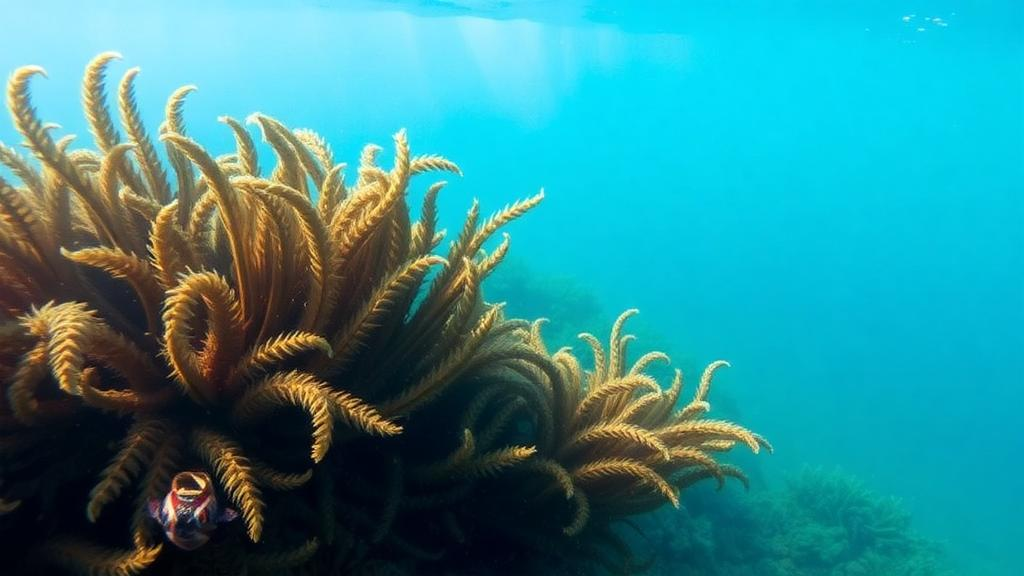
On the far western tip of Cuba, where the Caribbean meets the Gulf of Mexico and the nearest large city lies hundreds of kilometers away, scientists have quietly completed one of the most detailed chemical audits of a tropical marine protected area to date. A research team led by Juan Jesús Piña-Leyte-Vidal sampled seawater, five species of brown algae, and two species of seagrass at four beaches inside Guanahacabibes National Park, measuring concentrations of four trace metals that environmental chemists watch most closely: zinc, cadmium, lead, and copper. The results, published in Environmental Monitoring and Assessment, offer both reassurance and a methodological blueprint. The park’s waters show low metal concentrations and no widespread signs of enrichment, suggesting limited human influence. But the study’s deeper significance lies in how the team combined dissolved metal measurements with biological accumulation data to build a baseline against which future change in this UNESCO-recognized biodiversity hotspot can be judged.
Trace metals are a deceptively complicated class of contaminants. Unlike organic pollutants that eventually degrade, elements such as lead and cadmium persist indefinitely in the environment, cycling between water, sediment, and living tissue. At vanishingly small concentrations some of them, like zinc and copper, are actually essential micronutrients for marine organisms, while all four become toxic above certain thresholds. The challenge for monitoring programs is that dissolved metal concentrations in seawater are extraordinarily low, often fractions of a microgram per liter, and they fluctuate with tides, currents, and seasonal runoff. That is why many researchers prefer to read the chemical history of a coastline through its organisms. Brown algae in particular are famous bioaccumulators: their cell walls are rich in polysaccharides such as alginates and fucoidans that bind dissolved metal ions with remarkable efficiency, effectively concentrating metals from thousands of liters of water into a few grams of tissue. Seagrasses, rooted in sediment and bathed in the same water, provide a complementary signal that integrates both dissolved and sedimentary metal pools.
The Cuban team’s sampling design exploited this biology. At four beaches within the park, they collected specimens of Padina pavonica, Turbinaria tricostata, Dictyota dichotoma, Sargassum buxifolium, and the free-floating pelagic Sargassum natans, along with the two dominant Caribbean seagrasses, Thalassia testudinum, commonly known as turtle grass, and Syringodium filiforme, or manatee grass. Water samples were handled according to international ISO standards for preservation and handling, a detail that matters enormously in trace metal work, where contamination from sampling gear or storage containers can swamp the signal being measured. Dissolved metals in the seawater were quantified using square-wave anodic stripping voltammetry, an electrochemical technique prized for its sensitivity at the microgram-per-liter level. The technique works by plating dissolved metal ions onto an electrode under an applied potential and then stripping them off again, measuring the current generated as each metal is released, which produces a characteristic fingerprint of concentration for each element.
The plant and algal samples followed a different analytical route. After digestion, metal contents were determined by inductively coupled plasma optical emission spectrometry, or ICP-OES, a workhorse technique in which a plasma torch heated to roughly 10,000 Kelvin atomizes the sample and excites its constituent elements, causing them to emit light at wavelengths specific to each metal. The intensity of that emitted light translates directly into concentration. From these paired measurements of water and tissue, the researchers calculated bioaccumulation factors, or BAFs, which express how many times more concentrated a metal is inside an organism than in the surrounding water. A high BAF signals either efficient uptake by the organism or high bioavailability of the metal in its dissolved form, and comparing BAFs across species and sites is one of the standard ways ecotoxicologists gauge environmental quality without needing to deploy costly continuous chemical sensors.
The seawater results themselves tell a story of a relatively pristine environment. Zinc ranged from 12.7 to 40.1 micrograms per liter, cadmium from 0.39 to 1.3, lead from 0.69 to 3.6, and copper from 1.3 to 5.5. One site, Los Cayuelos, registered the highest concentrations of all four metals, a spatial pattern the authors flag as noteworthy even though the absolute values remain low by the standards of industrialized coastlines. For context, regulatory frameworks such as the United States Environmental Protection Agency’s national recommended water quality criteria set thresholds designed to protect aquatic life, and the values measured across Guanahacabibes sit comfortably within ranges associated with minimal risk. In a region where the Yucatan Current and the Cuban Countercurrent sweep through the basin, exchanging water between the Caribbean and the Gulf, low dissolved metal levels also suggest that the park is not receiving significant inputs from shipping lanes or from distant continental sources, at least not at the time of sampling.
Inside the organisms, the picture was more textured. Metal concentrations in the macrophytes followed a consistent hierarchy of zinc greater than copper greater than cadmium greater than lead, mirroring the relative abundance and biological demand for these elements in seawater. The maximum tissue values were 52.5 milligrams per kilogram of zinc in Dictyota dichotoma and 5.97 milligrams per kilogram of copper in Padina pavonica. Brown algae consistently showed higher bioaccumulation factors than the seagrasses, which fits with their known physiology: macroalgae absorb dissolved metals directly across their entire thallus surface, while seagrasses regulate uptake through both roots and leaves and possess internal detoxification mechanisms that can sequester metals in vacuoles and cell walls. Crucially, the BAFs varied not just between the two groups but among individual species and among the four beaches, confirming that a single sentinel species cannot capture the full picture of metal bioavailability across a heterogeneous coastal landscape.
To untangle these overlapping patterns, the team turned to principal component analysis, a statistical technique that compresses many correlated measurements into a few underlying axes of variation. The first components explained 83.4 percent of the total variance in the dataset, a remarkably high proportion that indicates the metal chemistry at these sites is governed by a small number of dominant processes. The analysis cleanly separated two contrasting regimes: a zinc-associated pattern characterizing the beach at El Perjuicio and a copper-associated pattern at La Barca. Such distinctions matter because different metals enter coastal waters through different pathways, whether natural geological weathering of the limestone substrate, atmospheric deposition, or localized human activity, and identifying which metal dominates at which site provides clues about the underlying source, even in the absence of an obvious polluter.
Perhaps the most intriguing finding, and the one with the widest implications for how biomonitoring is done, was the relationship between dissolved metal concentrations and the bioaccumulation factors themselves. Using log-log regressions, the researchers found significant inverse relationships between dissolved metal levels and BAFs for all four metals, with statistical significance at p below 0.05. In other words, where the water carried more metal, the organisms’ concentration factors were lower. This counterintuitive pattern is a recognized feature of accumulation biology: organisms have a finite capacity to take up and regulate metals, so as dissolved concentrations rise, the ratio of tissue concentration to water concentration tends to fall, partly because of active down-regulation of transport and partly because of saturation of binding sites. The practical lesson is sobering for monitoring programs. A falling BAF does not necessarily mean a cleaner environment; it can mean the opposite. Interpreting bioaccumulation data without the corresponding dissolved measurements risks drawing exactly the wrong conclusion, which is why the integrated approach adopted here, pairing water chemistry with tissue analysis, is so valuable.
For Guanahacabibes National Park itself, the study delivers a clean bill of health and a durable reference point. The park is one of Cuba’s most important protected areas, home to coral reefs, nesting sea turtles that depend on those seagrass meadows, and a coastline that has so far escaped the intensive development seen elsewhere in the Caribbean. Establishing that its waters and macrophytes carry low metal burdens today creates the baseline that any future assessment will need. If shipping traffic increases, if upstream development expands, or if climate-driven changes in ocean chemistry alter metal mobility, as recent research on trace element biogeochemistry in warming coastal ecosystems suggests is possible, the 2026 dataset will make those shifts detectable. The work also adds to a growing global literature showing that brown algae have declined in metal content over recent decades in many regions, and it demonstrates that even a modest suite of seven macrophyte species, sampled at a handful of beaches and analyzed with careful electrochemical and spectroscopic methods, can yield a scientifically rigorous portrait of environmental quality. For tropical marine protected areas around the world, many of which lack the resources for continuous instrumental monitoring, that is a template worth copying.
Subject of Research: Trace metal distribution and bioaccumulation in seawater, brown algae, and seagrasses of a Cuban marine protected area
Article Title: Trace metal distribution in seawater, brown algae, and seagrasses from Guanahacabibes National Park, Cuba
Article References: Piña-Leyte-Vidal, J. J., Vilasó-Cadre, J. E., Reyes-Domínguez, I. A., Márquez-Llauger, L., de Jesús Barraza-García, F., Díaz-Castañón, S., Rodríguez, R., & Ricardo, J. A. (2026). Trace metal distribution in seawater, brown algae, and seagrasses from Guanahacabibes National Park, Cuba. Environmental Monitoring and Assessment, 198(10), Article 1103. https://doi.org/10.1007/s10661-026-15961-3
Image Credits: AI Generated
DOI: 10.1007/s10661-026-15961-3
Keywords: trace metals, brown algae, seagrasses, bioaccumulation, Guanahacabibes National Park, Cuba, seawater chemistry, biomonitoring, marine pollution, Caribbean, anodic stripping voltammetry, ICP-OES
Cite Scienmag News
Margaret Porter. (October 5, 2026). Seaweeds and Seagrasses Reveal a Clean Bill of Health for Cuba’s Remote National Park Waters. Scienmag. https://scienmag.com/seaweeds-and-seagrasses-reveal-a-clean-bill-of-health-for-cubas-remote-national-park-waters/
Margaret Porter. "Seaweeds and Seagrasses Reveal a Clean Bill of Health for Cuba’s Remote National Park Waters." Scienmag, 5 October 2026, https://scienmag.com/seaweeds-and-seagrasses-reveal-a-clean-bill-of-health-for-cubas-remote-national-park-waters/. Accessed 5 October 2026.
Margaret Porter. "Seaweeds and Seagrasses Reveal a Clean Bill of Health for Cuba’s Remote National Park Waters." Scienmag. October 5, 2026. https://scienmag.com/seaweeds-and-seagrasses-reveal-a-clean-bill-of-health-for-cubas-remote-national-park-waters/


