


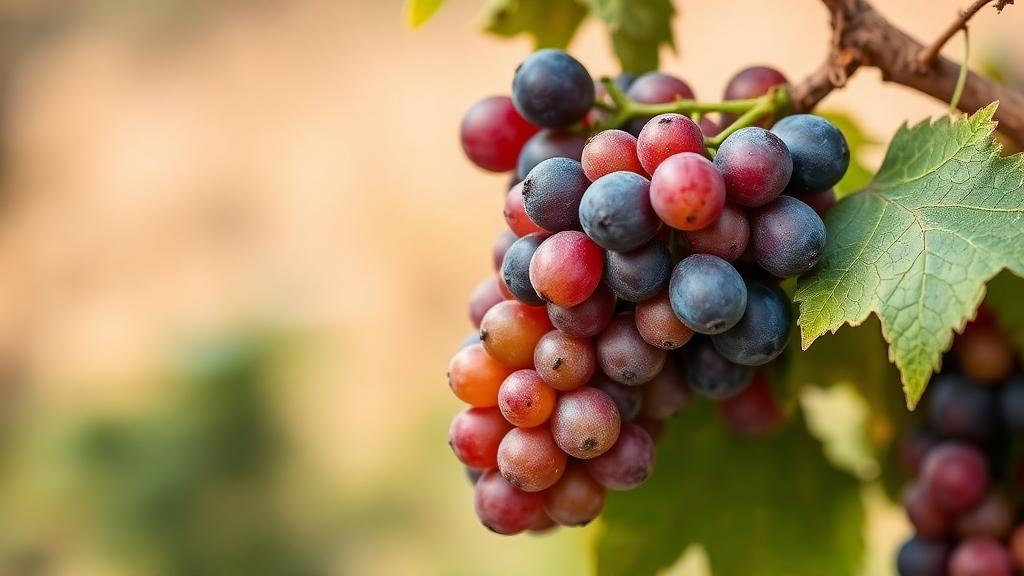
On a modest hillside in Türkiye’s Thrace Region, a single vineyard is quietly revealing how dramatically terrain can reshape plant chemistry. Researchers studying the autochthonous grapevine cultivar Vitis vinifera ‘Adakarası’ have shown that simply moving up a 10.17 percent slope is enough to shift the vine’s photosynthetic behavior, hormone levels, and arsenal of defensive phenolic compounds. The findings, published in Plant Biosystems, carry implications far beyond one Turkish grape: as Mediterranean viticulture confronts intensifying heat and drought under climate change, understanding how slope position modulates stress responses could help growers match varieties to the right patches of ground.
The study was conducted in 2024 at the Tekirdağ Viticulture Research Institute, in a rainfed vineyard whose elevation ranges from roughly 47.45 to 55.46 meters above sea level. The researchers divided the block into three slope positions—lower, middle, and upper—and examined vines grafted onto 5BB rootstock and trained in a bilateral cordon system. Because the vineyard receives no irrigation, every vine depends entirely on rainfall and soil water reserves, making the site a natural laboratory for observing how water availability, which typically declines upslope, translates into physiological and biochemical change.
Across the growing season, the team measured net photosynthesis, stomatal conductance, transpiration, and two measures of water use efficiency on eleven separate occasions, under climatic conditions spanning air temperatures of 30 to 38 degrees Celsius, relative humidity of 26 to 50 percent, and photosynthetically active radiation from 600 to 1800 micromoles per square meter per second. These repeated field measurements captured how the vines responded to genuinely fluctuating Mediterranean summer conditions rather than a single snapshot, giving the dataset unusual ecological realism for a physiological study.
The results revealed a clear stress gradient running up the hill. Vines at the upper slope position showed lower rates of photosynthesis and stomatal conductance than their lower-slope counterparts, but they achieved higher water use efficiency—both in terms of carbon gained per unit of water lost through stomata and per unit transpired. In other words, the upslope vines were running a conservative water-use strategy, keeping their stomata tighter to conserve moisture at the cost of slower carbon assimilation. This is a classic drought-avoidance signature, and its emergence along a purely topographic gradient underscores how strongly slope position governs vine water status even within a single, seemingly uniform vineyard.
Biochemical analyses reinforced the physiological picture. Chlorophyll a, chlorophyll b, and total chlorophyll contents all decreased as one moved upslope, consistent with stress-impaired pigment metabolism, while the ratio of chlorophyll a to b increased—a shift often associated with acclimation to harsher light and water conditions. Meanwhile, the stress-signaling hormone abscisic acid, total phenolics, and tannins all rose with slope position. Abscisic acid is the plant hormone that orchestrates stomatal closure under drought, so its upslope accumulation dovetails neatly with the observed reduction in stomatal conductance and the shift toward water conservation.
Perhaps the most striking results came from high-performance liquid chromatography profiling of individual phenolic compounds. Gallic acid, vanillic acid, syringic acid, caftaric acid, chlorogenic acid, caffeic acid, catechin, epicatechin, rutin, and kaempferol all accumulated more abundantly in vines at the middle and upper slope positions. These compounds are not merely metabolic byproducts; they form a chemically diverse defensive shield, scavenging reactive oxygen species generated when photosynthesis is stressed, reinforcing cell walls, and deterring pathogens. Their upslope enrichment suggests that vines facing tighter water budgets invest more heavily in secondary metabolism, effectively trading growth and carbon gain for chemical resilience.
To test whether these patterns were statistically robust rather than incidental, the researchers applied principal component analysis and hierarchical clustering to the full dataset. Both multivariate approaches cleanly separated the three slope positions, with the upper slope clustering alongside the key stress markers—elevated abscisic acid, phenolics, tannins, and water use efficiency, and depressed chlorophyll and photosynthesis. Bivariate correlation analysis added a further layer: photosynthesis was negatively linked with abscisic acid, intrinsic water use efficiency, and phenolic concentrations, exposing an explicit trade-off between carbon assimilation and defense investment. A vine cannot maximize both at once, and the slope dictates where along that continuum each plant sits.
Proline, a compatible osmolyte that helps cells maintain turgor under water deficit, was also measured, along with antioxidant capacity assessed by the TEAC assay. Together with the hormone and pigment data, these measurements sketch a coherent portrait of ‘Adakarası’ as a cultivar with genuine drought resilience. Rather than collapsing under upslope stress, the vines reprogrammed their physiology and secondary metabolism in an apparently coordinated fashion—closing stomata, signaling with abscisic acid, accumulating osmoprotectants, and ramping up phenolic defenses. Such integrated plasticity is precisely the trait profile that breeders and growers seek as climate zones for quality viticulture shift poleward and upward.
The work also speaks to the concept of terroir, the oft-invoked idea that place imprints itself on wine. While terroir is usually discussed in terms of soil, mesoclimate, and tradition, this study demonstrates that within-vineyard topography alone can generate measurable gradients in leaf chemistry and gas exchange. Slope-driven differences in soil water content, erosion, and solar exposure appear sufficient to push vines into distinct physiological and metabolic states—states that plausibly influence berry composition and, ultimately, wine character. For precision viticulture, the message is that slope position deserves attention not just at the scale of hillsides and valleys, but within individual blocks.
For the Turkish wine industry, the stakes are concrete. ‘Adakarası’ is a heritage variety native to Thrace, and preserving its cultivation under a warming, drying climate depends on understanding where it thrives and why. By identifying the upper slope as a zone of conservative water use and heightened phenolic defense, and the lower slope as one of freer gas exchange, the study offers growers a physiological rationale for vineyard design, rootstock and scion matching, and future irrigation decisions. More broadly, it shows that a humble hillside, read carefully through the language of pigments, hormones, and polyphenols, can teach us how one of humanity’s oldest crops negotiates the stress of a changing world.
Subject of Research: Slope-induced abiotic stress effects on leaf phenolics and physiological activity in the grapevine cultivar Vitis vinifera 'Adakarası'
Article Title: Leaf phenolics, physiological activity and abiotic stress relationship induced by slope in grapevine: Vitis vinifera ‘Adakarası’
Article References: Candar, S., Alço, T., Seçkin, G. U., Şahin, E., Demirağ, O., Güngör, T. A., Bahar, E., & Korkutal, İ. (2026). Leaf phenolics, physiological activity and abiotic stress relationship induced by slope in grapevine: Vitis vinifera ‘Adakarası’. Plant Biosystems, 160(4), Article 217. https://doi.org/10.1007/s44473-026-00228-z
Image Credits: AI Generated
DOI: 10.1007/s44473-026-00228-z
Keywords: grapevine, Vitis vinifera, Adakarası, drought stress, phenolic compounds, abscisic acid, photosynthesis, water use efficiency, chlorophyll, slope gradient, viticulture, climate change
Cite Scienmag News
Bethany Barker. (October 5, 2026). Slope Position Rewrites the Stress Chemistry of an Ancient Turkish Wine Grape. Scienmag. https://scienmag.com/slope-position-rewrites-the-stress-chemistry-of-an-ancient-turkish-wine-grape/
Bethany Barker. "Slope Position Rewrites the Stress Chemistry of an Ancient Turkish Wine Grape." Scienmag, 5 October 2026, https://scienmag.com/slope-position-rewrites-the-stress-chemistry-of-an-ancient-turkish-wine-grape/. Accessed 5 October 2026.
Bethany Barker. "Slope Position Rewrites the Stress Chemistry of an Ancient Turkish Wine Grape." Scienmag. October 5, 2026. https://scienmag.com/slope-position-rewrites-the-stress-chemistry-of-an-ancient-turkish-wine-grape/


