


One of Europe’s most competitive research funding programmes has placed the future of citrus at the centre of its portfolio. A consortium coordinated by Universitat Jaume I in Castellón, Spain, has secured €3.9 million to develop genetically modified citrus lines capable of withstanding the mounting pressures of climate change, pests and diseases. The project, known as CitrusAld – Applied Biotechnology for More Resilient and Nutritionally Enhanced Citrus Crops, emerged victorious from a European Innovation Council Pathfinder Challenges call in which only 30 of 647 submitted proposals were selected for funding, and just four projects were financed under this specific challenge. The result places a Spanish-led team at the forefront of a European effort to apply cutting-edge biotechnology to one of the world’s most economically and culturally significant fruit crops.
The scientific leadership rests with Vicent Arbona Mengual of the Department of Biology, Biochemistry and Natural Sciences at Universitat Jaume I. His team also includes Miguel González Guzmán, coordinator of the GaMBiT research group – Genetic and Metabolic Integration of Biotic and Abiotic Interactions – together with Rosario Vidal and Beatriz Julián from the Institute of Advanced Materials (INAM-UJI). The wider consortium spans 11 partners from five countries: Spain, Italy, France, Germany and Sweden. Spanish participants include the Valencian Institute for Agricultural Research and the Galician University–Business Foundation. Italy contributes the Council for Agricultural Research and Economics (CREA) and UNITEC S.p.A., while France is represented by the French Agricultural Research Centre for International Development (CIRAD), the French National Research Institute for Agriculture, Food and Environment (INRAE) and Doriane SAS. Germany’s Computomics GmbH and CYBRES GmbH join the Swedish University of Agricultural Sciences to complete the partnership.
The project’s primary biological targets are sweet orange (Citrus sinensis) and mandarin (Citrus reticulata), two species that dominate global citrus production and consumption. The central objective is to generate genetically modified lines with greater resilience to the adverse conditions caused by climate change and its exacerbating effects on pests and diseases. Rising temperatures, altered rainfall patterns and shifting pest distributions are already straining citrus orchards across the Mediterranean and beyond, making the development of hardier varieties an increasingly urgent agricultural priority. By combining stress physiology expertise with advanced genetic engineering, the consortium aims to produce trees that can maintain productivity under conditions that would compromise conventional varieties.
Resilience is only half of the project’s ambition. CitrusAld also pursues the biofortification of citrus fruits to enhance their nutritional properties. Citrus fruits are widely regarded as functional foods that combine nutritional value with health-promoting properties, thanks to their antioxidant, anti-inflammatory and cardioprotective effects. The project seeks to increase naturally occurring beneficial compounds such as flavonoids and furanocoumarins, while also introducing a compound that citrus does not normally produce: resveratrol. This stilbene, best known as a constituent of grapes and cocoa, has been selected for its cardioprotective and anti-ageing properties. If successful, the work could transform an everyday fruit into an even richer source of bioactive molecules, blurring the line between conventional nutrition and functional food design.
Identifying which genes to modify in a genome as complex as citrus is a formidable challenge, and this is where artificial intelligence enters the project. The consortium will design and implement AI-based systems capable of analysing and integrating large volumes of biological data to pinpoint the most suitable target genes for each desired modification. Rather than relying on laborious trial-and-error approaches, the researchers intend to use computational pipelines that can sift through genomic, transcriptomic and metabolic datasets to prioritise candidate genes whose manipulation is most likely to yield stress tolerance or enhanced nutritional profiles. This data-driven gene discovery methodology represents one of the project’s key methodological innovations and reflects a broader trend of machine learning reshaping plant biotechnology.
Once target genes are identified, the actual genetic modifications will be carried out using New Genomic Techniques, or NGTs, which are now permitted in Europe under the newly updated regulatory framework. These techniques allow precise edits to a plant’s genome without introducing foreign DNA in the way older transgenic methods did, and their recent regulatory acceptance in the European Union has opened the door to projects of this kind. The consortium will also integrate novel materials capable of overcoming existing biological barriers that have historically limited the genetic efficiency of citrus species. Citrus is notoriously difficult to transform genetically, with recalcitrant tissues, long generation times and barriers to regeneration, so the development of new delivery materials could prove as consequential as the gene edits themselves.
In parallel with genome editing, the consortium will explore complementary strategies based on RNA interference technology. RNAi allows researchers to slow down or silence the expression of specific genes without permanently altering the genome, offering a reversible and highly targeted means of modulating plant traits. A central technical hurdle for RNAi in plants is delivering the interfering molecules into plant tissues, where cell walls and other barriers block conventional approaches. The CitrusAld team plans to use novel materials as delivery vehicles into plant tissues, an approach that draws on the materials science expertise within the consortium and could establish new protocols for transient gene silencing in woody perennial crops.
The funding mechanism behind the project is as distinctive as its science. The EIC Pathfinder Challenges programme, part of the European Innovation Council, supports highly innovative, high-risk scientific research with the potential to generate entirely new technologies in the future. It deliberately funds the early stages of research, when ideas are still being explored in the laboratory and there is not yet a clear commercial application. The programme’s objective is to establish the scientific and technological foundations for breakthroughs that, in the long term, can transform entire sectors or help address major societal challenges. For a crop that underpins the economies of Mediterranean regions and provides vitamin-rich food to billions of people, the societal stakes of climate-resilient citrus are considerable.
The four-year project will begin in October 2026 under proposal number 101306995, giving the consortium a defined window in which to deliver its gene discovery pipelines, transformation protocols and biofortified citrus lines. The breadth of the partnership – spanning academic plant science institutes, agricultural research organisations, materials specialists and companies – suggests a deliberate effort to cover the full pipeline from fundamental gene discovery to applied field-relevant varieties. The involvement of computational firms such as Computomics and CYBRES alongside plant science heavyweights like INRAE and CIRAD signals that the AI and data integration components are treated as core infrastructure rather than an afterthought.
For consumers and growers alike, the project’s promise is twofold: citrus trees better equipped to endure a warming, pest-pressured world, and fruit with an enhanced portfolio of health-promoting compounds. Whether engineered resilience and resveratrol-enriched oranges will reach commercial orchards remains a question for the years beyond the project’s horizon, but CitrusAld represents one of the most comprehensive European attempts to marry genomics, artificial intelligence, materials science and plant breeding in service of a single iconic crop. As climate change accelerates and the tools of biotechnology mature, the humble orange may become a showcase for how 21st-century science re-engineers the foods we have cultivated for millennia.
Subject of Research: Genetic modification of citrus crops for climate resilience and nutritional biofortification
Article Title: Universitat Jaume I leads European consortium to develop genetically modified citrus lines with greater resilience to climate change, pests and diseases
Article References: Universitat Jaume I leads European consortium to develop genetically modified citrus lines with greater resilience to climate change, pests and diseases. (n.d.). Original publication
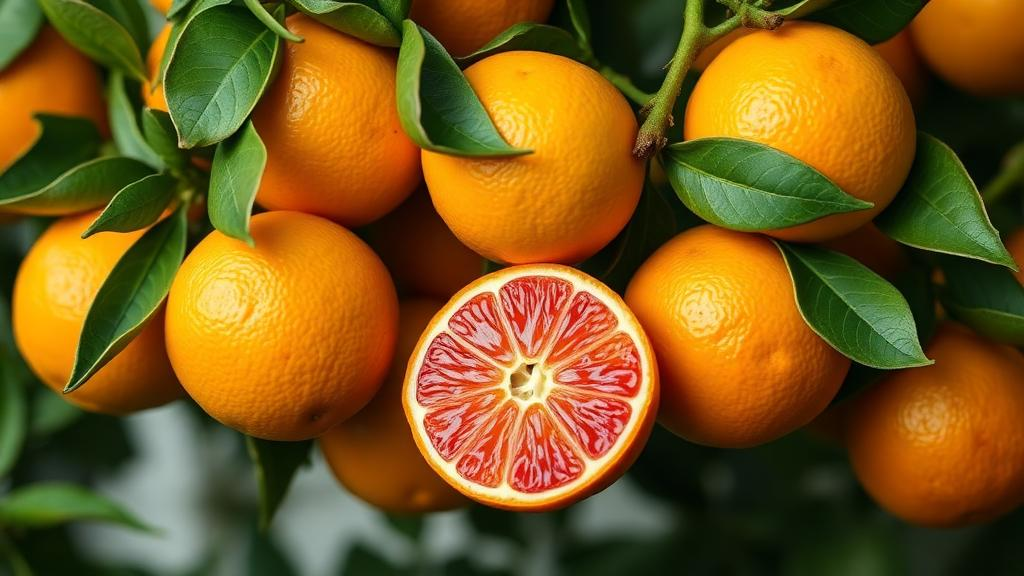
Image Credits: AI Generated
DOI: Not provided
Keywords: citrus, genetic modification, climate change, EIC Pathfinder, Universitat Jaume I, New Genomic Techniques, RNA interference, biofortification, resveratrol, artificial intelligence, sweet orange, mandarin
Cite Scienmag News
Juliet Wilcox. (October 5, 2026). European scientists engineer climate-proof citrus with AI and gene editing. Scienmag. https://scienmag.com/european-scientists-engineer-climate-proof-citrus-with-ai-and-gene-editing/
Juliet Wilcox. "European scientists engineer climate-proof citrus with AI and gene editing." Scienmag, 5 October 2026, https://scienmag.com/european-scientists-engineer-climate-proof-citrus-with-ai-and-gene-editing/. Accessed 5 October 2026.
Juliet Wilcox. "European scientists engineer climate-proof citrus with AI and gene editing." Scienmag. October 5, 2026. https://scienmag.com/european-scientists-engineer-climate-proof-citrus-with-ai-and-gene-editing/


