


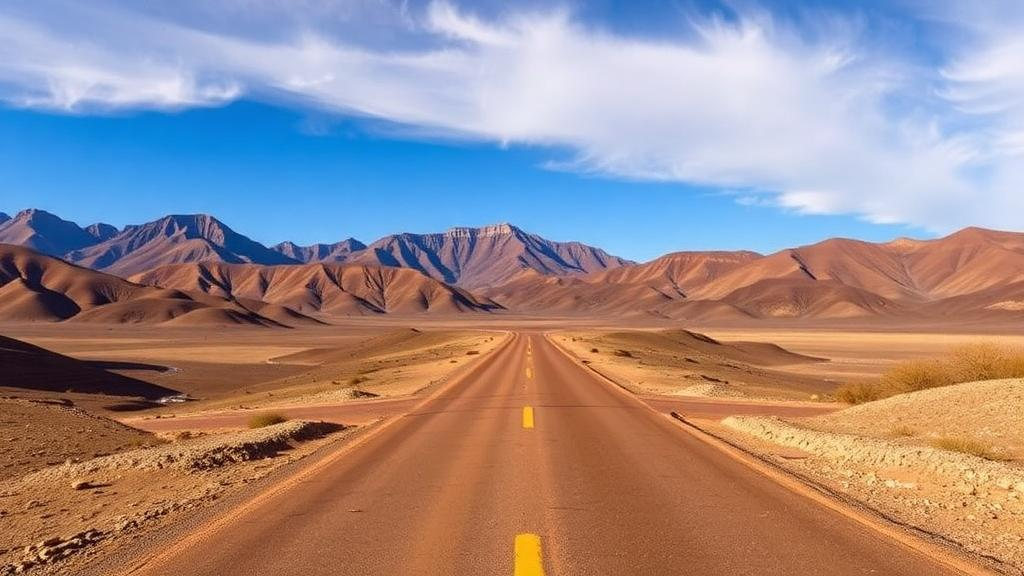
High on the Qinghai-Xizang Plateau, where highways thread between glaciers, permafrost and alpine meadows, the thin soils beside the asphalt hold a record of how one of Earth’s harshest environments is functioning. A new study published in Environmental Monitoring and Assessment by Lin Gong, Wencan Ma and Xingyue Wen of China West Normal University has mapped roadside soil quality across representative areas of the plateau and found that just four chemical indicators are enough to tell whether these fragile soils are thriving or struggling. The work offers a practical shortcut for monitoring an ecosystem that is warming faster than almost anywhere else, and it reveals a striking pattern: soil health is not spread evenly across the plateau, but rises and falls in predictable waves with elevation, rainfall and temperature.
The team collected surface soil samples from roadside locations in representative regions of the plateau and measured a suite of physicochemical properties. Rather than treating every measurement as equally important, the researchers turned to principal component analysis, a statistical technique that compresses many correlated variables into a small number of independent axes of variation. By selecting the indicators that loaded most heavily onto those axes, they built what soil scientists call a minimum dataset, a trimmed-down set of measurements that captures most of the information contained in the full battery of laboratory tests. The final minimum dataset contained just four attributes: soil organic matter, total phosphorus, the carbon-to-nitrogen ratio and the nitrogen-to-phosphorus ratio.
Among these four, soil organic matter carried the highest weight in the resulting soil quality index, making it the primary evaluation indicator for the plateau’s roadside soils. That finding makes ecological sense. Organic matter is the backbone of soil fertility, storing nutrients, binding particles into stable aggregates, retaining water and feeding the microbial communities that drive nutrient cycling. On the Qinghai-Xizang Plateau, where cold temperatures slow decomposition and thin soils develop slowly over bedrock and glacial debris, the amount of organic matter a soil has accumulated over centuries is a sensitive barometer of its overall condition. The stoichiometric ratios, meanwhile, encode the balance of elements that microbes and plants need, so shifts in carbon, nitrogen and phosphorus proportions signal changes in nutrient supply and decomposition dynamics.
Combining the four indicators into a soil quality index based on the minimum dataset, the researchers then examined how the index varied across space, both horizontally across the plateau and vertically along elevation gradients. The horizontal picture was sharply divided. Soil quality values were relatively elevated in the eastern and southern parts of the plateau, while the western and northern regions scored noticeably lower. This east-west and south-north contrast mirrors the plateau’s fundamental climatic geography: moisture-bearing air masses deliver more precipitation to the eastern and southern margins, supporting denser vegetation and richer soils, whereas the interior northwest is arid, windswept and dominated by sparse desert and steppe vegetation that contributes little organic material to the ground.
The vertical pattern proved equally revealing, and perhaps more surprising. Along altitudinal gradients, soil quality peaked at middle elevations, between roughly 3200 and 4500 meters, and declined both at lower elevations of 2700 to 3100 meters and at the highest elevations of 4500 to 5100 meters. This hump-shaped relationship, sometimes called an elevational mid-domain pattern, means that the healthiest roadside soils are neither in the warm valleys nor near the frozen summits, but in the intermediate belt where conditions strike a balance. Understanding where that sweet spot lies is essential for prioritizing restoration along the plateau’s expanding road network, which continues to grow as highways link settlements across the region.
What drives this mid-elevation optimum? The study points to precipitation, temperature and vegetation type as the main governing factors, acting through three linked processes: the input of plant litter, the rate of microbial decomposition, and the resulting accumulation of soil organic matter. At lower elevations, warmer and drier conditions limit plant productivity, so litter inputs are modest even though decomposition is relatively fast. At the highest elevations, cold suppresses both vegetation growth and microbial activity, and soils remain thin and poorly developed. In the middle belt, enough moisture and warmth sustain productive alpine vegetation, and the moderate climate allows organic matter to accumulate faster than it decomposes. The result is a soil quality maximum sandwiched between two less favorable extremes.
Central to this chain of causation is soil organic matter itself, which the authors identify as a key mediator linking environmental gradients to soil quality shifts. In other words, climate and vegetation do not merely correlate with soil health; they act on it largely through the amount of organic matter that builds up in the ground. Litter falling from alpine grasses, shrubs and meadows is broken down by soil microbes, and the balance between those two fluxes determines whether organic stocks grow or shrink. Because organic matter simultaneously influences nutrient retention, structure and biological activity, it sits at the hub of the plateau’s soil system, transmitting the signal of every change in rainfall, temperature or plant cover into the wider soil quality index.
The roadside setting of the study adds another layer of significance. Roads are among the most pervasive human footprints on the plateau, and their verges experience compaction, altered drainage, dust deposition and traffic-related contamination, all of which can stress soil ecosystems. Previous research along the Qinghai-Tibet highway has documented elevated heavy metals in roadside topsoil and shifts in bacterial communities with distance from the road, underscoring how strongly the transport corridor shapes its immediate environment. By focusing sampling on roadside locations, the new study targets precisely the soils most exposed to disturbance, providing a baseline against which the effects of future construction, traffic growth and climate change can be measured.
Beyond its scientific findings, the study delivers a methodological payoff. The SQI-MDS framework, as the authors describe it, characterizes soil quality variations with fewer indicators and reduced survey costs, because laboratories need to measure only four attributes instead of a full panel of physical and chemical properties. For a region as vast, remote and logistically difficult as the Qinghai-Xizang Plateau, where field campaigns involve long drives at extreme altitude, that economy is not trivial. The framework offers scientific support for large-scale soil resource monitoring and ecological environment management, allowing agencies to track soil condition along thousands of kilometers of highway without exhaustive sampling programs.
The broader implications reach past the road verge. The plateau’s soils store substantial carbon, and changes in organic matter accumulation ripple into regional carbon budgets and permafrost stability. As warming alters precipitation patterns and shifts vegetation zones upward, the mediating role of soil organic matter identified in this study suggests that roadside soils could serve as sentinels, registering environmental change before it becomes visible at landscape scale. A cheap, four-indicator index that can be applied repeatedly across elevation gradients gives researchers and land managers exactly the tool they need to watch that signal, and to intervene early where the thin, slow-forming soils of the world’s highest plateau begin to degrade.
Subject of Research: Spatial variation of roadside soil quality and its climatic and vegetation drivers on the Qinghai-Xizang Plateau
Article Title: Spatial variation of roadside soil quality and its key influencing factors on the Qinghai-Xizang Plateau
Article References: Gong, L., Ma, W., & Wen, X. (2026). Spatial variation of roadside soil quality and its key influencing factors on the Qinghai-Xizang Plateau. Environmental Monitoring and Assessment, 198(10), Article 1104. https://doi.org/10.1007/s10661-026-15941-7
Image Credits: AI Generated
DOI: 10.1007/s10661-026-15941-7
Keywords: soil quality index, Qinghai-Xizang Plateau, roadside soil, minimum dataset, principal component analysis, soil organic matter, elevation gradient, soil stoichiometry, alpine ecosystems, soil monitoring, environmental management, highway ecology
Cite Scienmag News
Gavin Prescott. (October 5, 2026). Four Soil Clues Reveal How Roads Reshape the Health of the World’s Highest Plateau. Scienmag. https://scienmag.com/four-soil-clues-reveal-how-roads-reshape-the-health-of-the-worlds-highest-plateau/
Gavin Prescott. "Four Soil Clues Reveal How Roads Reshape the Health of the World’s Highest Plateau." Scienmag, 5 October 2026, https://scienmag.com/four-soil-clues-reveal-how-roads-reshape-the-health-of-the-worlds-highest-plateau/. Accessed 5 October 2026.
Gavin Prescott. "Four Soil Clues Reveal How Roads Reshape the Health of the World’s Highest Plateau." Scienmag. October 5, 2026. https://scienmag.com/four-soil-clues-reveal-how-roads-reshape-the-health-of-the-worlds-highest-plateau/


