


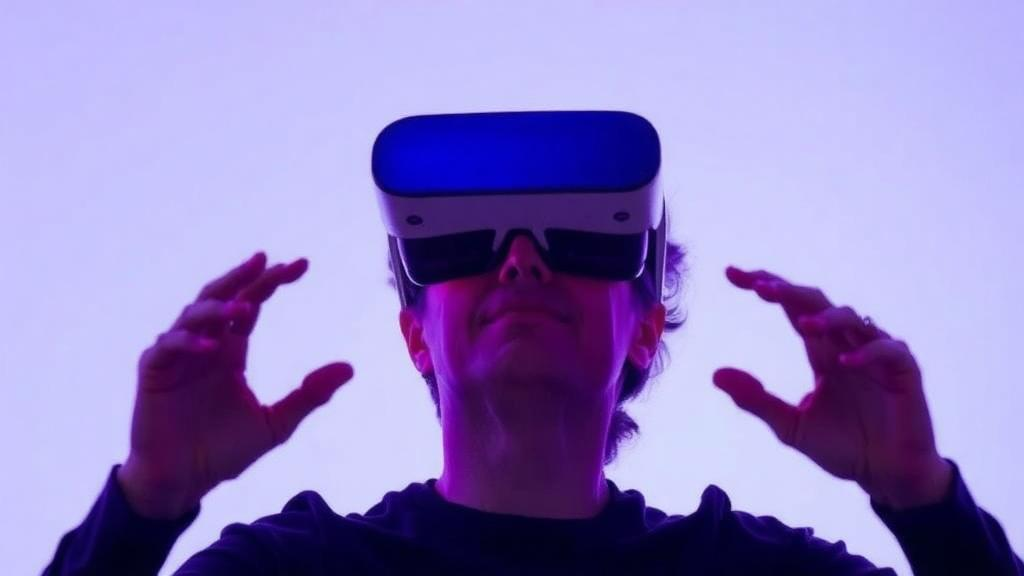
For millions of people living with cancer, anxiety is not a side effect of treatment so much as a constant companion. It arrives before a chemotherapy infusion, lingers through radiation planning sessions, and follows patients home to palliative care. Anti-anxiety medications can help, but they bring drowsiness, interactions with oncology drugs, and the risk of dependence. Now a comprehensive synthesis of two decades of research suggests that a headset and a carefully designed virtual world may offer a meaningful alternative, and the numbers behind that claim are striking enough to capture the attention of oncologists worldwide.
A team of Turkish nursing researchers, led by Aydanur Aydin of Gumushane University together with Gülcan Bağcivan and Aleyna Özkan of Koç University, conducted a systematic review and meta-analysis published in Supportive Care in Cancer. The team searched five major databases, including Ovid MEDLINE, PubMed, CINAHL, Web of Science, and Scopus, for studies published between 2000 and November 2025. After independent reviewers screened the literature, twenty-one publications met the strict inclusion criteria, spanning randomized controlled trials and quasi-experimental studies evaluated with the Joanna Briggs Institute critical appraisal tools. The protocol was prospectively registered in the PROSPERO database, a step that guards against selective reporting in evidence syntheses.
The headline result is a standardized mean difference of −0.793, with a 95 percent confidence interval stretching from −1.403 to −0.184 and a statistically significant p-value of 0.011. In plain terms, patients who received virtual reality interventions reported substantially lower anxiety than those who did not, with an effect size in the moderate-to-high range by conventional statistical benchmarks. Because standardized mean differences allow studies that measured anxiety with different instruments to be pooled, this figure represents one of the clearest quantitative signals yet that immersive technology can move the needle on psychological distress in oncology populations.
The breadth of the evidence is as notable as its strength. Statistically significant reductions in anxiety scores appeared across multiple cancer types, including breast, prostate, and ovarian cancers, and across a striking variety of clinical contexts. Some trials tested VR as a distraction during chemotherapy infusions, drawing on the well-established principle that absorbing sensory experiences can crowd out anticipatory distress. Others deployed virtual environments before a patient’s first chemotherapy dose, in gynecologic oncology surgery preparation, during radiation therapy education, and even at home for patients with advanced or metastatic disease receiving palliative care. The consistency of benefit across such heterogeneous settings suggests the effect is not an artifact of one particular protocol or patient group.
The mechanisms researchers propose are grounded in cognitive science rather than science fiction. Immersive virtual reality occupies a large share of the user’s attentional resources, effectively competing with the rumination and catastrophic thinking that fuel anxiety. In distraction-based applications, the brain’s limited capacity for processing competing stimuli means a vivid virtual forest or ocean scene can genuinely displace awareness of an infusion pump or a waiting room. In more therapeutic applications, such as the virtual reality adaptations of cognitive behavioral therapy and mindfulness training included in the review, the technology serves as a delivery vehicle for proven psychological techniques, allowing patients to practice relaxation and coping skills in simulated environments that feel real enough to trigger, and then retrain, their stress responses.
Safety data from the synthesis will reassure clinicians who worry about adding hardware to the bedside. No major side effects were reported across the included studies. The one recurring complaint was cyber sickness, the nausea and disorientation that can arise when visual motion cues conflict with vestibular signals, and even these minor instances were managed simply by adjusting session durations. That profile stands in sharp contrast to pharmacological anxiolytics, particularly benzodiazepines, which can cause sedation, cognitive impairment, falls, and dangerous interactions in patients already managing complex medication regimens. For oncology teams, an intervention whose worst documented downside is mild, manageable motion discomfort represents an unusually favorable risk-benefit equation.
Patient enthusiasm may be the most commercially and clinically consequential finding of all. Satisfaction scores reported in the reviewed studies reached 4.47 on a five-point scale and 7.35 on a ten-point scale, levels of acceptance that few medical interventions achieve. This matters because even the most effective therapy fails if patients refuse to use it. Earlier feasibility work cited in the review, including codesigned interventions incorporating compassionate mind training and pilot trials in home palliative care, found that patients with cancer not only tolerated the headsets but frequently described the experiences as meaningful, restorative, and a welcome escape from the psychological weight of their diagnosis.
The authors argue that the evidence now supports integrating virtual reality into routine oncology nursing and palliative care, particularly around stressful treatment moments such as chemotherapy administration. The practical implications are tangible. A nurse could offer a patient a ten-minute immersive relaxation session before an infusion, requiring no additional medication, no physician order in many settings, and equipment that has become dramatically cheaper and lighter over the past decade. Because the intervention is non-pharmacological, it sidesteps the regulatory and dependency concerns that complicate anxiolytic prescribing, and it can be layered on top of standard psychological care rather than replacing it.
Cautions remain, and the researchers are candid about them. The included studies varied in design quality, sample size, and the specific VR content and duration used, and the wide confidence interval around the pooled effect size reflects that heterogeneity. The authors explicitly call for further research to support wider clinical implementation, including investigations of whether virtual reality benefits extend to other physical and psychological symptoms and whether gains persist over longer follow-up periods. Questions about which patients respond best, whether effects fade with repeated use, and how to standardize content across institutions remain open. The review also notes that the underlying datasets are not publicly available but can be requested from the corresponding author, a limitation typical of evidence syntheses in nursing science.
Even with those caveats, the synthesis marks a turning point in how the field can talk about immersive technology in cancer care. What began two decades ago as small pilot studies of distraction during chemotherapy has matured into a body of evidence robust enough for meta-analysis, with a statistically significant pooled effect, an encouraging safety record, and satisfaction scores that most drug developers would envy. As headset costs continue to fall and clinical content libraries expand, the barrier to adoption is shifting from hardware to workflow: training nurses, designing evidence-based virtual environments, and embedding sessions into crowded treatment schedules. If ongoing trials confirm the durability of these effects, the humble VR headset may soon sit alongside infusion chairs and radiation machines as standard equipment in the fight not just against cancer itself, but against the fear that shadows it.
Subject of Research: Effectiveness of virtual reality interventions for managing anxiety in patients with cancer
Article Title: Virtual reality as a non-pharmacological adjuvant for anxiety in oncology care: a systematic review and meta-analysis
Article References: Virtual reality as a non-pharmacological adjuvant for anxiety in oncology care: a systematic review and meta-analysis. (n.d.). https://doi.org/10.1007/s00520-026-11265-x
Image Credits: AI Generated
DOI: 10.1007/s00520-026-11265-x
Keywords: virtual reality, anxiety, oncology, cancer care, meta-analysis, systematic review, non-pharmacological intervention, supportive care, chemotherapy, palliative care, symptom management, nursing
Cite Scienmag News
Nathaniel Bowman. (October 4, 2026). Virtual Reality Calms Cancer Anxiety, Major Analysis of 21 Studies Finds. Scienmag. https://scienmag.com/virtual-reality-calms-cancer-anxiety-major-analysis-of-21-studies-finds/
Nathaniel Bowman. "Virtual Reality Calms Cancer Anxiety, Major Analysis of 21 Studies Finds." Scienmag, 4 October 2026, https://scienmag.com/virtual-reality-calms-cancer-anxiety-major-analysis-of-21-studies-finds/. Accessed 4 October 2026.
Nathaniel Bowman. "Virtual Reality Calms Cancer Anxiety, Major Analysis of 21 Studies Finds." Scienmag. October 4, 2026. https://scienmag.com/virtual-reality-calms-cancer-anxiety-major-analysis-of-21-studies-finds/


