


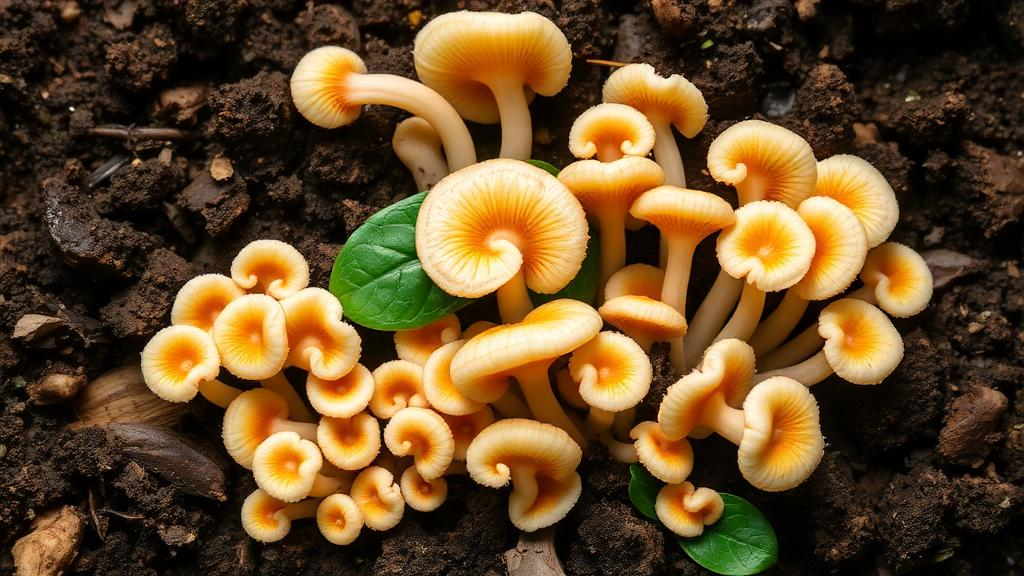
Beneath nearly every forest, grassland, and farm field on Earth lies a biological infrastructure so vast and so old that scientists sometimes describe it as the original partnership that made land life possible. Arbuscular mycorrhizal fungi, threadlike soil dwellers that form intimate symbioses with the roots of roughly eighty percent of terrestrial plant species, have been doing this work for more than 400 million years, dating back to the first plants that colonized dry land. A comprehensive new review published in Discover Plants synthesizes decades of evidence on how these fungi deliver plant nutrition, build soil structure, suppress disease, and buffer ecosystems against drought, salinity, and contamination, while also confronting the stubborn gaps that still prevent the field from delivering reliable, scalable solutions for agriculture and restoration.
The scale of the partnership is staggering. An estimated 250,000 plant species depend on mutualistic associations with approximately 50,000 distinct fungal species. Under nutrient-deficient conditions, mycorrhizal symbioses can mediate the transfer of up to eighty percent of the phosphorus and nitrogen a host plant requires. The mechanism is elegantly physical: the fungi extend a web of extraradical hyphae far beyond the nutrient depletion zone that surrounds roots, dramatically expanding the absorptive surface area available to the plant. In exchange, the plant supplies carbohydrates and, crucially, lipids, because arbuscular mycorrhizal fungi are lipid auxotrophs that cannot synthesize their own fatty membranes without host support. This carbon-for-nutrient trade, negotiated inside specialized fungal structures called arbuscules that form within root cortex cells, is one of the most consequential biological exchanges on the planet.
The review emphasizes that the benefits ripple far beyond individual plants. Fungal hyphae and their glycoprotein exudates, notably glomalin-related soil protein, act as biological binding agents that enmesh soil particles into stable macroaggregates. This aggregation improves aeration, water retention, and erosion resistance, and it physically encapsulates soil organic matter, shielding it from rapid enzymatic degradation and locking carbon into long-term terrestrial reserves. By transferring photosynthetic carbon into the soil and modulating microbial community dynamics, mycorrhizal fungi influence the global carbon cycle, and researchers argue that integrating them into community and ecosystem models is essential for understanding terrestrial carbon storage and climate mitigation potential.
Perhaps the most conceptually rich section of the review concerns the mycorrhizosphere, the zone of soil influenced by fungal hyphae, which the authors frame as a dynamic interaction hub rather than a passive conduit. Fungal networks create continuous moisture films, so-called fungal highways, that allow motile bacteria to traverse otherwise impassable dry soil micropores. Carbon-rich fungal exudates selectively recruit bacterial consortia, including nitrogen-fixing diazotrophs and phosphate-solubilizing species such as Pseudomonas and Bacillus. These bacteria form biofilms on hyphae, secrete extracellular enzymes that mobilize recalcitrant nutrients, and produce phytohormones that stimulate root development. The fungus absorbs and translocates the mobilized nutrients to its host. Studies of the fungus Rhizophagus irregularis have shown that when coupled with synergistic soil microbiota, plant nitrogen uptake from organic matter can effectively double, a striking demonstration that the symbiosis is a multi-species collaboration rather than a simple two-partner deal.
The review also documents a defensive dimension that is often overlooked. Mycorrhizal colonization primes plant immune responses, enhancing both local and systemic defenses and accelerating the deployment of defense hormones and pathogenesis-related proteins. The fungi reshape the rhizosphere microbiome, enriching antagonistic taxa such as Pseudomonas, Bacillus, and Trichoderma that suppress pathogens through antibiosis, competition, and niche exclusion. Against plant-parasitic nematodes, among the most damaging agricultural pests worldwide, the effects can be dramatic: inoculation of coffee plants reduced root-knot nematode infection severity by up to 52.5 percent in one cited study, and in soybean rhizospheres, mycorrhizal presence fosters consortia of anti-nematode microbes, including fungal taxa that prey on the pests directly. Even grazing by fungivorous nematodes can stimulate fungal turnover and shift community composition in ways that ultimately enhance root colonization and plant nutrient uptake, illustrating the tangled, multi-trophic character of these soil food webs.
Yet the review is refreshingly candid about the limits of the mutualism. Mycorrhizal symbioses exist on a continuum that can shift toward antagonism or even parasitism under specific conditions. When soil phosphorus is already abundant, plants may reject their fungal partners, or the fungi may act as a carbon drain, siphoning up to twenty percent of the plant’s photosynthetically fixed carbon without delivering commensurate benefits. Low light intensity can tip the balance as fungal carbon demand outpaces a plant’s diminished photosynthetic capacity. Molecular work has identified the precise biochemical requirements for successful colonization, including complementation between plant-secreted and fungal lysin motif proteins, and physiological dysfunctions in model hosts such as Lotus japonicus can restructure entire root-associated fungal communities. The message is that context, not universal benevolence, governs the outcome of the partnership.
The authors also tackle the scientifically contested territory of common mycorrhizal networks, the hyphal links that can interconnect the roots of different plants and have been popularized as a kind of forest internet. The review acknowledges evidence that these networks can redistribute resources, transmit and possibly filter defense signals among connected plants, and influence competition and community dynamics. But it equally warns that claims of preferential resource allocation remain debated, that evidence for the ubiquity and exact functioning of these networks in natural settings is not yet conclusive, and that overinterpretation in some studies has led to the spread of misinformation. This calibrated stance, embracing the excitement of the field while policing its excesses, is one of the review’s most valuable contributions.
On the applied side, the potential is enormous but so are the obstacles. Field inoculation with commercial mycorrhizal products frequently fails to replicate greenhouse successes because natural soils impose complex biotic and abiotic filters. Indigenous fungal communities exert priority effects, occupying root and soil niches and competitively excluding introduced strains, while the broader soil microbiome can antagonize inocula through resource competition, antibiosis, or predation. Notably, the composition of the resident soil microbial community often predicts inoculation outcomes more reliably than soil fertility metrics, suggesting that site-adapted strain selection and integrated management, including conservation tillage, ground cover, and minimized synthetic phosphorus, matter more than simply adding spores. In restoration contexts, however, the results are encouraging: reintroducing native mycorrhizal communities has been shown to accelerate plant succession and improve native plant establishment, and mycorrhizal inoculation has improved root development and growth in degraded coal mine-subsided lands.
The review highlights further applications in phytoremediation, where mycorrhizal fungi enhance the extraction and stabilization of heavy metals and persistent organic pollutants. Inoculation of the arsenic-tolerant fern Pteris vittata significantly enhanced contaminant extraction from polluted soils, and combinations of mycorrhizal fungi, plant growth-promoting rhizobacteria, and earthworms improved lead bioaccumulation and plant health in Bermuda grass growing in lead-contaminated soil. The fungi protect plants from phytotoxicity, stimulate soil microbial activity, and improve soil structure through glomalin production, making them multipurpose agents in the cleanup and recovery of degraded land. The authors note, however, that research on emerging contaminants such as microplastics, antibiotics, and endocrine-disrupting chemicals remains limited, representing a significant frontier for future work.
Looking ahead, the review identifies clear priorities: long-term, multi-site field trials; trait-based approaches linking fungal characteristics to plant performance; mechanistic studies of carbon and nutrient exchange that reconcile competing models of how the trade is regulated; and systematic assessment of agronomic and economic benefits to translate research into routine farmer practice. Invasive species, which disrupt native mycorrhizal communities and reduce fungal richness, demand particular attention to temporal dynamics and post-invasion restoration. What emerges from this synthesis is a portrait of an ancient symbiosis that is neither a miracle cure nor a mere curiosity, but a foundational ecological process whose careful stewardship, through organic and low-input farming, conservation of fungal biodiversity, and scientifically grounded inoculation, could underpin more resilient agriculture and healthier ecosystems in a changing climate. The fungi have been holding the biosphere together for hundreds of millions of years; the task now is to manage that partnership with the precision it deserves.
Subject of Research: The roles of arbuscular mycorrhizal fungi in plant nutrition, soil health, and ecosystem resilience
Article Title: Arbuscular mycorrhizal fungi support plant nutrition soil health and ecosystem resilience
Article References: Bhosale, K. S., Shinde, B. P., Ahire, S. V., Mankar, G. D., Salunke, T. R., & Sontakke, O. P. (2026). Arbuscular mycorrhizal fungi support plant nutrition soil health and ecosystem resilience. Discover Plants, 3(1), Article 387. https://doi.org/10.1007/s44372-026-00858-9
Image Credits: AI Generated
DOI: 10.1007/s44372-026-00858-9
Keywords: arbuscular mycorrhizal fungi, mycorrhizosphere, plant-microbe interactions, soil health, nutrient cycling, carbon sequestration, common mycorrhizal networks, nematode control, biofertilizers, phytoremediation, sustainable agriculture, ecosystem restoration
Cite Scienmag News
Alan Morgan. (October 4, 2026). The Hidden Fungal Networks That Feed the World’s Plants and Hold Soils Together. Scienmag. https://scienmag.com/the-hidden-fungal-networks-that-feed-the-worlds-plants-and-hold-soils-together/
Alan Morgan. "The Hidden Fungal Networks That Feed the World’s Plants and Hold Soils Together." Scienmag, 4 October 2026, https://scienmag.com/the-hidden-fungal-networks-that-feed-the-worlds-plants-and-hold-soils-together/. Accessed 4 October 2026.
Alan Morgan. "The Hidden Fungal Networks That Feed the World’s Plants and Hold Soils Together." Scienmag. October 4, 2026. https://scienmag.com/the-hidden-fungal-networks-that-feed-the-worlds-plants-and-hold-soils-together/


