


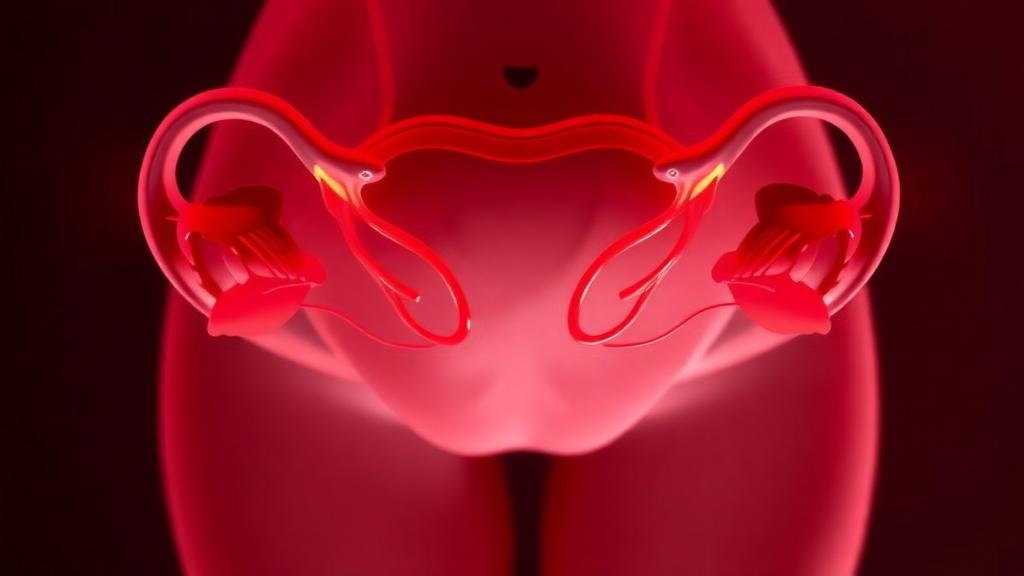
For decades, obstetricians have drawn a bright line at age 35, labeling pregnancies beyond that threshold as advanced maternal age. The designation, based purely on chronology, has long been a blunt instrument: it flags millions of women for closer monitoring, yet it cannot say which of them will actually face difficult labors, unplanned cesarean births, or postpartum hemorrhage. A new study published in Epigenetics Communications suggests there may be a more precise way to measure the aging of the very organ that does the work of labor, the myometrium, the muscular wall of the uterus. By applying molecular aging clocks to samples of uterine tissue and matched blood, researchers have taken a first step toward replacing a birthday-based label with a biological one.
The study, led by Elise N. Erickson of Oregon Health and Science University together with colleagues at Emory University and Imperial College London, set out to answer two deceptively simple questions. First, do existing epigenetic clocks, mathematical models that estimate biological age from chemical tags on DNA, actually track maternal age in the myometrium at all? Second, and more importantly for future clinical use, can a simple blood draw stand in for a tissue that can only be obtained during surgery? The answer to both, the team reports, is a cautious yes, with one clock in particular standing out from the pack.
Epigenetic clocks rest on a phenomenon called DNA methylation, the attachment of methyl groups to specific positions in the genome that changes in reproducible patterns as cells age. Because methylation patterns shift predictably over the lifespan, researchers can compute a weighted average across hundreds or thousands of CpG sites, the cytosine-guanine sequences where these tags accumulate, to produce an age estimate in years. The team measured methylation across more than 850,000 CpG sites using the Illumina MethylationEPIC BeadChip, then calculated epigenetic age with four well-known clocks: the pan-tissue Horvath clock, the blood-derived Hannum clock, the PhenoAge clock, and GrimAge, which incorporates methylation surrogates of plasma proteins linked to disease and mortality.
The samples came from 27 pregnant individuals undergoing planned cesarean birth at term, of whom 21 had complete, quality-controlled matched specimens of myometrium and blood. Their chronological ages spanned an impressive range, from 20 to 50 years, with a median of 35.5. During each cesarean, surgeons excised a small full-thickness piece of myometrium from the edge of the uterine incision immediately after delivery, which was then flash-frozen in liquid nitrogen. Blood was collected by venipuncture one to two hours before delivery. This paired design, the first of its kind to compare epigenetic age across blood and myometrium in the same individuals, is what gives the findings their unusual value.
The results were strikingly tissue-specific. Three of the four clocks, Horvath, Hannum, and GrimAge, produced epigenetic ages that correlated significantly with chronological age in both tissues, meeting the researchers’ benchmark of a moderate Spearman correlation of at least 0.5. In blood, the correlations were strong, ranging from 0.72 to 0.87. In myometrium, they were somewhat weaker but still significant, between 0.62 and 0.70. The PhenoAge clock, however, failed to track age in uterine tissue at all, showing no significant correlation, and was dropped from subsequent analyses. The pattern suggests that clocks trained on blood or on broad tissue panels do not transfer equally well to the pregnant uterus.
Just as intriguing were the absolute age estimates, which diverged from chronological age in opposite directions depending on the clock. Horvath’s pan-tissue clock judged the myometrium to be dramatically older than the women themselves, estimating every single uterine sample at age 40 or older even though the youngest donor was 20, with a median myometrial estimate of 49.4 years. In blood, the same clock also overestimated age, yielding a median of 39.2 years. By contrast, the Hannum and GrimAge clocks returned estimates younger than chronological age in both tissues. The authors caution that these discrepancies likely reflect how each clock was built and validated, and that pregnancy itself, a state of profound hormonal and immunological change, may reshape methylation patterns in ways the clocks were never designed to capture.
The most clinically consequential finding concerned the relationship between the two tissues. If blood is to serve as a proxy for the uterus, epigenetic age measured in the two must agree. GrimAge delivered the strongest concordance by far, with a Spearman correlation of 0.81 between blood and myometrial epigenetic age, while Horvath and Hannum showed moderate correlations of 0.60 and 0.62. Even more telling, when the researchers calculated age acceleration, the gap between biological and chronological age that signals faster or slower aging, only GrimAge’s acceleration measure correlated significantly across tissues, with a coefficient of 0.49. In other words, if you want to know how quickly a woman’s uterus is aging, GrimAge applied to her blood currently offers the best window available.
Why does this matter? The myometrium is the engine of childbirth, and its function during labor, in the third stage of delivery, and during postpartum involution depends on coordinated smooth muscle contraction. Population studies consistently show that older parturients experience longer labors, need more oxytocin, and face higher rates of labor dystocia, unplanned cesarean, and postpartum hemorrhage. Yet laboratory studies of myometrial contractility by age have produced conflicting results, and many women over 35 deliver without any difficulty while some younger women experience severe dysfunction. Chronological age, in short, is a poor predictor of the biology that matters. A biomarker of uterine biological age could eventually identify, before labor begins, which pregnancies are at risk of myometrial failure.
The study also surfaced a provocative secondary observation: myometrial GrimAge acceleration was moderately correlated with pre-pregnancy body mass index, with a Spearman coefficient of 0.52. The association did not survive correction for multiple testing, and the authors are careful to flag it as potentially spurious, but it aligns with earlier work showing that obesity accelerates epigenetic aging in liver and adipose tissue. Given that higher body mass is independently linked to poor birth outcomes, future studies will need to disentangle the contributions of age and body composition to uterine aging, a task that will require far larger cohorts than the 21 participants analyzed here.
The limitations are real and the authors do not hide them. The sample was small, overwhelmingly of European ancestry, and composed entirely of women who never entered labor, since all samples came from planned cesareans. No in vitro contraction testing was possible with the preserved tissue, and limited clinical data prevented adjustment for confounders. But the consistency of the correlations across three clocks and two tissues, despite these constraints, gives the findings credibility. The study establishes proof of concept that blood-derived epigenetic age can plausibly stand in for the inaccessible uterus, opening the door to studies that follow vaginal births, sample earlier in pregnancy, and test whether epigenetic age acceleration predicts prolonged labor, hemorrhage, or even preeclampsia. It may also, the authors suggest, become a tool for measuring whether interventions such as diet, exercise, or stress reduction genuinely slow biological aging in pregnant women, and for examining how the cumulative wear of social disadvantage, which widens racial disparities in maternal outcomes with advancing age, is written into the genome of the uterus itself.
Subject of Research: Epigenetic clock-based estimation of biological age in maternal blood and uterine myometrium during pregnancy
Article Title: Advancing understanding of maternal age: correlating epigenetic clocks in blood and myometrium
Article References: Erickson, E. N., Knight, A. K., Smith, A. K., & Myatt, L. (2022). Advancing understanding of maternal age: correlating epigenetic clocks in blood and myometrium. Epigenetics Communications, 2(1), Article 3. https://doi.org/10.1186/s43682-022-00010-0
Image Credits: AI Generated
DOI: 10.1186/s43682-022-00010-0
Keywords: epigenetic clocks, DNA methylation, maternal age, myometrium, pregnancy, GrimAge, Horvath clock, biological aging, age acceleration, parturition, obstetrics, biomarkers
Cite Scienmag News
Beatrice Stafford. (October 4, 2026). Epigenetic clocks reveal how the aging uterus ticks during pregnancy. Scienmag. https://scienmag.com/epigenetic-clocks-reveal-how-the-aging-uterus-ticks-during-pregnancy/
Beatrice Stafford. "Epigenetic clocks reveal how the aging uterus ticks during pregnancy." Scienmag, 4 October 2026, https://scienmag.com/epigenetic-clocks-reveal-how-the-aging-uterus-ticks-during-pregnancy/. Accessed 4 October 2026.
Beatrice Stafford. "Epigenetic clocks reveal how the aging uterus ticks during pregnancy." Scienmag. October 4, 2026. https://scienmag.com/epigenetic-clocks-reveal-how-the-aging-uterus-ticks-during-pregnancy/


