


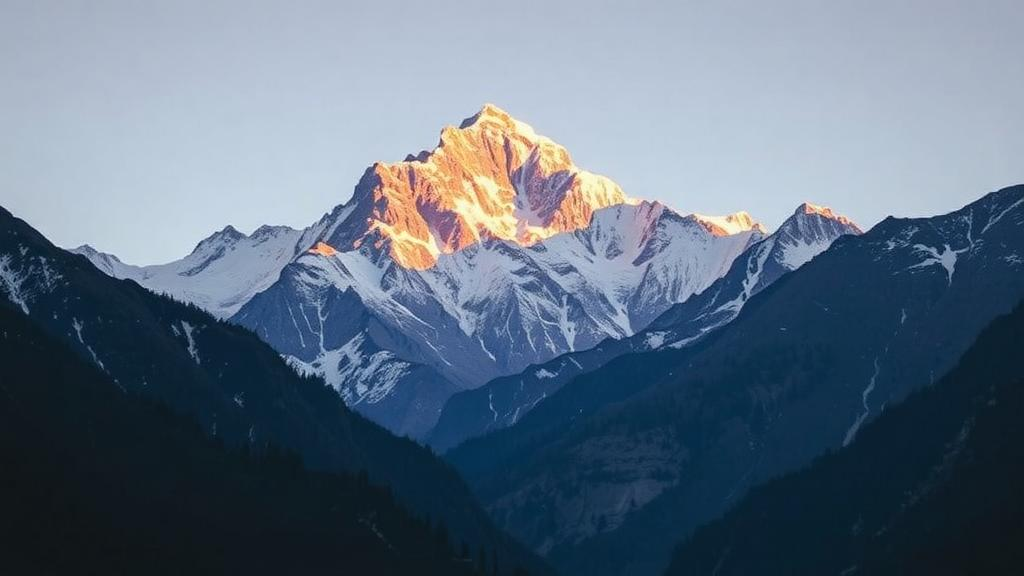
High in the Western Himalayas, where terraced slopes climb from subtropical valleys to alpine meadows above 4,000 meters, traditional medicine is not a single body of wisdom but a patchwork of knowledge systems shaped by both altitude and ethnic identity. A new study from Azad Kashmir, Pakistan, has mapped that patchwork in unprecedented quantitative detail, revealing that the distribution of ethnomedicinal knowledge across mountain communities follows predictable ecological and cultural patterns. The findings, published in Plant Biosystems, offer one of the most comprehensive biocultural portraits yet assembled for the region, and they carry urgent implications for conserving both plant diversity and the human heritage intertwined with it.
Between March 2023 and November 2024, researchers led by Choudhary Muhammad Babar and Sadaf Kayani of Mohi-Ud-Din Islamic University, working with colleagues in Georgia, Croatia, Türkiye and Pakistan, conducted semi-structured interviews and focus group discussions with 105 informants drawn from three ethnic groups: the Gujjar, the Pahari and the Kashmiri. The survey spanned an altitudinal gradient from 1,000 to 4,500 meters above sea level, capturing everything from lowland farmland to high pastures. Rather than simply cataloguing plants, the team applied an integrative biocultural framework designed to test a specific question: does medicinal knowledge vary systematically with elevation and cultural affiliation, or is it distributed more or less uniformly across communities?
The scale of the documentation alone is striking. In total, the researchers recorded 180 medicinal plant species belonging to 63 families, with the daisy family Asteraceae and the grass family Poaceae dominating the list. Leaves emerged as the most frequently harvested plant part, and powders were the most common preparation method, a practical choice in communities where dried material can be stored through long winters and administered easily. Collection activity followed a clear seasonal rhythm, running mainly from February to October and peaking sharply in April, when spring growth makes foliage both abundant and pharmacologically active.
The statistical core of the study lies in its quantitative indices. The team calculated the Frequency of Citation and Relative Frequency of Citation for each species, and used the Jaccard Index to compare species overlap between communities and with previously published studies. To test whether plant use differed across elevation belts, they applied the Kruskal-Wallis test, a non-parametric method suited to count data that do not follow a normal distribution. The result was unambiguous: species frequency distributions differed significantly among altitudinal zones, with a test statistic of H = 13.72 and a p-value of 0.003, meaning the probability of observing such a pattern by chance alone is less than one in two hundred.
Perhaps the most visually compelling finding is the mid-elevation peak. Medicinal plant records were concentrated between 1,800 and 2,600 meters above sea level, a belt that corresponds broadly to temperate forest and sub-alpine zones. Ecologists have long recognized that Himalayan plant diversity itself often peaks at intermediate elevations, where moisture, temperature and habitat heterogeneity combine to support a rich flora. The new study suggests that human knowledge mirrors that ecological pattern: communities living in the mid-elevation belt encounter the greatest variety of usable species, and their pharmacopoeias expand accordingly. Knowledge, in other words, is not randomly scattered across the landscape but structured by the same environmental gradients that structure the plants themselves.
Cultural identity adds a second, equally important axis of variation. Cross-cultural analysis revealed that the Pahari community retained the greatest proportion of unique medicinal knowledge, with 15 taxa recorded exclusively within that group. At the same time, the Gujjar and Pahari communities shared 64 taxa, a substantial overlap indicating strong intercultural exchange, likely facilitated by proximity, trade and the seasonal movements of pastoralists. The Gujjars, traditionally a pastoral community that moves livestock between elevations, occupy a distinctive position in this network, potentially acting as carriers of botanical knowledge between lowland and highland zones. The Kashmiri group showed a different profile, underscoring that ethnic affiliation, language and livelihood strategy each leave measurable fingerprints on what a community knows about its flora.
The relative frequency of citation values ranged from 0.857 down to 0.038, a wide spread that highlights how unevenly cultural importance is distributed among species. At the top of the ranking stood two mints: Mentha arvensis and Mentha longifolia. Both are widespread, aromatic herbs whose volatile oils have well-documented digestive and antimicrobial properties, and their prominence aligns neatly with the study’s most striking therapeutic finding. Across all communities, plants were used to treat 27 categories of ailments, and gastrointestinal disorders were the most frequently treated condition, a pattern consistent with other ethnobotanical surveys across Pakistan and the Himalayas, where digestive complaints are common and mint-family remedies are both accessible and effective.
Comparisons with earlier studies painted a picture of regional distinctiveness. Jaccard similarity values between this survey and comparable studies ranged from just 6.96 percent to 13.91 percent, indicating generally low species similarity. Such low overlap suggests that the medicinal flora of Azad Kashmir’s communities is not merely a subset of a homogeneous regional tradition but a locally distinctive system, shaped by the specific plants available at specific elevations and by the specific histories of the people who use them. For ethnopharmacologists, that distinctiveness matters: low similarity implies that regional surveys continue to surface novel plant-use combinations that could guide future pharmacological screening, rather than repeatedly documenting the same well-known species.
The study’s authors frame these results as evidence that ethnomedicinal knowledge is a dynamic biocultural system, jointly produced by ecology and cultural affiliation rather than a static inheritance frozen in time. That framing has practical consequences. Conservation strategies that protect medicinal plants without considering the communities that know how to use them, or that support cultural heritage without safeguarding the habitats where those plants grow, are likely to fail. The mid-elevation concentration of knowledge points to a concrete priority: the temperate and sub-alpine belts between roughly 1,800 and 2,600 meters, where both botanical richness and human expertise converge, deserve targeted protection as biocultural hotspots. Land-use change, overharvesting and the erosion of traditional livelihoods in these zones would erode knowledge and flora simultaneously.
There is also a human dimension that the numbers only hint at. All participants provided prior informed consent, and the research followed the International Society of Ethnobiology’s code of ethics, reflecting a growing standard in the field that indigenous knowledge holders are partners rather than mere data sources. The authors acknowledge their debt to the communities of District Bagh, whose cooperation made the surveys possible. As climate change pushes Himalayan vegetation zones upslope and younger generations migrate to cities, the window for documenting and sustaining these knowledge systems is narrowing. What this study demonstrates is that the knowledge worth saving is not a generic archive of remedies but a living, spatially structured dialogue between people and mountains, one in which a Pahari elder’s grasp of a mid-elevation herb and the ecology of the slope it grows on are two halves of a single, irreplaceable whole.
Subject of Research: Ethnomedicinal knowledge distribution across cultural and altitudinal gradients in the Western Himalayas
Article Title: Biocultural structuring of ethnomedicinal knowledge across cultural and altitudinal gradients in the Western Himalayas
Article References: Biocultural structuring of ethnomedicinal knowledge across cultural and altitudinal gradients in the Western Himalayas. (n.d.). https://doi.org/10.1007/s44473-026-00236-z
Image Credits: AI Generated
DOI: 10.1007/s44473-026-00236-z
Keywords: ethnobotany, medicinal plants, Western Himalayas, biocultural diversity, Azad Kashmir, altitudinal gradient, traditional ecological knowledge, Gujjar, Pahari, Kashmiri, quantitative ethnobotany, conservation
Cite Scienmag News
Alan Morgan. (October 4, 2026). Ancient Healing Knowledge in the Himalayas Follows the Mountains, Not Just the People. Scienmag. https://scienmag.com/ancient-healing-knowledge-in-the-himalayas-follows-the-mountains-not-just-the-people/
Alan Morgan. "Ancient Healing Knowledge in the Himalayas Follows the Mountains, Not Just the People." Scienmag, 4 October 2026, https://scienmag.com/ancient-healing-knowledge-in-the-himalayas-follows-the-mountains-not-just-the-people/. Accessed 4 October 2026.
Alan Morgan. "Ancient Healing Knowledge in the Himalayas Follows the Mountains, Not Just the People." Scienmag. October 4, 2026. https://scienmag.com/ancient-healing-knowledge-in-the-himalayas-follows-the-mountains-not-just-the-people/


