


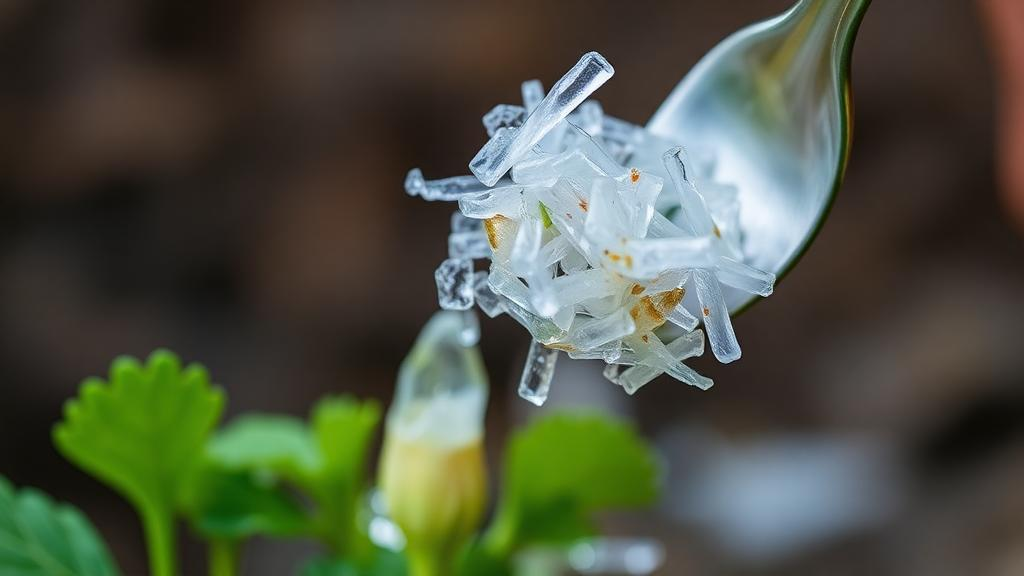
A sweeping new review published in Discover Soil has pulled together the scattered evidence on one of the most unsettling environmental stories of our time: the movement of microplastics and nanoplastics from contaminated farmland into the edible tissues of the crops we eat. The analysis, led by Muhammad Khizar Hayat of Sakarya University of Applied Sciences and an international team of co-authors, synthesizes peer-reviewed research published between 2000 and 2025 and arrives at a stark conclusion. Agricultural soils, once considered merely a sink for plastic debris, are now understood to be an active conduit through which plastic particles travel from degraded mulch films, sewage sludge and wastewater irrigation into roots, stems, leaves and ultimately human diets.
The scale of the contamination problem begins with the sheer volume of plastic deployed in modern agriculture. According to a landmark assessment by the Food and Agriculture Organization cited in the review, more than 12.5 million tons of plastic products are used annually in plant and animal agriculture worldwide. Plastic mulch films, greenhouse covers, drip irrigation lines and silage wraps all fragment over time under ultraviolet radiation and mechanical abrasion, shedding particles that span the full size range of microplastics, defined here as particles between 1 micrometer and 5 millimeters, down to nanoplastics measuring roughly 1 to 150 nanometers. These particles are composed of common synthetic polymers including polyethylene, polypropylene, polystyrene, polyethylene terephthalate and polyvinyl chloride, and they occur as fragments, fibers, films, beads and pellets.
The review identifies three dominant pathways delivering plastics to farmland. The first is the direct degradation of plastic mulching films, which are left in fields season after season and break down in place. The second is the land application of sewage sludge, or biosolids, which are rich in nutrients but also concentrate the microplastics that survive wastewater treatment. Treatment plants remove between 57 and 99 percent of incoming microplastics, but those captured particles accumulate in sludge at a median concentration of 22.41 particles per gram. Globally, the review estimates that between 8.2 times ten to the tenth and 1.29 times ten to the fifteenth microplastic particles, weighing between 0.4 and 6,430 tons, enter terrestrial environments through biosolids each year. Regional contributions are substantial: roughly 26,042 tonnes of microplastic-laden biosolids are recycled onto farmland annually in the European Union, about 21,249 in the United States, 13,660 in China, 1,518 in Canada and 1,241 in Australia.
The third pathway is wastewater irrigation, an increasingly common practice in water-scarce regions where treated effluent still carries microplastics that conventional treatment cannot fully remove. Field measurements reinforce the picture of accumulation. In agricultural facility soils, concentrations peak in the top 10 centimeters at 896.5 items per kilogram, dominated by polypropylene and polyethylene fibers that make up 72.2 percent of the particles, a profile the review classifies as risk level 4. Coastal plain farmland in China averages 314 items per kilogram, and a semi-arid barley system in Spain showed that sludge amendments containing 5,972 to 7,771 microplastics per kilogram of dry weight added roughly 16,000 particles to treated plots, where concentrations remained elevated and relatively constant over time. Notably, surface runoff mobilized only 0.2 to 0.4 percent of the added particles, suggesting that semi-arid agricultural soils act as long-term accumulators rather than temporary way stations.
Once embedded in the soil matrix, these particles do not sit inertly. The review documents measurable degradation of soil physicochemical properties, including altered bulk density and aggregate stability, alongside disruption of native microbial communities and their enzymatic activities. A global meta-analysis synthesized in the review found that while low concentrations of macroplastics, 30 to 240 kilograms per hectare, and microplastics, 0.01 to 100 milligrams per kilogram, sometimes produced no significant effects, higher concentrations and prolonged exposure consistently damaged crop growth and soil health. Plastic content, polymer type, particle size and the specific crop or soil animal involved emerged as the key variables governing these responses. The consequences for plants include compromised nutrient uptake, reduced photosynthetic efficiency and diminished biomass, with polystyrene particles as small as 0.08 micrometers at concentrations of 2,000 milligrams per liter producing the strongest inhibition of pea seed germination and growth.
The most consequential finding concerns translocation, the physical movement of particles from soil into plant tissue. Because intact microplastics are too large to pass through plant cell walls, direct penetration of root tissue was long considered implausible. The review, however, details a growing body of evidence that particles exploit alternative routes. Research on tobacco plants showed that while 100-nanometer polystyrene beads were not absorbed, beads of 20 to 40 nanometers were taken up directly through the cell wall. Fluorescently tagged 0.2-micrometer polystyrene microbeads were observed lodged in the mucilage layer outside the root cap, and a crack-entry mode has been documented whereby submicrometer particles exploit fissures at lateral root junctions to bypass the plant’s outer defenses. Foliar uptake adds another dimension: nanoplastics deposited on leaves can move through the plant’s vascular system, with maize studies demonstrating leaf-to-root translocation of particles whose behavior depends on their surface charge.
Inside the plant, the particles inflict damage through both physical and chemical mechanisms. Transmission electron microscopy of onion roots treated with polystyrene nanoplastics revealed cytoplasm densely packed with electron-dense structures, likely lipid bodies not yet mobilized, indicating cellular stress. Nanoplastic exposure triggers overproduction of reactive oxygen species, oxidative damage to DNA and lipids, and disruption of photosynthetic pigments. Shape matters as much as chemistry: in carrot studies, films and fibers reduced germination velocity, possibly by altering soil water dynamics, physically blocking pores or releasing toxic leachates, even though final germination percentages remained intact. Weathered plastic has even been shown to reduce seed germination across generations, with mother plants exposed to aged plastic producing seeds with impaired germination in the coastal dune species Cutandia maritima.
The review is candid that the human health implications remain incompletely quantified, but the pathway is clear. Particles that accumulate in edible tissues create a direct route of dietary exposure, and microplastics are known to act as vectors for other contaminants, adsorbing persistent organic pollutants, heavy metals and antibiotic-resistant microorganisms onto their large surface areas while simultaneously leaching plastic monomers and additives. The authors emphasize that standardized detection methods are urgently needed, since inconsistent analytical techniques make it difficult to compare concentrations across studies, and that transport models spanning from the cellular to the landscape scale are still in their infancy.
Mitigation, the review argues, must operate on multiple fronts simultaneously. Policy frameworks such as the FAO and UNEP Voluntary Code of Conduct for the Sustainable Use and Management of Plastics in Agriculture outline lifecycle management, promotion of biodegradable materials and circular economy approaches, while the European Union’s Directive 2019/904 and Circular Economy Action Plan, France’s mandate for biodegradable mulch films and China’s national standard on film thickness represent concrete regulatory steps. On the remediation side, physical techniques such as sieving and density separation achieve laboratory recoveries above 80 to 90 percent but remain practical only for small, heavily contaminated hotspots. Bioremediation offers broader promise: bacteria, fungi and actinomycetes secrete oxidases, hydrolases and alkane monooxygenases that depolymerize polyethylene, polystyrene, PET and polypropylene, with particularly potent degraders isolated from the guts of Zophobas atratus larvae. Phytoremediation adds another layer, as alfalfa grown in contaminated soil has been shown to enhance biodegradation of PET and polypropylene through combined root exudate and microbial activity.
Perhaps the most immediately actionable finding involves biochar, the carbon-rich material produced by pyrolyzing agricultural residues. Because of its porous structure and high surface area, biochar can adsorb microplastics, heavy metals and organic pollutants, limiting their transport through soil profiles and reducing plant uptake, while simultaneously improving soil aggregation, water-holding capacity and microbial diversity. Biochar-clay composites have shown high capacities for trapping microplastics in filtration experiments, and biochar derived from Solidago canadensis significantly enhanced soil enzyme activities and microbial biomass in soils contaminated with polyethylene and polylactic acid particles. Combined with conservation tillage, diverse crop rotations and carefully screened organic amendments, the review concludes, such strategies can buffer soils against the plastic burden already in the ground. But the authors are unequivocal that the deeper solution lies upstream: cutting avoidable plastic use, accelerating the transition to certified biodegradable alternatives, overhauling waste management and recycling infrastructure, and investing in the long-term ecological and toxicological research needed to quantify what the Plasticene era has quietly deposited on the world’s dinner plates.
Subject of Research: Microplastic and nanoplastic translocation from contaminated agricultural soils into food crops
Article Title: Assessing microplastic translocation from contaminated agricultural soils to food crops
Article References: Hayat, M. K., Arif, M., Turan, F., Mahmud, M. N., Batool, R., Cengiz, R., Tasnim, N., Shrabonti, R. M., & Billah, J. (2026). Assessing microplastic translocation from contaminated agricultural soils to food crops. Discover Soil, 3(1), Article 124. https://doi.org/10.1007/s44378-026-00281-2
Image Credits: AI Generated
DOI: 10.1007/s44378-026-00281-2
Keywords: microplastics, nanoplastics, agricultural soils, food crops, sewage sludge, plastic mulch, wastewater irrigation, soil health, plant uptake, food security, biochar, bioremediation
Cite Scienmag News
Alan Morgan. (October 3, 2026). From Field to Fork: Microplastics Are Invading the Food We Grow. Scienmag. https://scienmag.com/from-field-to-fork-microplastics-are-invading-the-food-we-grow/
Alan Morgan. "From Field to Fork: Microplastics Are Invading the Food We Grow." Scienmag, 3 October 2026, https://scienmag.com/from-field-to-fork-microplastics-are-invading-the-food-we-grow/. Accessed 3 October 2026.
Alan Morgan. "From Field to Fork: Microplastics Are Invading the Food We Grow." Scienmag. October 3, 2026. https://scienmag.com/from-field-to-fork-microplastics-are-invading-the-food-we-grow/


