


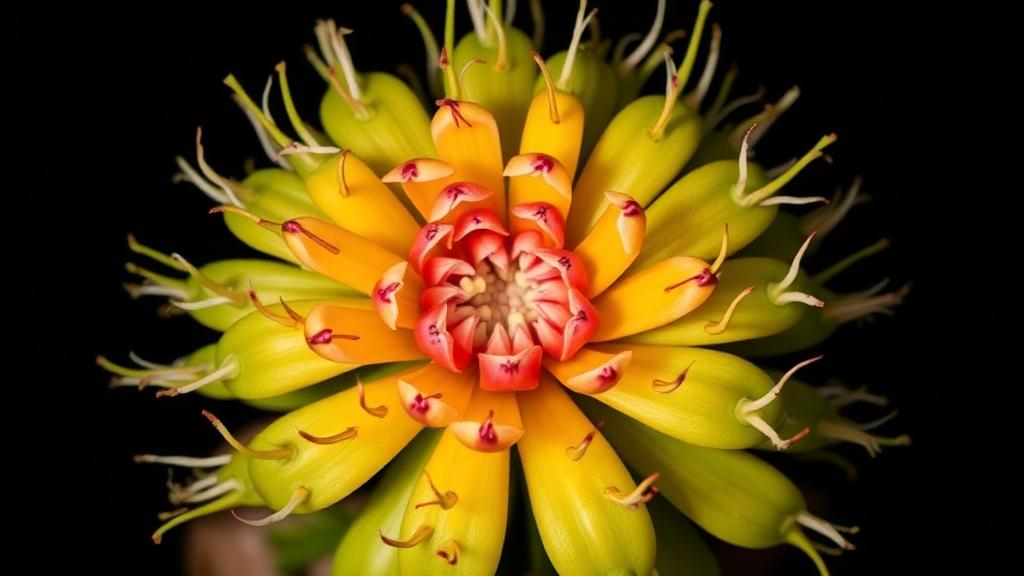
Deep in the arid landscapes of Morocco grows a succulent plant that local healers have trusted for generations to mend wounds, soothe aching joints, and calm pain. Known across the country as Shbarto, Asburto, or Ashbardou, Kleinia anteuphorbium is found nowhere else on Earth. A new comprehensive review published in the journal Plant Biosystems has now pulled together everything science knows about this strictly endemic species, from its tangled taxonomic history to the chemistry of its sesquiterpene-rich tissues and the laboratory evidence behind its traditional reputation. The result is both a celebration of Moroccan ethnobotanical heritage and a sober reminder of how much work remains before folk knowledge can be translated into validated medicine.
The review, led by Aya Khouchlaa of the Laboratory of Microbial Biotechnology and Bioactive Molecules at Sidi Mohammed Ben Abdellah University in Fez, together with colleagues in Morocco, China, and Rabat, systematically combed the major scientific databases, including Scopus, SciFinder, Web of Science, Wiley Online Library, SpringerLink, PubMed, and Google Scholar. The team gathered every available record describing the plant’s ethnopharmacological uses, taxonomy, geographical distribution, secondary metabolite chemistry, and biological properties. Their synthesis confirms that K. anteuphorbium occupies a distinctive place in Moroccan folk medicine, where it has long been applied against rheumatism, wounds, injuries, acne, back pain, and lesions, and has also been used as a sedative for pain relief.
Understanding the plant begins with its remarkable biogeography. K. anteuphorbium is a member of the Asteraceae family, the vast daisy clan that includes sunflowers and chamomile, and it belongs to the tribe Senecioneae, a group whose classification has shifted repeatedly over the past century. The species was originally described under the genus Senecio, and older literature frequently refers to it as Senecio anteuphorbium, a name that still appears in much of the chemical and pharmacological work discussed in the review. Molecular phylogenetic studies of Senecioneae, including analyses based on internal transcribed spacer sequences, revealed that the broadly defined genus Senecio was not a natural group, prompting a reclassification of many African succulent taxa into Kleinia. Morphological and anatomical work on African succulent Senecio species has supported this reclassification, placing K. anteuphorbium among a lineage of fleshy-stemmed plants adapted to dry environments.
That taxonomic history matters for more than nomenclatural tidiness. Because the plant has been studied under two different scientific names, researchers risk overlooking relevant literature, and the review’s authors explicitly bridge the two naming traditions. The species’ restricted range adds another layer of urgency. Strictly endemic to Morocco, and catalogued among the country’s rare and threatened vascular plants, K. anteuphorbium is part of the distinctive flora of southwestern Morocco, a region whose phytogeographical significance has been compared with that of the Canary Islands, where a close relative, Kleinia neriifolia, evolved in isolation. Endemism of this kind makes the species both a potential treasure trove of unique chemistry and a conservation concern, since a narrow distribution leaves a species vulnerable to habitat change and overharvesting.
The chemical heart of the story lies in sesquiterpenes, a class of fifteen-carbon terpenoid molecules built from three isoprene units and famous throughout the plant kingdom for their defensive roles and biological activities. Phytochemical investigations of K. anteuphorbium, some dating back decades, have identified a suite of sesquiterpene derivatives, including germacrene-type compounds and tricyclic sesquiterpenes isolated in classical phytochemistry studies of the species when it was still classified as Senecio anteuphorbium. Beyond these core metabolites, analyses of the plant’s essential oil have characterized its volatile composition, and studies of extracts have reported measurable phenolic and flavonoid content alongside proanthocyanidins, the condensed tannins that contribute antioxidant capacity in many medicinal plants.
Laboratory studies have begun to test whether this chemistry translates into the bioactivities that traditional use implies. In vitro investigations of extracts and compounds from K. anteuphorbium have demonstrated antioxidant effects, consistent with the presence of phenolic compounds capable of scavenging reactive oxygen species. Antifungal activity has also been reported, an observation that aligns with the broader literature on essential oils, whose terpenoid constituents can disrupt fungal cell membranes. Anti-inflammatory effects have been documented as well, providing a plausible mechanistic thread connecting the plant’s chemistry to its folk applications against rheumatism, injuries, and pain. Comparative work has even examined K. anteuphorbium alongside other Moroccan medicinal species, finding anti-inflammatory and antioxidant activity that supports its place in the national pharmacopoeia.
Some of the most intriguing findings sit outside medicine altogether. Materials scientists have explored the plant as a green corrosion inhibitor, reporting that extracts of Senecio anteuphorbium can protect S300 steel in acidic media, with follow-up work using solvent fractions to understand the inhibition mechanism at the molecular level. Ecologists have taken a different angle, analyzing the volatile compounds in the essential oil and demonstrating an allelopathic effect, meaning the plant’s chemical emissions can influence the growth of neighboring vegetation. These studies, though far from the healer’s kit, underscore how a single endemic species can generate value across pharmacology, agriculture, and industrial chemistry, and they reinforce the case for careful chemical characterization of its metabolites.
The review’s authors are careful to frame these results as promising but preliminary. Nearly all of the pharmacological evidence comes from in vitro assays, which measure activity in test tubes or cell cultures but say little about whether the same effects occur in a living body at achievable doses. No clinical trials have validated the plant’s therapeutic efficacy, and the molecular mechanisms underlying its anti-inflammatory, antioxidant, and antifungal actions remain to be elucidated. The authors call for in-depth pharmacological studies to identify the active principles, define their targets, and establish dose-response relationships. Equally important, they stress that toxicological assessments are needed before any medicinal use can be considered safe, a point of particular relevance for a species in the Senecioneae tribe, a group known in other members to produce pyrrolizidine alkaloids, compounds with well-documented hepatotoxic risks.
The safety question highlights a broader tension in ethnopharmacology. Traditional knowledge, accumulated over generations of Moroccan healers, offers an invaluable screening tool that has repeatedly pointed researchers toward biologically active plants. Yet tradition is not a substitute for toxicology, and the gap between folk practice and evidence-based medicine can only be closed with rigorous preclinical and clinical evaluation. For K. anteuphorbium, that path would involve standardized extraction protocols, chemical fingerprinting of preparations, bioassay-guided fractionation to isolate the responsible compounds, and systematic safety testing in animal models before any human application could be contemplated. The review positions itself as the roadmap for that journey, consolidating a scattered literature that spans French colonial-era botanical surveys, twentieth-century phytochemistry, and twenty-first-century pharmacology.
There is also a conservation dimension that the authors and the wider botanical community cannot ignore. Morocco’s endemic flora faces pressure from climate change, land-use transformation, and unsustainable harvesting of medicinal species, and plants with documented healing reputations are often the most heavily collected. If K. anteuphorbium’s bioactive sesquiterpenes prove valuable, the sustainable answer lies in cultivation, controlled propagation, and possibly the synthesis or hemisynthesis of key compounds rather than wild harvest. Documenting the species’ ethnobotanical uses, as this review does, also helps preserve the cultural knowledge of the communities who have stewarded the plant, knowledge that is itself vulnerable to erosion as younger generations move away from traditional healing practices.
For now, Shbarto remains what it has always been: a plant of the Moroccan drylands, carrying centuries of healing lore in its succulent stems and a chemistry that modern instruments are only beginning to decode. The new review transforms that scattered knowledge into a coherent scientific baseline, confirming that the plant’s extracts show real antioxidant, antifungal, and anti-inflammatory activity in the laboratory while insisting, correctly, that the distance between a test tube and a treatment is long and demanding. As researchers take up the challenge of mechanism, efficacy, and safety, Kleinia anteuphorbium stands as a compelling case study of how endemic flora, traditional medicine, and rigorous pharmacology can converge, provided the science keeps pace with the folklore and the plant itself is protected long enough to yield its secrets.
Subject of Research: Ethnomedicinal uses, phytochemistry, and pharmacological effects of the Moroccan endemic plant Kleinia anteuphorbium
Article Title: Ethnomedicinal uses, phytochemistry, and pharmacological effects of Kleinia anteuphorbium: A review
Article References: Khouchlaa, A., Fatna, Z., Lee, L.-H., Omari, N. E., Bouyahya, A., & Khamar, H. (2026). Ethnomedicinal uses, phytochemistry, and pharmacological effects of Kleinia anteuphorbium: A review. Plant Biosystems, 160(4), Article 231. https://doi.org/10.1007/s44473-026-00218-1
Image Credits: AI Generated
DOI: 10.1007/s44473-026-00218-1
Keywords: Kleinia anteuphorbium, Morocco, ethnomedicine, phytochemistry, sesquiterpenes, antioxidant, antifungal, anti-inflammatory, endemic plants, Asteraceae, traditional medicine, plant conservation
Cite Scienmag News
Alan Morgan. (October 3, 2026). Morocco’s Endemic Healing Succulent Kleinia anteuphorbium Under the Scientific Spotlight. Scienmag. https://scienmag.com/moroccos-endemic-healing-succulent-kleinia-anteuphorbium-under-the-scientific-spotlight/
Alan Morgan. "Morocco’s Endemic Healing Succulent Kleinia anteuphorbium Under the Scientific Spotlight." Scienmag, 3 October 2026, https://scienmag.com/moroccos-endemic-healing-succulent-kleinia-anteuphorbium-under-the-scientific-spotlight/. Accessed 3 October 2026.
Alan Morgan. "Morocco’s Endemic Healing Succulent Kleinia anteuphorbium Under the Scientific Spotlight." Scienmag. October 3, 2026. https://scienmag.com/moroccos-endemic-healing-succulent-kleinia-anteuphorbium-under-the-scientific-spotlight/


