


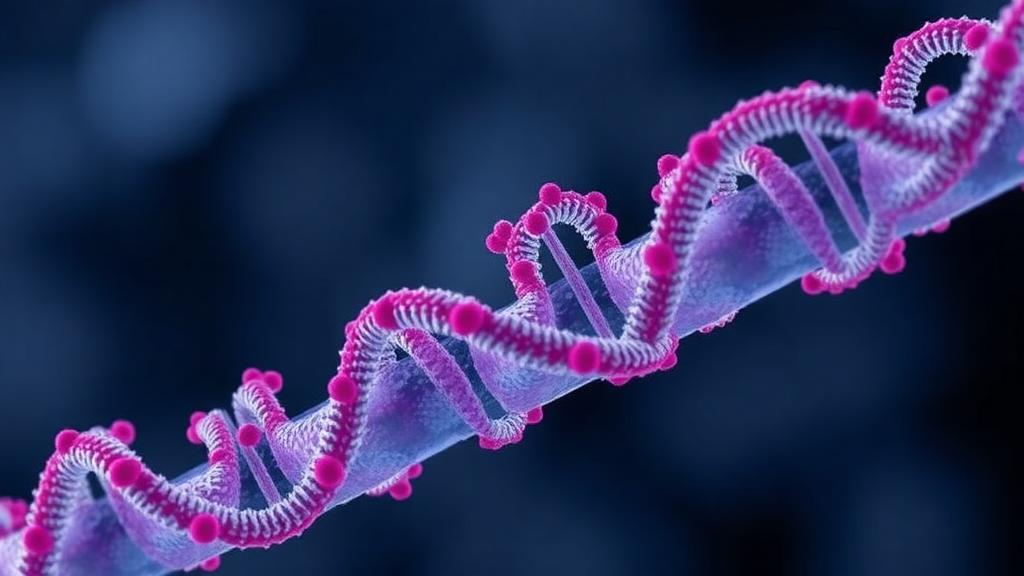
Epigenetics has spent the past two decades promising to rewrite the rules of biology. The idea that chemical tags sitting on top of DNA can switch genes on and off, that these tags can be shaped by diet, stress, pollution and poverty, and that some of them might even be passed down through generations, has electrified scientists, unsettled philosophers and captured the public imagination in a way few areas of molecular biology ever have. Now, a journal dedicated to the field is formally acknowledging that this science cannot be understood, or responsibly practised, in isolation from the society that funds it, fears it and hopes to benefit from it. Epigenetics Communications has launched a new section called Epigenetics and Society, a dedicated forum for theoretical, ethical, legal, social and political appraisal of the discipline, and its editors are inviting contributions from well beyond the laboratory bench.
The editorial announcing the section, published as an open-access article in the journal, was written by Luca Chiapperino of the University of Lausanne, Eline Bunnik of Erasmus MC in Rotterdam, and Gerard J. van den Berg of the University of Groningen. Their argument is straightforward but ambitious: epigenetics sits at a crossroads where biology meets the social world so directly that the two cannot be disentangled, and the research community needs a stable venue where life scientists, ethicists, philosophers, historians and social scientists can interrogate the field together. The new section will accept original research, reviews, perspectives and correspondence pieces, and the editors explicitly welcome authors from inside and outside academia. It is an unusual move for a molecular life sciences journal, and it reflects a growing recognition that the questions epigenetics raises are too big for any single discipline to answer alone.
The first pillar of the new section concerns the ethical, legal and social aspects of epigenetic research, often abbreviated to ELSA. The editors point out that this body of scholarship has accumulated for years without settling some of its most fundamental questions. One of the sharpest is the role epigenetics should play in public health promotion. If the science can be read as a molecular account of how social determinants of health, such as deprivation, stress and environmental exposures, become inscribed in our biology and shape disease predispositions, does that strengthen the case for social and community interventions, or does it instead invite a rhetoric of personal responsibility, in which individuals are urged to make positive lifestyle changes to protect their epigenomes? The editorial notes that the ELSA literature remains divided on how public representations of epigenetic knowledge should frame modifiable disease risks, and on what the field implies for the unfair distribution of environmental and transgenerational risks across societies.
Among the most technically provocative issues the section hopes to address is epigenetic editing. Techniques derived from CRISPR-Cas systems can now be repurposed not to cut and rewrite the DNA sequence itself, but to add, remove or reposition the chemical marks that regulate gene expression. Because these marks are, in principle, transient and reversible, epigenetic editing is often assumed to be a safer and less controversial option than genomic editing, which makes permanent, heritable changes to the genetic code. The editors argue that this assumption deserves scrutiny rather than complacency. A decade of debate around genome editing has crystallised a set of ethical intuitions, and the reversible nature of epigenetic modifications challenges them in ways that have not yet been properly dissected. As epigenetic editing approaches clinical translation, the section will seek work that maps the specific concerns and opportunities of the technology on its own terms, rather than treating it as a footnote to the genome editing debate.
The ethical agenda extends to the conduct of research itself. The editors invite contributions on best practices for study design and on the rules of engagement for participants in epigenetic studies, with particular attention to vulnerable populations. This is not an abstract concern. Epigenetic studies increasingly involve refugees, asylum seekers, marginalised communities and people exposed to environmental harms, groups for whom the promise of molecular insight into their suffering carries real risks of stigmatisation, re-identification and exploitation. The section also welcomes ELSA assessments of understudied topics, including the societal concerns attached to the epigenetic engineering of plants, an area where agricultural applications may be outpacing public deliberation. By bringing these questions into a life sciences journal rather than confining them to bioethics periodicals, the editors hope to reach the researchers whose daily decisions actually shape how such studies are designed and communicated.
A second key dimension of the section concerns the clinical promise and peril of epigenetic technologies. The editors are interested in assessments of the utility and limitations of existing and future applications in the diagnosis, stratification and prognosis of disease, along with the risks these applications carry and the models needed for their responsible clinical implementation. Epigenome-wide association studies have proliferated, machine learning approaches are being applied to DNA methylation data to build diagnostic and classification tools, and epigenetic risk-predictive screening for cancers is already being debated. Each of these developments raises questions about validity, interpretability and equity that the editors want examined before, not after, the technologies reach the clinic. The section will serve as a place where the technical literature on biomarkers and screening can be read alongside careful analysis of what these tools mean for patients and health systems.
On a deeper level, the editors encourage submissions that uncover the epigenetic mechanisms and pathways through which socio-economic conditions and life events influence later health outcomes. This is where epigenetics becomes genuinely interdisciplinary in a demanding sense. Epidemiologists and economists have documented transgenerational effects of childhood conditions on the health and education of subsequent generations, and epigenetics offers a candidate molecular substrate for such effects. Studies of this kind, the editorial argues, improve understanding of the long-run implications of social, economic and psychological factors for health and for societal inequality. If adversity leaves molecular traces that shape disease risk decades later, then epigenetics becomes not just a laboratory science but a lens on how inequality is biologically embedded, and potentially reproduced, across lifetimes and generations.
The third pillar of the section addresses the agendas, questions and research practices of epigenetics itself, including how these shape the societal circulation of the knowledge produced. A substantial body of empirical work in Science and Technology Studies has examined the intrinsic biases and limitations of epigenetic research practices, biases that may produce a controversial uptake of the science in public. Scholars in this tradition have analysed, for example, how assumptions about the causal primacy of maternal effects influence research on the developmental origins of health and disease, how gendered imaginaries structure knowledge of epigenetic programming, and how laboratory constructions of early-life adversity frame what counts as an intervention. The editors observe that this work is rarely brought to the attention of life scientists and seldom gains recognition beyond networks of social science collaboration. They are asking Science and Technology Studies scholars to condense their thick socio-anthropological analyses into short perspectives and correspondence articles suitable for a life sciences audience, with the explicit aim of improving the methods, designs and configurations of research that critics have found wanting.
Fourth, the section will serve as an outlet for philosophical, historical and socio-anthropological work on the theoretical and experimental foundations of epigenetics. This literature has interrogated how the field reiterates fundamental questions about life and biology, and how it challenges the established conception of the body as a self-contained entity. Epigenetics straddles disciplinary divides between the life and social sciences, and it straddles research traditions within biology itself, oscillating between mechanism and organicism, reduction and emergence, linear determination and plasticity. The editors argue that these seemingly abstract debates are far from idle. Definitional and methodological disagreements within epigenetics, including disputes over what global methylation measures actually signify and how the epigenetic timeline should be conceptualised, offer a prolific terrain for empirical and conceptual inquiry into foundational notions such as genes, genomes and organisms. They envision the section as a trading zone where theoretical analysis and pragmatic scientific relevance can productively engage with one another.
Underlying the whole enterprise is the notion of the biosocial, a term the editors use to describe a contested experimental space at the crossroads of the social and life sciences, one that captures complex, non-linear social-biological transitions in the shaping of the epigenome and situates biology within its material, social and ecological environments. The section welcomes honest reports on the challenges of interdisciplinary work towards a biosocial science of health, because collaboration, as the editors note, is a loaded practice: the encounter of different research cultures is intricate, power-driven, often frustrating and risky. Extending the journal’s stated openness to negative data beyond molecular biology, they invite accounts of interdisciplinary experimentations that succeeded and those that did not. The editors believe a venue that connects and integrates different communities of researchers may be a major enabler of a thriving epigenetic science, and that the time is ripe for collaborative approaches capable of structuring an effective contribution of epigenetics to societal flourishing.
Subject of Research: The ethical, societal and interdisciplinary appraisal of epigenetics research
Article Title: ‘Epigenetics and Society’: a forum for the theoretical, ethical and societal appraisal of a burgeoning science
Article References: Chiapperino, L., Bunnik, E., & van den Berg, G. J. (2022). ‘Epigenetics and Society’: a forum for the theoretical, ethical and societal appraisal of a burgeoning science. Epigenetics Communications, 2(1), Article 6. https://doi.org/10.1186/s43682-022-00013-x
Image Credits: AI Generated
DOI: 10.1186/s43682-022-00013-x
Keywords: epigenetics, ELSA, bioethics, epigenetic editing, CRISPR, biosocial science, Science and Technology Studies, public health, interdisciplinarity, DNA methylation, social determinants of health, Epigenetics Communications
Cite Scienmag News
Juliet Wilcox. (October 3, 2026). New Journal Section Puts Epigenetics on Trial: Ethics, Society and Science Collide. Scienmag. https://scienmag.com/new-journal-section-puts-epigenetics-on-trial-ethics-society-and-science-collide/
Juliet Wilcox. "New Journal Section Puts Epigenetics on Trial: Ethics, Society and Science Collide." Scienmag, 3 October 2026, https://scienmag.com/new-journal-section-puts-epigenetics-on-trial-ethics-society-and-science-collide/. Accessed 3 October 2026.
Juliet Wilcox. "New Journal Section Puts Epigenetics on Trial: Ethics, Society and Science Collide." Scienmag. October 3, 2026. https://scienmag.com/new-journal-section-puts-epigenetics-on-trial-ethics-society-and-science-collide/


