


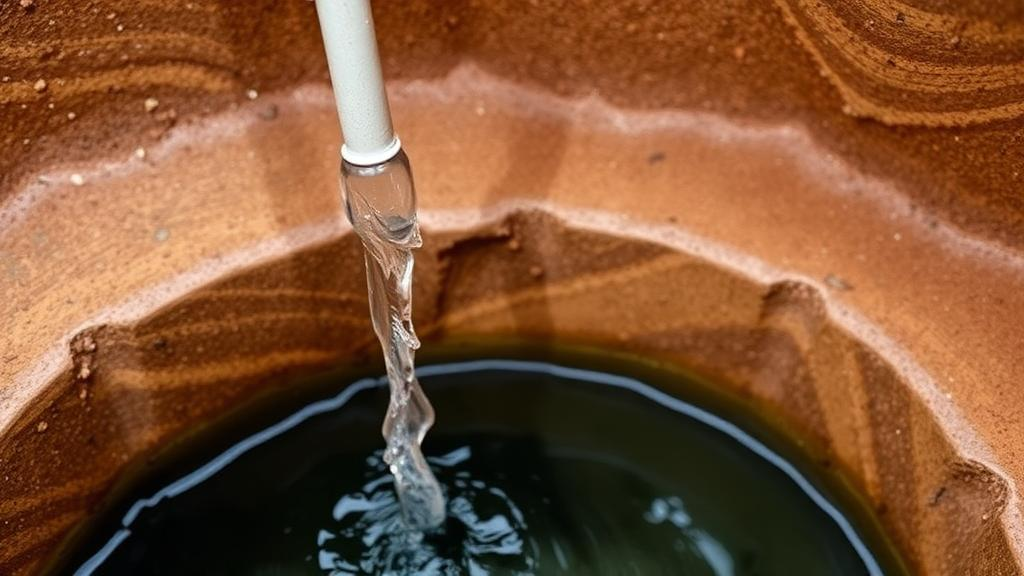
Beneath the red laterite soils of Tamale, one of West Africa’s fastest growing cities, an invisible emergency is unfolding in the water that hundreds of thousands of people drink every day. A new study of groundwater sources across the Tamale metropolis in Northern Ghana has found that both hand-dug wells and boreholes, the backbone of domestic water supply in this semi-arid region, are contaminated with faecal indicator bacteria at levels that frequently exceed national and international safety standards. The research, published in BMC Environmental Science, offers one of the most detailed recent portraits of microbial water safety in a city whose population and built footprint are expanding faster than its piped infrastructure can follow.
The stakes could hardly be higher. Groundwater is often assumed to be inherently safe because soil and rock layers filter out many contaminants as water percolates downward. Globally, it supplies drinking water to an estimated two billion people and constitutes roughly thirty percent of the planet’s available freshwater. In Ghana, national survey data show that groundwater sources, mainly boreholes and hand-dug wells, provide the primary drinking water for about 36.4 percent of households nationwide and 37.1 percent in the Northern region. Yet the new findings demonstrate that this reputation for safety can be dangerously misleading in densely settling urban catchments where sanitation lags behind growth.
Tamale is a case study in rapid, uneven urbanization. The city has grown from fewer than two thousand residents in 1907 to more than 232,000 by the 2010 census, and between 2001 and 2014 its built-up area expanded by an estimated 78 percent, an annual growth rate of 4.4 percent. The metropolis now encompasses the urban core, seventeen peri-urban communities and 115 villages spread across 922 square kilometres. Pipe-borne water, treated at a conventional facility at Dalun-Naawuni, reaches only part of this sprawl, and erratic supply, poor distribution to new suburbs and rising tariffs push households toward self-supply. The result is a dense scatter of boreholes and wells, many of them privately developed, poorly maintained and unprotected from the wastes of the settlements that surround them.
To assess the consequences, researchers from the Council for Scientific and Industrial Research Water Research Institute and partner institutions sampled twenty groundwater sites, ten hand-dug wells and ten boreholes, distributed across different suburbs using cluster and purposive sampling. Fieldwork took place during the 2022/23 lean season, when low rainfall means the aquifer reflects its true baseline condition rather than storm-driven dilution or flushing. Borehole samples were drawn after flaming the pump nozzle with ethanol-soaked cotton and purging the system for eight to twelve minutes, while well samples were collected with a flamed metallic sampler lowered to the water level. All samples reached the laboratory within two hours, where analysts used the membrane filtration technique standardized by the American Public Health Association, incubating total coliforms and Escherichia coli at 37 degrees Celsius and faecal coliforms at 44 degrees Celsius for roughly 24 hours.
The numbers are stark. In hand-dug wells, total coliform counts ranged from zero to 32,200 colony-forming units per 100 millilitres, with a median of 379. Faecal coliforms reached 18,000 cfu/100 ml, and E. coli, the single most reliable indicator of faecal contamination and a causative agent of diarrhoeal disease and urinary tract infections, was detected in half of the wells, with counts up to 16,000 cfu/100 ml. Seventy percent of wells tested positive for total and faecal coliforms. Boreholes fared better but not cleanly: half exceeded acceptable total coliform limits, twenty percent carried faecal coliforms above 200 cfu/100 ml, and although no borehole sample exceeded the E. coli guideline, the median total coliform count of 600 cfu/100 ml signals that contamination pathways exist even in these supposedly protected sources.
Physical measurements reinforced the microbial picture. Median turbidity, a measure of suspended particles that both shelters microbes and interferes with disinfection, stood at 78 NTU for wells and 119 NTU for boreholes, with individual readings as high as 234 and 182 NTU respectively, all far above the permissible range for potable water. Statistical testing, including Shapiro-Wilk normality checks, an unpaired t-test and the non-parametric Mann-Whitney U test, found no significant difference in turbidity between the two source types, suggesting the problem is catchment-wide rather than specific to one technology. Turbid water demands more treatment, raising costs for households and the informal water vendors who resell supplies, and it provides substrates on which bacteria can persist and multiply.
Perhaps the most alarming discovery came from antibiotic susceptibility testing. Confirmed E. coli isolates from the wells were challenged against eight antimicrobial agents using the Kirby-Bauer disk diffusion method on Mueller-Hinton agar. The isolates resisted six of them, ceftazidime, cefuroxime, augmentin, cefixime and, in some tests, gentamicin and nitrofurantoin, while remaining susceptible to the fluoroquinolones ciprofloxacin and ofloxacin. The finding means that people infected through contaminated groundwater face treatment options narrowed by resistance, and it adds Tamale’s water supply to the growing global map of environmental reservoirs of antimicrobial resistance, a phenomenon with direct implications for empirical treatment protocols in regional clinics.
Sanitary inspections, conducted with a World Health Organization risk assessment form adapted to local conditions, explained much of what the laboratory revealed. Inspectors scored each site against risk factors such as unsanitary covers, aprons smaller than one metre in radius, missing or faulty fences, nearby pollution sources and latrines within ten metres. Dug-wells scored between 1 and 7, with most falling into higher risk categories, while boreholes scored between 2 and 6 and achieved four low-risk ratings. The most frequent risk factors were other sources of pollution and unsanitary or inadequate covers and aprons. Notably, no latrines were found within ten metres of any well and no ponding within two metres of any borehole, the latter likely a seasonal effect of dry harmattan winds and rapid evaporation. Binomial regression suggested that a small apron increased the odds of high faecal coliform loading by a factor of 4.3, although the associations did not reach statistical significance at the 0.05 level.
Applying WHO infection risk classifications, in which any E. coli count above zero is unsafe, 1 to 10 cfu/100 ml is low risk, 11 to 100 is intermediate and above 100 is high, the team found that half of the dug wells posed no E. coli risk, twenty percent posed low risk, twenty percent intermediate and ten percent high risk. Boreholes conformed to the E. coli guideline entirely. The researchers attribute the boreholes’ relative advantage to deeper construction, intact contamination pathways, safe distancing from septic points and, in some cases, developers’ compliance with the Water Resource Commission’s requirement that groundwater points sit 100 feet from septic infrastructure. Still, the presence of coliforms in half of the boreholes means the barrier is not absolute, and the absence of delineated protection zones around some sites leaves them vulnerable as the city grows.
The authors conclude that periodic disinfection and proper maintenance of aprons, covers and auxiliary components of both wells and boreholes are essential, alongside stronger enforcement of metropolitan by-laws on water safety, subsidies for household treatment technologies and penalties for non-compliant private vendors. They also acknowledge limitations, including the modest sample size imposed by logistics and laboratory resources, and call for future work on pathogens such as Salmonella and Campylobacter and their resistance profiles. For now, the message for Tamale’s residents is clear: the water beneath their feet is not automatically safe, and in a city adding new suburbs faster than pipes, the microbial margin between a functioning well and a source of typhoid, diarrhoea and drug-resistant infection is being decided by maintenance, distance and vigilance rather than by geology alone.
Subject of Research: Microbial contamination and health risk assessment of groundwater in urbanizing Tamale, Northern Ghana
Article Title: Groundwater microbial quality and risk evaluation in a rapidly transforming urbanized area of Northern Ghana
Article References: Bekoe, E. M. O., Hayford, D., Quarcoo, G., & Yar, D. D. (2025). Groundwater microbial quality and risk evaluation in a rapidly transforming urbanized area of Northern Ghana. BMC Environmental Science, 2(1), Article 9. https://doi.org/10.1186/s44329-025-00022-w
Image Credits: AI Generated
DOI: 10.1186/s44329-025-00022-w
Keywords: groundwater, E. coli, coliforms, water quality, Tamale, Ghana, urbanization, sanitary inspection, antimicrobial resistance, boreholes, hand-dug wells, public health
Cite Scienmag News
Sloane Callahan. (October 3, 2026). Hidden Microbes in Tamale’s Wells Reveal a Growing Water Safety Crisis. Scienmag. https://scienmag.com/hidden-microbes-in-tamales-wells-reveal-a-growing-water-safety-crisis/
Sloane Callahan. "Hidden Microbes in Tamale’s Wells Reveal a Growing Water Safety Crisis." Scienmag, 3 October 2026, https://scienmag.com/hidden-microbes-in-tamales-wells-reveal-a-growing-water-safety-crisis/. Accessed 3 October 2026.
Sloane Callahan. "Hidden Microbes in Tamale’s Wells Reveal a Growing Water Safety Crisis." Scienmag. October 3, 2026. https://scienmag.com/hidden-microbes-in-tamales-wells-reveal-a-growing-water-safety-crisis/


