


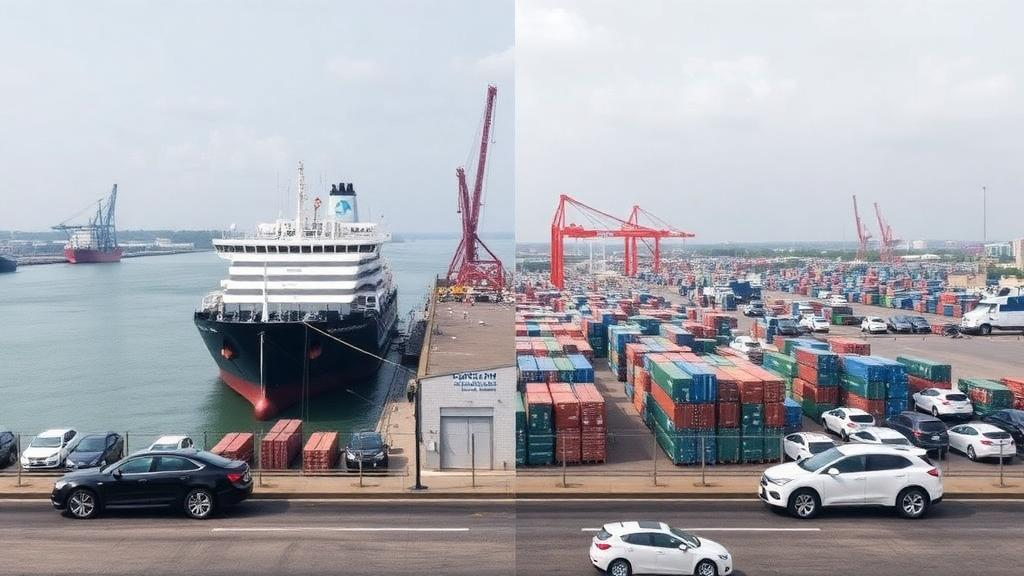
Port cities live a double environmental life. On one side of the waterfront, ferries, cruise ships and cargo vessels burn marine fuel and fill the harbor air with exhaust; on the other, buses, cars and delivery trucks thread through dense urban streets, releasing their own cocktail of pollutants and noise. For decades, researchers have tended to study these two traffic systems separately, which has made it difficult to say who is really responsible for the smog and din that residents endure. A new study from the Croatian port city of Split now puts both sources under the same statistical microscope, and its findings are a cautionary tale for any city hoping to blame its environmental problems on a single villain.
The research, published in the journal Environmental Monitoring and Assessment, was carried out by Luka Vukić, Anđela Bratić and Vjekoslav Mario Dragun of the Faculty of Maritime Studies at the University of Split. Between April and September 2024, the team deployed monitoring equipment across ten locations in the city, capturing 154 observations in the port area and 66 along a busy road corridor. They measured fine particulate matter known as PM2.5, coarser particles called PM10, and carbon monoxide, while also logging traffic intensity. Environmental noise was measured in the road corridor, and meteorological variables such as wind speed were recorded to help interpret the results. The approach was deliberately screening-level: rather than running an expensive reference-grade network, the researchers relied on low-cost sensors to make a comparative assessment feasible.
The headline numbers are striking. Mean concentrations of PM2.5 and PM10 were higher in the port area than along the road corridor, at 14.77 and 18.25 micrograms per cubic meter respectively, compared with 11.64 and 14.70 micrograms per cubic meter at the roadside sites. That pattern fits the intuition that ships, with their large engines and sulfur-bearing fuels, should dominate particulate pollution near the waterfront. Yet the story flips for carbon monoxide, a gas tightly linked to combustion engines in vehicles: the road corridor recorded a mean of 5.20 parts per million, nearly double the port figure of 2.91 parts per million. Each transport mode, in other words, leaves its own chemical fingerprint.
But here is where the study becomes genuinely instructive. When the researchers ran formal statistical comparisons between sampling occasions at the two types of location, the differences in PM2.5, PM10 and carbon monoxide were not statistically significant, with p-values of 0.218, 0.227 and 0.505 respectively. The raw averages looked different, but the variability from one measurement session to the next was large enough that the differences could not be confidently distinguished from chance. This is a common and underappreciated problem in urban environmental monitoring: short-duration campaigns capture snapshots of air that is constantly churned by weather, traffic schedules and seasonal shifts, and single averages can mislead.
To dig deeper, the team turned to correlation and regression analysis, and this is where the signal emerged. The number of vessels in the port showed a statistically significant but weak association with PM10 concentrations, explaining only about 8 percent of the variance, with an R-squared of 0.082 and a p-value below 0.001. Vehicle counts, by contrast, were moderately associated with maximum road-noise levels, with an R-squared of 0.236 and a p-value below 0.001. These are modest effect sizes, and the authors are candid about what they mean: neither ships nor cars can be isolated as the dominant driver of pollution in a complex port-city atmosphere using this kind of data alone.
The most robust findings came from multivariable models that accounted for clustering in the data. Even after controlling for other factors, vessel count remained positively associated with both PM2.5 and PM10 in the port area, with p-values below 0.001. Wind speed told the opposite story: higher winds were consistently associated with lower particulate concentrations, a textbook demonstration of atmospheric dispersion at work. When the breeze picks up, it sweeps accumulated particles out of the urban bowl; when the air stagnates, pollution from every source piles up. Meteorology, the study suggests, can mask or amplify the contribution of any single traffic source, which is why the researchers treated weather variables as essential context rather than an afterthought.
One further technical detail deserves attention. The researchers estimated the coarse particle fraction, essentially the share of particulate mass made up of larger particles, and found it to be similar between the port and road environments. This is significant because particle size carries clues about origin. Coarse particles often come from mechanical processes such as brake wear, tire abrasion, resuspended road dust and cargo handling, while fine particles are more characteristic of combustion. A similar coarse fraction in both settings hints that non-exhaust and dust-related processes may be as important as tailpipe or stack emissions, a conclusion that echoes a growing body of literature on non-exhaust vehicle emissions and port dust.
Why does this matter beyond Split? The health stakes are high. Long-term exposure to traffic-related air pollution has been linked in systematic reviews to cardiovascular and respiratory disease, and PM2.5 in particular is implicated in heart disease through well-documented biological pathways. Environmental noise is not a benign companion either; pooled laboratory studies have shown that road, railway and aircraft noise disrupt sleep, and epidemiological work has connected chronic noise exposure to hypertension and other cardiovascular effects. In a port city, residents may be exposed to both stressors simultaneously, and the combined burden could exceed what either source alone would suggest. Studies of European port cities have begun to quantify these maritime health impacts, and the Split data add a Mediterranean data point to that emerging picture.
The study also carries a practical message about monitoring technology. Low-cost sensors have proliferated worldwide, offering cities the ability to deploy dense networks at a fraction of the cost of reference-grade instruments, but they come with well-known calibration challenges and accuracy limitations. The Split team argues that these devices are genuinely useful for comparative, screening-level assessments, the kind of work that identifies hotspots and guides where more rigorous measurement should follow. That is an important middle ground between doing nothing and committing to a full-scale regulatory monitoring network. For many cities in developing regions and smaller ports that lack institutional budgets, this tiered approach may be the only realistic path to evidence-based environmental policy.
Perhaps the deepest takeaway is methodological humility. The authors conclude that the results indicate overlapping rather than uniquely attributable transport-source effects. In plain terms, the air in a port city is a shared product of ships, vehicles, weather, geography and urban form, and no single measurement campaign can cleanly apportion blame. For city planners, that means interventions should be evaluated across both domains at once: shore-power connections and cleaner marine fuels for the harbor, low-emission zones and traffic management for the streets, and noise mapping that treats the waterfront and the roadway as one continuous acoustic environment. For researchers, it means integrated assessments like this one, imperfect as they are, point the way forward. Split’s experience suggests that the question is not whether ships or cars pollute more, but how two overlapping systems of mobility combine to shape the air and soundscape of the cities that host them, and how a modest array of affordable sensors can begin to untangle that knot.
Subject of Research: Integrated assessment of road and maritime traffic impacts on urban air quality and noise in a port city
Article Title: Integrated assessment of road and maritime traffic impacts on urban air quality and noise in a port-city environment
Article References: Integrated assessment of road and maritime traffic impacts on urban air quality and noise in a port-city environment. (n.d.). https://doi.org/10.1007/s10661-026-15986-8
Image Credits: AI Generated
DOI: 10.1007/s10661-026-15986-8
Keywords: air quality, port city, maritime emissions, road traffic, PM2.5, PM10, carbon monoxide, noise pollution, low-cost sensors, Split Croatia, environmental monitoring, shipping
Cite Scienmag News
Russell Cooper. (October 3, 2026). Ships and Cars Both Pollute Port Cities, but Split Study Shows No Single Culprit. Scienmag. https://scienmag.com/ships-and-cars-both-pollute-port-cities-but-split-study-shows-no-single-culprit/
Russell Cooper. "Ships and Cars Both Pollute Port Cities, but Split Study Shows No Single Culprit." Scienmag, 3 October 2026, https://scienmag.com/ships-and-cars-both-pollute-port-cities-but-split-study-shows-no-single-culprit/. Accessed 3 October 2026.
Russell Cooper. "Ships and Cars Both Pollute Port Cities, but Split Study Shows No Single Culprit." Scienmag. October 3, 2026. https://scienmag.com/ships-and-cars-both-pollute-port-cities-but-split-study-shows-no-single-culprit/


