


When a major earthquake strikes a city, the building that matters most is often the one people rarely think about: the hospital. Emergency departments must keep operating, operating theatres must stay sterile and powered, and sensitive medical equipment must survive the shaking intact. Yet conventional seismic design, which focuses on preventing structural collapse, says little about whether a hospital can actually function in the hours and days after the ground stops moving. A new study published in the Bulletin of Earthquake Engineering by Elías Equihua, Esteban Flores and Jorge L. Alamilla of the Instituto Politécnico Nacional in Mexico City tackles this gap head-on, offering one of the most detailed probabilistic assessments to date of how base-isolated hospitals perform over their entire service life.
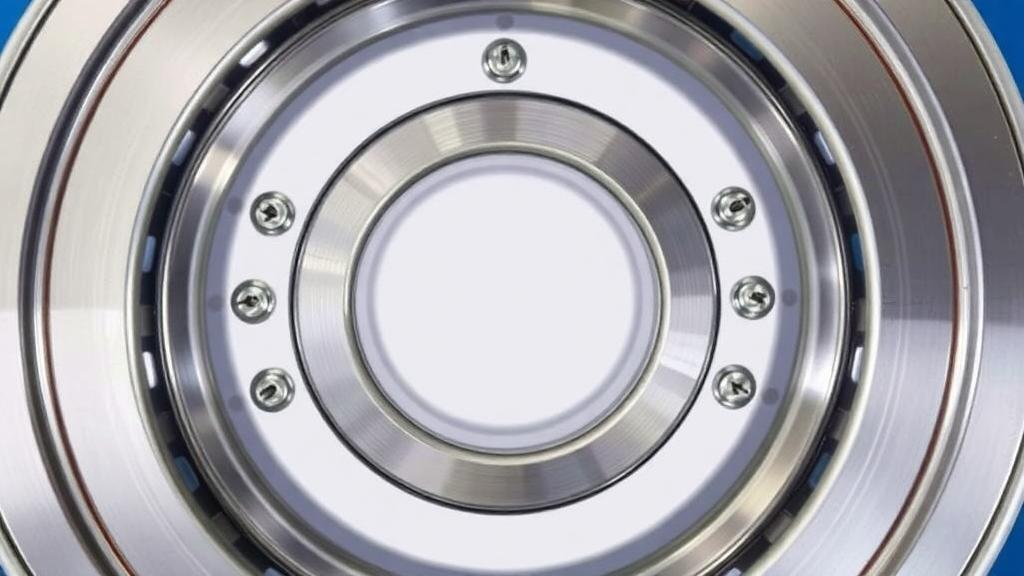
The research team focused on reinforced concrete hospital buildings resting on friction pendulum isolation systems, devices that sit between the building and its foundation and allow the superstructure to slide gently during strong shaking rather than deform violently. Two technologies were compared: the single friction pendulum (SFP) system, a proven design with one concave sliding surface, and the triple friction pendulum (TFP) system, a more sophisticated bearing whose four spherical surfaces engage sequentially as shaking intensifies. The TFP’s adaptive behavior means it is stiff under small motions, softer under moderate earthquakes, and stiffens again under extreme events, effectively retuning itself to each stage of the ground motion.
What makes the study distinctive is its life-cycle, probabilistic framing. Rather than testing a handful of design-level earthquakes, the authors computed annualized performance rates derived from site-specific seismic hazard curves, integrating the effects of every earthquake expected over the building’s lifetime, from frequent moderate shocks to rare catastrophic ones. Collapse safety was quantified through both the probability of collapse and the mean annual frequency of collapse. Structural performance was tracked through interstory drift, the relative displacement between floors that governs damage to both the frame and its partitions, cladding and mechanical systems. Functional continuity was assessed through peak floor accelerations, used as an acceleration-based proxy for the survival of sensitive equipment such as imaging machines, laboratory analyzers and intensive-care devices.
The modeling effort was substantial. Nonlinear response-history analyses were carried out in ETABS, with detailed hysteretic models capturing the behavior of the isolation bearings and the reinforced concrete superstructure. Concrete material properties were calibrated to Mexican production, and the hysteretic models of the frames drew on well-established formulations for confined concrete and degrading reinforced concrete response. The isolation systems themselves were designed under two regulatory approaches: a performance-based procedure aligned with the seismic isolator standard associated with ASCE 7, and the Mexican seismic provisions of Mexico City’s complementary technical norms, reflecting the study’s setting in one of the world’s most seismically exposed capitals.
The choice of Mexico City as the testbed is significant. The metropolis sits on a deep soft-lakebed basin that dramatically amplifies long-period ground motions, exactly the kind of shaking that resonates with flexible isolated buildings. The 1985 and 2017 earthquakes exposed the vulnerability of medical infrastructure, with hospitals suffering structural and nonstructural damage and, in some cases, losing the ability to treat patients precisely when demand for care peaked. The 2020 Mw 7.5 Oaxaca earthquake, arriving during the COVID-19 pandemic, further underscored how fragile hospital continuity can be. The new framework speaks directly to that experience by treating functionality, not just survival, as a design objective.
The results deliver a clear verdict. Across the configurations investigated, the TFP-based hospitals consistently achieved lower collapse probabilities, reduced interstory drift demands, and significantly lower peak floor accelerations than their SFP counterparts. The triple pendulum’s multi-stage sliding mechanism limited bearing displacements and kept the superstructure response within tighter bounds across the full spectrum of hazard, translating into enhanced structural safety and stronger functional continuity over the life cycle. The SFP configuration, by contrast, showed lower reliability, a higher likelihood of damage, and less effective protection of acceleration-sensitive equipment, meaning that even a hospital whose frame survives an earthquake could lose imaging suites, operating rooms or laboratory capacity to shaking-induced equipment failure.
The acceleration findings deserve particular attention from hospital planners. In conventional fixed-base buildings, floor accelerations can reach levels many times the ground acceleration at upper stories, tearing equipment from its anchors and rupturing piping and ductwork. Isolation dramatically cuts these demands, but the study shows the degree of protection depends strongly on the bearing technology. Because TFP bearings maintain lower transmitted accelerations across a wider range of earthquake intensities, they offer a more robust guarantee that medical equipment remains operational without costly post-event inspection and repair. In resilience terms, that difference can determine whether an emergency department admits patients within hours of a disaster or remains shuttered for weeks.
The framework’s annualized approach also changes how engineers can communicate risk. Instead of reporting performance against a single design earthquake with a fixed return period, the method expresses collapse risk, drift damage and equipment vulnerability as mean annual frequencies, quantities that can be summed over decades of service and compared directly across design alternatives. This gives hospital owners, insurers and regulators a common currency for weighing the higher upfront cost of advanced isolation against the expected lifetime losses avoided, including downtime, repair and the immeasurable social cost of a hospital that fails its community. The authors note that the approach unifies collapse safety, structural performance and functional continuity within a single probabilistic assessment, something conventional code-based design does not attempt.
Broader context supports the urgency of this work. Post-earthquake investigations after the 2010 Chile earthquake and the 2016 Kumamoto earthquake in Japan documented how nonstructural damage and equipment failures, far more than structural collapse, degraded hospital function. Researchers have repeatedly found that hospitals are among the most functionally fragile critical facilities, dependent on a chain of power, water, medical gases and functioning devices that shaking can sever at multiple links. By explicitly modeling acceleration-sensitive contents as part of the performance metric, the Mexican study moves hospital design closer to the resilience objectives that agencies such as PEER have long advocated, in which buildings are expected to remain operational, not merely standing, after design-level events.
The study’s implications extend beyond Mexico. As more countries adopt seismic isolation for critical facilities, and as new regulations for isolation in Mexico City come into force, the choice between simpler single-pendulum systems and adaptive multi-pendulum systems will recur in design offices worldwide. The evidence assembled here suggests that for buildings whose mission demands uninterrupted operation, the extra complexity of the triple friction pendulum buys measurable, quantifiable resilience: fewer collapses, less damage, and a far better chance that the lights, monitors and ventilators stay on when the city outside is in crisis. The datasets, synthetic ground-motion records and numerical routines behind the analysis are available from the corresponding authors on reasonable request, offering a foundation for engineers seeking to apply the same life-cycle logic to their own critical facilities.
Subject of Research: Life-cycle seismic performance and functional continuity of base-isolated hospital buildings using friction pendulum systems
Article Title: Life-cycle performance assessment of resilient base-isolated hospitals: collapse safety, structural performance, and functional continuity
Article References: Equihua, E., Flores, E., & Alamilla, J. L. (2026). Life-cycle performance assessment of resilient base-isolated hospitals: collapse safety, structural performance, and functional continuity. Bulletin of Earthquake Engineering. https://doi.org/10.1007/s10518-026-02694-4
Image Credits: AI Generated
DOI: 10.1007/s10518-026-02694-4
Keywords: base isolation, friction pendulum systems, hospitals, seismic reliability, functional continuity, collapse safety, interstory drift, floor acceleration, life-cycle performance, triple friction pendulum, Mexico City, earthquake engineering
Cite Scienmag News
Violet Maxwell. (October 2, 2026). Triple Pendulum Bearings Emerge as the Safest Way to Keep Hospitals Running After Earthquakes. Scienmag. https://scienmag.com/triple-pendulum-bearings-emerge-as-the-safest-way-to-keep-hospitals-running-after-earthquakes/
Violet Maxwell. "Triple Pendulum Bearings Emerge as the Safest Way to Keep Hospitals Running After Earthquakes." Scienmag, 2 October 2026, https://scienmag.com/triple-pendulum-bearings-emerge-as-the-safest-way-to-keep-hospitals-running-after-earthquakes/. Accessed 2 October 2026.
Violet Maxwell. "Triple Pendulum Bearings Emerge as the Safest Way to Keep Hospitals Running After Earthquakes." Scienmag. October 2, 2026. https://scienmag.com/triple-pendulum-bearings-emerge-as-the-safest-way-to-keep-hospitals-running-after-earthquakes/


