


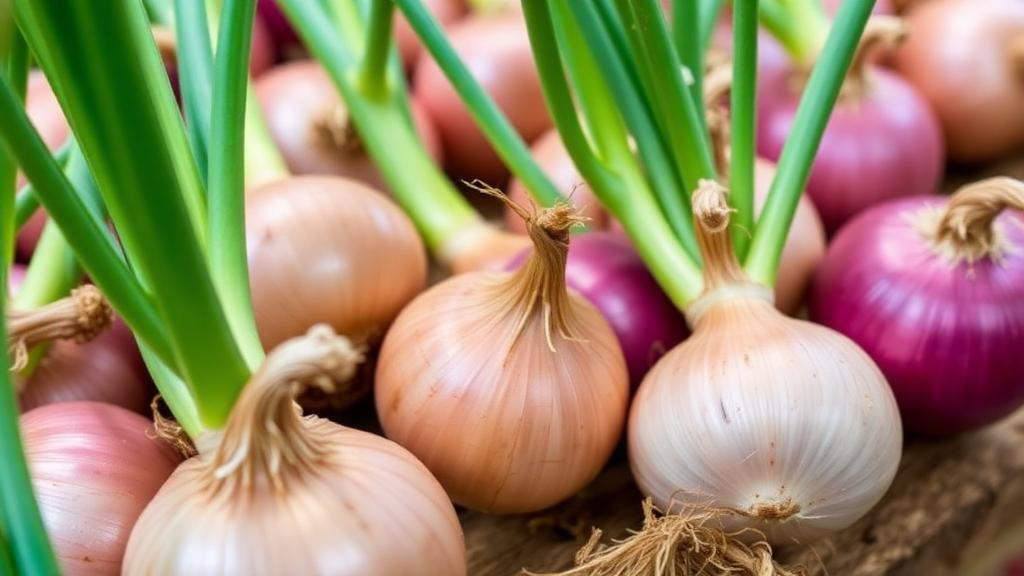
Onions are the quiet workhorse of the global kitchen, and in India they are nothing short of a national staple. Yet behind every bulb that reaches the market lies a stubborn scientific problem: the same onion variety that thrives in one region can falter badly in another, its yield swinging with soil, rainfall, temperature and disease pressure. A new multi-location study published in the Indian Journal of Genetics and Plant Breeding has tackled this challenge head-on, evaluating 43 red and white onion genotypes across five contrasting agro-climatic locations during the rabi 2020-21 season to identify which lines deliver consistently high yields regardless of where they are grown.
The research, led by Amar Jeet Gupta and colleagues at the ICAR-Directorate of Onion and Garlic Research in Pune, was conducted under the All India Network Research Project on Onion and Garlic with financial support from the Indian Council of Agricultural Research. Field trials followed a randomized complete block design, with the team recording data on yield attributes, maturity and disease response at every site. The scale of the effort matters: multi-environment trials of this kind are the gold standard for separating genuine genetic merit from the noise of local growing conditions, and they are essential before any variety can be recommended for commercial release.
The first major finding came from a combined analysis of variance, which revealed statistically significant effects of genotype, environment and, crucially, the genotype-by-environment interaction, or GEI, for marketable yield at the P < 0.05 level. In plain terms, the best onion in one location was not necessarily the best in another, and the differences were too large to ignore. This interaction is the central headache of plant breeding: a breeder can select a high-yielding line at a single trial site, only to watch it underperform when farmers plant it hundreds of kilometres away under different conditions.
To dissect this interaction, the team turned to the Additive Main Effects and Multiplicative Interaction model, better known as AMMI, a statistical framework that combines the additive analysis of variance with principal component analysis of the interaction term. The results were strikingly clean. For red onions, the first interaction principal component, IPCA1, explained 91.3 percent of the total GEI, while IPCA2 accounted for just 6.1 percent. For white onions the pattern was even more extreme, with IPCA1 capturing 96.8 percent and IPCA2 only 1.9 percent. Such a dominant single interaction axis means that most of the genotype-by-environment drama in these onions plays out along one dimension, which greatly simplifies both interpretation and selection decisions.
Using AMMI biplots, the graphical tools that plot genotypes and environments in the space of the interaction components, the researchers identified a clear set of stable performers. Among the red genotypes, RO-1769, RO-1773, RO-1783, Bhima Kiran and NHRDF Red-2 showed minimal interaction effects, meaning their yields stayed close to expected levels across all five locations. On the white side, W-444, W-500 and W-045 earned the same distinction. Stability in this context is not simply about being average; the ideal genotype combines high mean yield with low sensitivity to environmental shifts, and these eight lines passed both tests.
Because no single statistic can capture every nuance of stability, the team cross-checked their AMMI results with a battery of complementary parametric measures. These included Lin and Binns’s superiority index, which quantifies how far a genotype’s yield deviates from the maximum at each site; Wricke’s ecovalence, which measures a genotype’s contribution to the overall interaction; Shukla’s variance, an estimate of stability variance independent of environmental effects; the regression coefficient from the classic Finlay-Wilkinson tradition; and the AMMI Stability Value, which condenses the interaction principal component scores into a single number. The strong concordance among these indices and the AMMI-based rankings gave the researchers confidence that their conclusions were robust rather than artefacts of one particular model.
Spearman’s rank correlation analysis then delivered a practical bonus for breeders: the superiority index emerged as the most discriminative index for selecting high-yielding, stable genotypes. This matters because stability analysis can be computationally demanding and statistically intimidating, and knowing that a simple, well-established index tracks closely with the more elaborate AMMI framework offers a cost-effective screening tool for breeding programmes with limited resources. It also guards against the risk of relying on a single metric that might reward mediocrity, since the superiority index explicitly penalizes genotypes that fall short of the best performer at any location.
The implications extend well beyond statistical elegance. India is one of the world’s largest onion producers, and the crop’s productivity is strongly influenced by environmental variability, a vulnerability that climate change is expected to sharpen. Varieties that hold their yield across diverse environments are the backbone of a resilient food system, and the genotypes flagged in this study, including established checks like Bhima Kiran and NHRDF Red-2 alongside experimental breeding lines, are now candidates for large-scale evaluation and potential varietal release. The authors frame the work as a foundation for breeding climate-resilient onion cultivars adapted to India’s diverse production environments, a goal that aligns with broader efforts to stabilize vegetable supply chains against erratic weather.
The study also demonstrates the value of integrating AMMI with classical parametric stability models rather than treating them as rivals. AMMI excels at visualizing and partitioning the interaction structure, while measures such as ecovalence and Shukla’s variance provide genotype-specific summaries that are easy to rank and communicate. When independent methods converge on the same shortlist of genotypes, breeders gain the kind of decision confidence that single analyses rarely provide. Similar integrated approaches have proven effective in wheat, barley, lentil and soybean stability studies, and this work brings that methodological maturity to one of India’s most economically and culturally significant vegetables.
For farmers, the practical message is that help is on the way in the form of onions bred not just for peak yield in a favourable season but for dependable performance in whatever the weather delivers. For consumers, whose kitchens and household budgets depend on a steady onion supply, the research represents a quieter but no less important form of food security science. The next step will be multi-season validation and the formal testing pipeline that precedes varietal release, but the statistical groundwork laid by this team has already narrowed the field from 43 contenders to a handful of proven, stable performers ready to move toward India’s onion fields.
Subject of Research: Genotype-by-environment interaction and yield stability analysis of onion genotypes across multiple Indian locations
Article Title: Performance of Onion (Allium cepa L.) Genotypes at Multi-Location for Stability Analysis
Article References: Gupta, A. J., Mahajan, V., Aribenchi, K. V., Benke, A. P., Gawande, S. J., Dutta, R., Karuppaiah, V., Gedam, P. A., & Khade, Y. P. (2026). Performance of Onion (Allium cepa L.) Genotypes at Multi-Location for Stability Analysis. Indian Journal of Genetics and Plant Breeding, 86(1), 65-78. https://doi.org/10.1007/s44489-026-00009-0
Image Credits: AI Generated
DOI: 10.1007/s44489-026-00009-0
Keywords: onion, Allium cepa, genotype-by-environment interaction, AMMI analysis, yield stability, plant breeding, multi-environment trials, stability statistics, climate-resilient cultivars, India, crop science, varietal release
Cite Scienmag News
Alan Morgan. (October 2, 2026). Onion Breeding Breakthrough: Scientists Pinpoint Stable High-Yield Genotypes Across India. Scienmag. https://scienmag.com/onion-breeding-breakthrough-scientists-pinpoint-stable-high-yield-genotypes-across-india/
Alan Morgan. "Onion Breeding Breakthrough: Scientists Pinpoint Stable High-Yield Genotypes Across India." Scienmag, 2 October 2026, https://scienmag.com/onion-breeding-breakthrough-scientists-pinpoint-stable-high-yield-genotypes-across-india/. Accessed 2 October 2026.
Alan Morgan. "Onion Breeding Breakthrough: Scientists Pinpoint Stable High-Yield Genotypes Across India." Scienmag. October 2, 2026. https://scienmag.com/onion-breeding-breakthrough-scientists-pinpoint-stable-high-yield-genotypes-across-india/


