


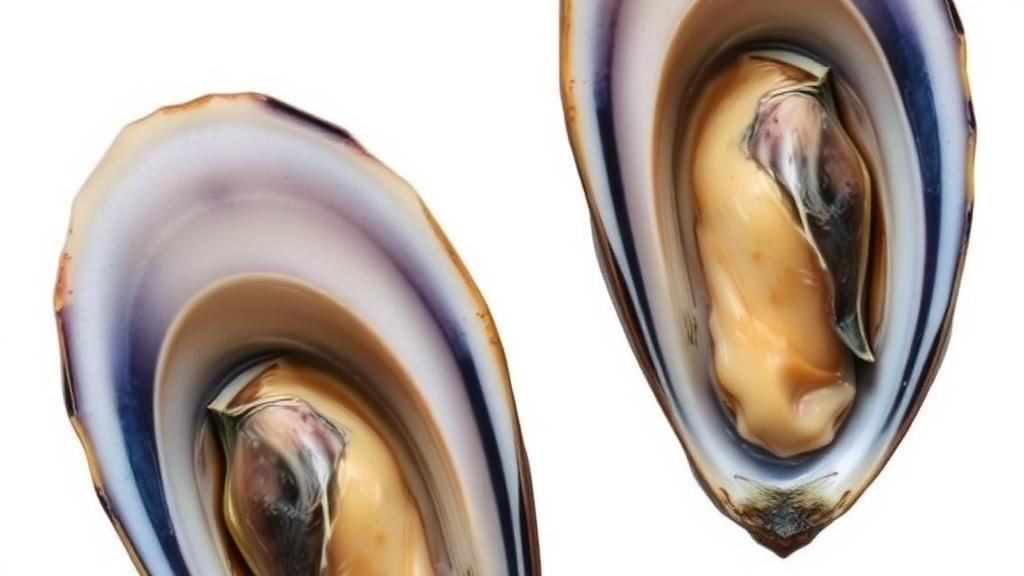
The Mediterranean mussel, Mytilus galloprovincialis, is one of the most economically important aquaculture species in Europe, and its gills are far more than a simple filtering apparatus. They are a living interface between the animal and the microbial world of the sea, constantly exposed to the bacteria suspended in seawater and packed into the particles the mussel ingests. A new study published in the journal Microbial Ecology has now mapped this hidden microbial landscape in unprecedented temporal detail, following the gill microbiome of mussels at two Adriatic Sea sites over a full year. The results reveal a microbial community that is neither a random sample of the surrounding ocean nor a fixed cast of characters, but a structured assemblage containing both permanent residents and seasonal visitors.
The research, led by Marino Korlević of the Ruđer Bošković Institute in Rovinj, Croatia, together with colleagues from several Croatian marine research institutions, set out to answer a deceptively simple question: which microbes genuinely live on mussel gills, and which are merely passing through? This distinction matters because resident taxa may perform functions that benefit the host, such as contributing to nutrition or defense, while transient taxa simply reflect what the animal has recently filtered from the water column. Separating the two requires sampling that spans both space and time, which is precisely what the team undertook.
The researchers sampled mussels at two locations on the eastern coast of the Adriatic Sea, Lim Bay on the Istrian peninsula and Mali Ston Bay in Dalmatia, two of Croatia’s most important shellfish farming areas. Crucially, they did not stop at the mussels themselves. At the same time and at the same locations, they also characterized the microbial communities in the surrounding seawater and in the sediment. This three-way comparison is what gives the study its analytical power: if a microbe found on the gills is also abundant in seawater, it may simply be a hitchhiker; if it appears on the gills regardless of its abundance in the environment, it is more likely a true associate of the host.
To characterize the communities, the team used Illumina MiSeq sequencing of the V4 region of the 16S rRNA gene, the standard workhorse of modern microbiome research. This approach amplifies and reads a short, highly conserved stretch of bacterial DNA that allows researchers to identify which taxa are present and in what relative proportions. Sequences were grouped into operational taxonomic units, or OTUs, providing a fine-grained picture of community structure that could be compared across individuals, sites, and months.
The first major finding was that the gill microbiome is genuinely distinct. When the researchers compared the structure of the gill communities, measured at the OTU level, with the microbial communities of the surrounding seawater and sediment, the gills stood apart from both. This is not a trivial result. Mussels pump enormous volumes of water across their gills every day, and if the gill community were simply a snapshot of the planktonic bacteria in that water, the two communities would look statistically indistinguishable. The fact that they do not suggests that the gill environment actively selects for particular microbes, whether through the gill’s epithelial surfaces, its mucus chemistry, the immune defenses of the host, or the microconditions of oxygen and nutrients that prevail there.
Equally striking was what the comparison between the two bays showed, or rather did not show. The structure of the gill microbiome did not differ significantly between Lim Bay and Mali Ston Bay, despite the geographic separation and the environmental differences between the sites. In other words, whatever forces shape the mussel gill community, they appear to operate consistently across the Adriatic farming grounds studied. The gill microbiome, in this sense, behaves like a host-associated community rather than a local environmental artifact. What did differ was time: the gill communities showed clear differences between months, indicating temporal dynamics in their composition over the course of the year-long sampling program.
The taxonomic analysis then delivered the study’s central insight. Within the family Endozoicomonadaceae, a group of Gammaproteobacteria well known from associations with marine invertebrates, the researchers found members without known relatives at the genus level, so-called unclassified Endozoicomonadaceae, present in the gills of mussels from both locations and throughout the entire study period. This persistence across space and time marks them as resident members of the gill microbiome, microbes that maintain a stable association with the host rather than drifting in and out with the seasons. Their consistent presence hints at a functional role, though the study, based on 16S rRNA gene profiles, does not directly demonstrate what that role might be.
In contrast, other members of the same family behaved very differently. Endozoicomonas and the taxon provisionally known as Candidatus Endoecteinascidia appeared in the gill microbiome of mussels from both locations only in certain months, marking them as transient taxa whose presence ebbs and flows with the seasons. The picture became even more site-specific with the Vibrionaceae. Vibrio and unclassified members of the Vibrionaceae were also transient, appearing only in certain months, but with a telling distinction: they were specific to Lim Bay. That a well-known group of bacteria, which includes both harmless marine organisms and significant pathogens, showed up as a seasonal, location-limited component of the gill community is likely to attract attention from aquaculture researchers, since Vibrio dynamics in farmed bivalves are a persistent concern for the industry.
The conceptual framework the study reinforces is one that microbiome science has been converging on for years: host-associated communities are mixtures of core and casual members, and only long-term, repeated sampling can tell them apart. A single snapshot of a gill microbiome might have recorded the unclassified Endozoicomonadaceae and concluded they were the whole story, or it might have caught a Vibrio bloom and drawn alarming conclusions. By sampling monthly across a year and pairing the mussel data with seawater and sediment references, the Croatian team was able to show that the gill community combines a stable backbone with a shifting overlay of seasonal and local arrivals. The temporal dynamics they observed, with community composition differing between months even as the overall gill signature remained distinct from the environment, suggest that both the host and the changing conditions of the Adriatic play a role in shaping who lives on the gills.
For the aquaculture sector, the implications are practical as well as conceptual. Mytilus galloprovincialis is farmed intensively in the Mediterranean, and the health of farmed mussels is increasingly understood in terms of their microbial associations. Knowing that a stable, resident core of Endozoicomonadaceae persists on the gills across sites and seasons provides a baseline against which future perturbations, whether from warming waters, disease outbreaks, or changes in farming practice, can be measured. Knowing that Vibrio appears only transiently and only at one of the two studied bays provides a template for monitoring programs that distinguish routine seasonal variation from genuine warning signs. And methodologically, the study demonstrates the value of the three-compartment design, comparing host, water, and sediment simultaneously, as a way to separate true host association from environmental background. As microbiome research moves from description toward prediction, studies of this kind, grounded in a full year of observation at real farming sites, provide the empirical foundation on which that transition will depend. The gills of the Mediterranean mussel, it turns out, are not just a filter but a curated habitat, one whose permanent residents and temporary guests can now be told apart.
Subject of Research: Resident and transient bacterial taxa in the gill microbiome of the Mediterranean mussel Mytilus galloprovincialis in the Adriatic Sea
Article Title: Resident and Transient Microbial Taxa in the Gill Microbiome of the Mussel Mytilus galloprovincialis
Article References: Korlević, M., Markovski, M., Kapetanović, D., Vardić Smrzlić, I., Orlić, K., Bolotin, J., Kožul, V., Bobanović-Ćolić, S., Nerlović, V., & Perić, L. (2026). Resident and Transient Microbial Taxa in the Gill Microbiome of the Mussel Mytilus galloprovincialis. Microbial Ecology. https://doi.org/10.1007/s00248-026-02888-y
Image Credits: AI Generated
DOI: 10.1007/s00248-026-02888-y
Keywords: gill microbiome, Mytilus galloprovincialis, Mediterranean mussel, Endozoicomonadaceae, Vibrionaceae, 16S rRNA gene sequencing, Adriatic Sea, aquaculture, marine microbiology, temporal dynamics, Gammaproteobacteria, microbial ecology
Cite Scienmag News
Morgan Morrow. (October 2, 2026). Mussel Gills Host a Year-Round Core Microbiome Shaped by Resident and Transient Microbes. Scienmag. https://scienmag.com/mussel-gills-host-a-year-round-core-microbiome-shaped-by-resident-and-transient-microbes/
Morgan Morrow. "Mussel Gills Host a Year-Round Core Microbiome Shaped by Resident and Transient Microbes." Scienmag, 2 October 2026, https://scienmag.com/mussel-gills-host-a-year-round-core-microbiome-shaped-by-resident-and-transient-microbes/. Accessed 2 October 2026.
Morgan Morrow. "Mussel Gills Host a Year-Round Core Microbiome Shaped by Resident and Transient Microbes." Scienmag. October 2, 2026. https://scienmag.com/mussel-gills-host-a-year-round-core-microbiome-shaped-by-resident-and-transient-microbes/


