


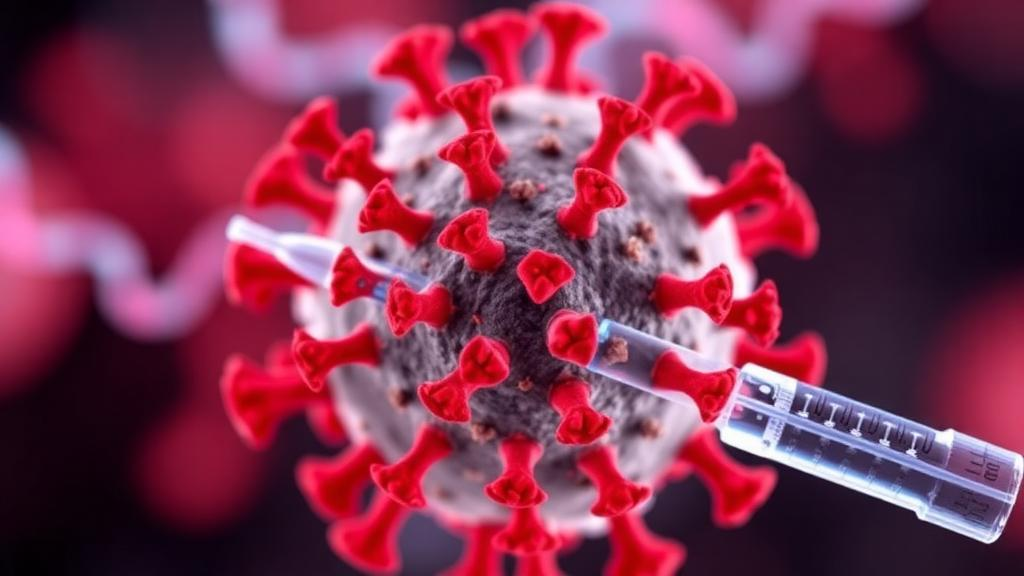
Virus-like particles, or VLPs, occupy a remarkable position in modern biomedicine: they look like viruses to the immune system, yet they carry no infectious genetic material. A comprehensive review published in Advanced Composites and Hybrid Materials by Milad Rasouli of the Research Institute of the McGill University Health Centre and colleagues, including corresponding author Mohammad Doroudian of Kharazmi University, synthesizes the state of this field and argues that VLPs should be understood not as a single vaccine technology but as adaptable biohybrid nanomaterials whose value spans prophylaxis, precision medicine, and advanced therapeutic modalities. The review, published open access on 15 September 2026, integrates perspectives from materials engineering, immunology, biomanufacturing, and regulatory science, and it is unusual in how candidly it treats the translational barriers that separate laboratory demonstrations from licensed products.
At their core, VLPs are self-assembling nanostructures built from viral coat proteins that spontaneously organize into capsids closely resembling native virions in size, symmetry, and surface topology. Because the genetic blueprint of the virus is absent or deliberately removed, these particles cannot replicate or cause infection, which makes them inherently safer than attenuated or inactivated virus preparations. That safety, however, does not come at the cost of immunological potency. The repetitive, multivalent display of epitopes on a nanoscale scaffold is a pattern the immune system evolved to recognize as a hallmark of viral threat, so VLPs are taken up efficiently by antigen-presenting cells and can elicit strong antibody responses, often without the need for aggressive adjuvant formulation. The review emphasizes that this structure-property relationship, the link between capsid architecture and immune outcome, is the central design principle governing everything VLPs do.
The authors classify VLPs along several axes, distinguishing enveloped from non-enveloped particles, simple capsids from multi-layered architectures, and particles derived from bacteriophages, plant viruses, and animal viruses. Each structural class brings distinct advantages. Bacteriophage-derived platforms such as those based on Qβ or MS2 are extraordinarily robust and easy to produce in bacterial expression systems, while plant virus-derived particles offer remarkable stability and low manufacturing cost. Mammalian virus-derived VLPs, including those modeled on hepatitis B core antigen or papillomavirus capsids, more closely mimic the glycosylation and conformational presentation of human pathogens. The choice of scaffold is therefore never neutral: it determines particle size, surface chemistry, cargo capacity, and the nature of the immune response the particle will provoke.
Production is where much of the practical complexity lies. The review systematically compares expression systems, from bacteria and yeast to insect cells, plants, and mammalian cell lines, and it is explicit about the trade-offs. Bacterial systems are fast and cheap but cannot perform the post-translational modifications that some VLPs require; mammalian systems offer authentic glycosylation but at higher cost and lower yield. Glycosylation emerges as a recurring theme, because sugar patterns on capsid proteins can alter both antigenicity and manufacturing consistency. Downstream, purification must control impurities such as host-cell proteins, nucleic acids, and misassembled capsid species, and characterization demands a battery of methods, including electron microscopy, dynamic light scattering, mass spectrometry, and potency assays, to establish the critical quality attributes that regulators will scrutinize.
One of the most consequential sections of the review addresses cargo loading, the set of strategies by which VLPs are transformed from empty shells into delivery vehicles. Cargo can be packaged inside the capsid cavity, covalently or non-covalently attached to the interior or exterior surface, or electrostatically condensed within the particle. Genetic fusion during expression allows peptides and proteins to be displayed on the capsid surface with atomic precision, while chemical conjugation after purification offers flexibility for attaching haptens, drugs, or imaging agents. Disassembly-reassembly protocols exploit the reversible self-assembly of many capsids to trap molecules inside. These engineering options are what allow a single structural platform to serve as a vaccine carrier, a drug delivery vehicle, or a contrast agent, depending on what it carries and how it is decorated.
The clinical track record for prophylactic vaccines provides the field’s strongest precedent. Licensed VLP-based vaccines against hepatitis B virus and human papillomavirus have demonstrated that self-assembling capsids can protect millions of people, and the HPV vaccines in particular showed how multivalent capsid display can generate antibody titers far exceeding those produced by natural infection. The review is careful, however, to separate these established successes from the newer applications that remain largely preclinical or in early translational stages. Therapeutic cancer vaccines built on VLP scaffolds, mRNA delivery systems, CRISPR/Cas genome-editing cargo, and AI-assisted capsid design are all presented as promising but unproven at scale, and the authors resist the temptation to extrapolate from prophylactic success to therapeutic promise without evidence.
That distinction matters because the requirements for therapeutic applications are fundamentally different from those for prophylaxis. A cancer immunotherapy built on a VLP must not only present tumor-associated antigens but also break immune tolerance, often requiring co-delivered adjuvants or checkpoint modulation, and it must navigate an immunosuppressed tumor microenvironment. Gene and RNA delivery demands that particles protect fragile nucleic acid cargo from nucleases, achieve cell-type-specific targeting through surface ligands, and release their payload inside the correct intracellular compartment. For CRISPR/Cas delivery, the cargo is not merely large but enzymatically active, adding constraints on loading efficiency and release kinetics that no licensed VLP product has yet had to satisfy. The review treats each of these modalities as a distinct engineering problem rather than a simple extension of vaccine technology.
Biohybrid and composite design represents the direction the field is heading. The authors describe capsid engineering through rational mutation and directed evolution, surface functionalization with polymers such as PEG to extend circulation time, lipid envelope modification to mimic natural virions, and the incorporation of inorganic or polymeric materials to create composite particles with tailored mechanical and optical properties. These hybrid constructs blur the boundary between a biological nanoparticle and a designed material, which is precisely why the review appears in a journal devoted to composites and hybrid materials. Artificial intelligence is beginning to accelerate this design cycle, with computational models used to predict assembly behavior, optimize epitope presentation, and screen surface modifications, although the review notes that AI-assisted designs remain at an early stage of validation.
Diagnostics and imaging complete the application portfolio. VLPs can serve as high-density antigen displays in serological assays, improving sensitivity by presenting target epitopes in the multivalent arrangement antibodies preferentially recognize. When loaded with contrast agents or fluorophores, they become targeted imaging probes whose capsid provides both stability and molecular specificity. The uniformity of VLP dimensions, typically tens of nanometers, also makes them attractive standards for calibrating nanoscale measurement techniques. In all of these uses, the same core properties recur: self-assembly, monodispersity, programmable surface chemistry, and the absence of infectivity.
The review closes with a sober assessment of what stands between the current state of the art and routine clinical use. Manufacturing complexity, batch-to-batch consistency, glycosylation control, particle stability during storage, and scalability of production are identified as the principal barriers, compounded by a regulatory landscape that has not fully harmonized standards for products that are simultaneously biologicals, drugs, and devices. Potency assays must reliably predict clinical performance, and comparability studies must demonstrate that process changes do not alter critical quality attributes. The authors’ central argument is that the clinical value of VLPs will be determined not by any single breakthrough but by reproducible design, validated characterization, scalable production, and evidence-based implementation. In framing VLPs as biohybrid nanomaterials rather than merely as vaccines, the review offers a unifying conceptual framework for a technology that has already saved lives and may, if its manufacturing and regulatory challenges are met, reshape how vaccines, gene therapies, and precision medicines are built.
Subject of Research: Virus-like particles as biohybrid nanomaterial platforms for vaccines, drug and gene delivery, and diagnostics
Article Title: Virus-like particles as a unifying platform bridging prophylaxis, precision medicine, and advanced therapeutic modalities
Article References: Rasouli, M., Farhadi Khoozani, M., Fallahhosseini, N., Azary, H., ZiaRazzaz, M., Shirovi, S., & Doroudian, M. (2026). Virus-like particles as a unifying platform bridging prophylaxis, precision medicine, and advanced therapeutic modalities. Advanced Composites and Hybrid Materials. https://doi.org/10.1007/s42114-026-02050-9
Image Credits: AI Generated
DOI: 10.1007/s42114-026-02050-9
Keywords: virus-like particles, VLPs, vaccines, drug delivery, gene delivery, CRISPR, mRNA delivery, cancer immunotherapy, nanoparticles, biohybrid materials, biomanufacturing, capsid engineering
Cite Scienmag News
Juliet Wilcox. (October 2, 2026). Virus-Like Particles Emerge as a Unifying Platform for Vaccines, Gene Delivery, and Precision Medicine. Scienmag. https://scienmag.com/virus-like-particles-emerge-as-a-unifying-platform-for-vaccines-gene-delivery-and-precision-medicine/
Juliet Wilcox. "Virus-Like Particles Emerge as a Unifying Platform for Vaccines, Gene Delivery, and Precision Medicine." Scienmag, 2 October 2026, https://scienmag.com/virus-like-particles-emerge-as-a-unifying-platform-for-vaccines-gene-delivery-and-precision-medicine/. Accessed 2 October 2026.
Juliet Wilcox. "Virus-Like Particles Emerge as a Unifying Platform for Vaccines, Gene Delivery, and Precision Medicine." Scienmag. October 2, 2026. https://scienmag.com/virus-like-particles-emerge-as-a-unifying-platform-for-vaccines-gene-delivery-and-precision-medicine/


