


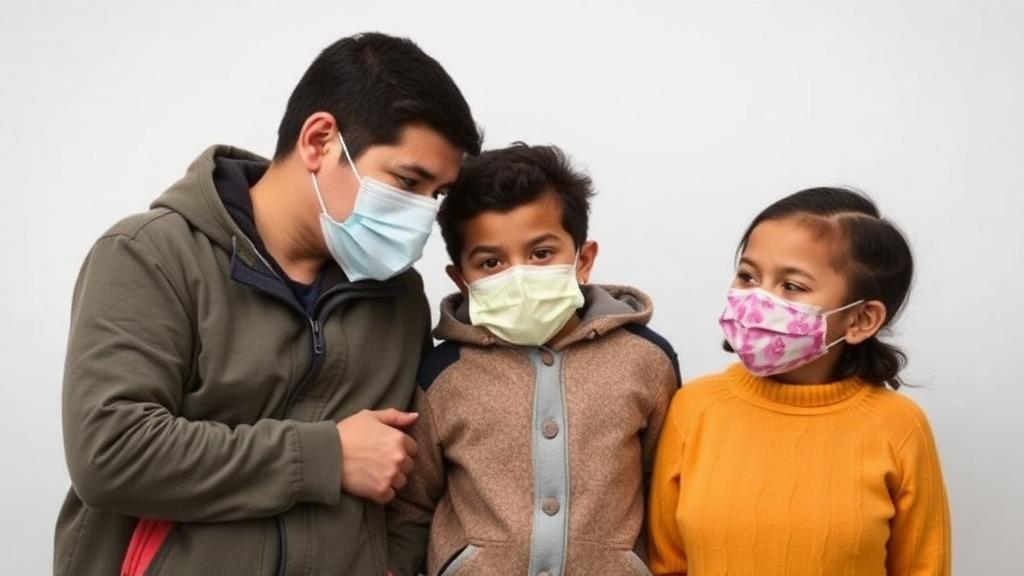
When the COVID-19 pandemic locked down communities across Canada in 2020, families suddenly found themselves sharing the same walls, the same schedules, and the same limited opportunities for exercise, screen use, and sleep. A new national study has now revealed just how powerful that forced togetherness was: the daily movement habits of parents and their children became measurably entwined, with parents who met health guidelines far more likely to raise children who did the same. The findings, published in the Journal of Activity, Sedentary and Sleep Behaviors, offer one of the clearest natural experiments ever conducted on how parental behavior shapes the health habits of the next generation.
The research team, led by Hilary Caldwell and Sarah Moore of Dalhousie University alongside collaborators from the University of British Columbia, the Children’s Hospital of Eastern Ontario Research Institute, and other Canadian institutions, surveyed two large independent national samples of parents. In October 2020, 1,568 parents of children and adolescents aged 5 to 17 completed detailed online questionnaires about their own movement behaviors and those of one of their children. In April 2021, a second sample of 1,600 parents answered the same questions. Participants were recruited through the market research company Maru/Matchbox from a panel designed to mirror the Canadian census in terms of age, gender, ethnicity, geography, and socioeconomic status, giving the results an unusually strong claim to national representativeness.
The study focused on the three pillars of the Canadian 24-Hour Movement Guidelines: moderate-to-vigorous physical activity, recreational screen time, and sleep. For children, the benchmarks were at least 60 minutes of heart-pumping activity on six or seven days per week, no more than two hours of daily recreational screen time, and age-appropriate sleep of nine to eleven hours for 5-to-13-year-olds or eight to ten hours for teenagers. Parents faced their own targets: at least 150 minutes of weekly moderate-to-vigorous activity, no more than three hours of daily recreational screen time, and seven to nine hours of nightly sleep. Meeting all three simultaneously is a demanding proposition, and the data showed just how rare it was.
The headline numbers were sobering. In October 2020, only 8 percent of parents met the combined 24-hour guidelines, rising marginally to 10 percent by April 2021. Children and adolescents fared worse still: just 4 percent met all three guidelines in fall 2020, improving only to 5 percent the following spring. Individual components told a more nuanced story. Most parents met the sleep recommendation, 66 percent in October and 68 percent in April, and a slim majority stayed within screen time limits. But physical activity was the weak link for adults, with only 20 percent meeting the MVPA target in fall 2020 before a recovery to 30 percent in spring 2021. Among children and adolescents, only 17 percent met the physical activity guideline in spring 2021, while 29 percent met the screen time limit and 71 percent slept enough.
Yet the most scientifically compelling results lay in the statistical relationships between parents and children. Using Spearman correlations suited to the non-normally distributed data, the team found consistent, positive associations between parental and child behavior in both waves. In October 2020, child and parent moderate-to-vigorous physical activity correlated at r = 0.171, child and parent screen time at r = 0.255, and child and parent sleep at r = 0.124, all statistically significant. Six months later the pattern held, with correlations ranging from 0.124 to 0.204. Fisher’s Z-tests confirmed that the strength of these parent-child links barely changed between the two timepoints, despite shifting public health restrictions across Canadian provinces.
The guideline-level analysis was even more striking. When a parent met an individual guideline, the incidence of their child meeting the same guideline rose substantially, with incidence rate ratios between 1.10 and 3.06 in October 2020 and 1.19 and 2.26 in April 2021. The strongest effect appeared for the combined 24-hour guidelines: children whose parents met all three recommendations were roughly three times as likely to meet them too in fall 2020 (IRR = 3.06, 95% CI: 1.55 to 6.04) and more than twice as likely in spring 2021 (IRR = 2.26, 95% CI: 1.34 to 3.83). According to the authors, this suggests that parental modeling or co-participation across the full sweep of the day, not just in a single behavior, exerts the greatest influence on a child’s entire 24-hour activity pattern.
The theoretical backbone of the study is Bandura’s Social Cognitive Theory, which holds that health behaviors emerge from the dynamic interplay of personal, behavioral, and environmental factors. Parents act as both models and gatekeepers: they encourage, facilitate, set expectations, and remove barriers to healthy movement. Before the pandemic, Canadian survey data showed that 73 percent of parents regularly supported their children’s sleep, 49 percent supported screen time management, 44 percent supported light activity, and only 23 percent supported vigorous activity. When lockdowns canceled sports leagues, closed recreation centers, and emptied playgrounds, those parental levers became almost the only ones left. Qualitative interviews cited in the paper described parents improvising walks and bike rides with their children when structured options vanished, making the family unit the primary behavioral environment for months on end.
Intriguingly, the parent-child link was not uniform across ages and genders. In October 2020, parental guideline compliance predicted higher incidence of guideline compliance among children aged 5 to 11 and among girls, but the associations were weaker or absent for adolescents and, in some analyses, boys. By April 2021, parental compliance predicted compliance among children and among adolescents for the physical activity and sleep guidelines, though not for screen time or the combined guidelines. After adjusting for age and gender, being younger consistently predicted better compliance with the activity, screen time, and combined guidelines at both timepoints, reflecting the well-documented decline in healthy movement as children enter adolescence. The researchers attribute this age gradient to teenagers’ growing independence and orientation toward peers, and to parents’ diminishing sense of control over adolescent screen time and activity choices.
The gender findings add another layer of complexity. In the adjusted April 2021 models, being a girl was associated with a lower incidence of meeting the physical activity and combined guidelines, yet in unadjusted analyses girls were more likely than boys to meet guidelines when their parents did. The authors note that their parent sample was predominantly women, and prior research suggests particularly strong behavioral connections between mothers and daughters, potentially reflecting closer emotional ties and more shared activity. Because so few fathers participated, the study could not disentangle whether mother-child and father-child associations differ, a limitation the team acknowledges alongside the self-reported nature of the data and the inability to compare behavior volumes directly between parents and children.
What emerges from this research is both a warning and an opportunity. Compliance with the 24-hour movement guidelines remained strikingly low for every age group throughout the pandemic’s first year, echoing pre-pandemic Canadian Health Measures Survey figures of 13.9 percent compliance in children, 4.8 percent in adolescents, and 19.1 percent in adults. But the tight coupling of parent and child behavior during lockdowns demonstrates that health promotion efforts aimed at families as units, rather than at children in isolation, could pay dividends precisely when external supports collapse. The authors argue that future public health emergencies should treat the household as the target: encouraging parents to model activity, manage screens, and protect sleep alongside their children. In a crisis that confined families together, the study found, parents did not just share their homes with their children. They shared their habits, for better and for worse.
Subject of Research: Parent-child associations in 24-hour movement behaviours during the COVID-19 pandemic in Canada
Article Title: Associations between parent and child 24-hour movement behaviours across the COVID-19 pandemic in Canada
Article References: Caldwell, H. A., Campbell, J. E., Preston, A., Bhamra, S., Kirk, S. F., Faulkner, G., Tremblay, M. S., & Moore, S. A. (2025). Associations between parent and child 24-hour movement behaviours across the COVID-19 pandemic in Canada. Journal of Activity, Sedentary and Sleep Behaviors, 4(1), Article 10. https://doi.org/10.1186/s44167-025-00081-z
Image Credits: AI Generated
DOI: 10.1186/s44167-025-00081-z
Keywords: physical activity, sedentary behaviour, screen time, sleep, COVID-19, parenting, children, adolescents, 24-hour movement guidelines, public health, Canada, family health
Cite Scienmag News
Glenn Wilkins. (October 2, 2026). Like Parent, Like Child: How Lockdowns Forged a Shared Movement Blueprint in Canadian Families. Scienmag. https://scienmag.com/like-parent-like-child-how-lockdowns-forged-a-shared-movement-blueprint-in-canadian-families/
Glenn Wilkins. "Like Parent, Like Child: How Lockdowns Forged a Shared Movement Blueprint in Canadian Families." Scienmag, 2 October 2026, https://scienmag.com/like-parent-like-child-how-lockdowns-forged-a-shared-movement-blueprint-in-canadian-families/. Accessed 2 October 2026.
Glenn Wilkins. "Like Parent, Like Child: How Lockdowns Forged a Shared Movement Blueprint in Canadian Families." Scienmag. October 2, 2026. https://scienmag.com/like-parent-like-child-how-lockdowns-forged-a-shared-movement-blueprint-in-canadian-families/


