


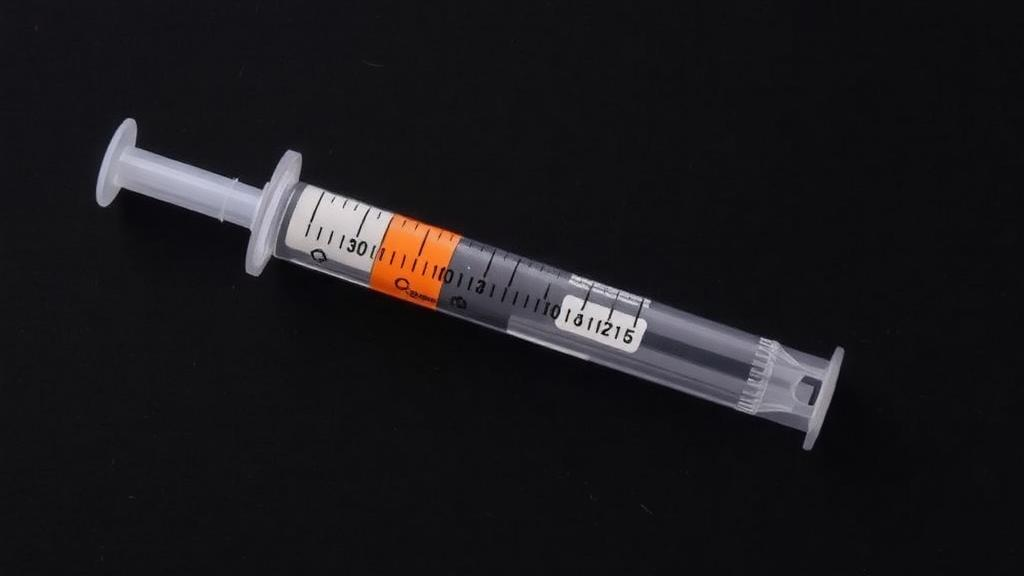
For millions of people living with IgG-mediated autoimmune diseases such as generalized myasthenia gravis (gMG) and chronic inflammatory demyelinating polyradiculoneuropathy (CIDP), treatment often means repeated clinic visits, lengthy infusions, or the fiddly task of drawing medication from a vial into a syringe. A new set of studies published in Advances in Therapy suggests that a simpler option is now on solid scientific ground. Researchers report that a 5-milliliter prefilled syringe (PFS) of efgartigimod coformulated with recombinant human hyaluronidase PH20 delivers the drug into the body just as effectively as the original vial-and-syringe presentation, can be injected safely in as little as 20 seconds, and can be used correctly at home by untrained patients and caregivers alike.
Efgartigimod works through an elegant molecular trick. It is a human immunoglobulin G1 (IgG) antibody Fc fragment, engineered to bind with unusually high affinity to the neonatal Fc receptor (FcRn), the cellular recycling machinery that normally protects IgG antibodies from degradation and gives them their characteristically long half-life in the bloodstream. By occupying FcRn, efgartigimod interrupts this recycling loop, so circulating IgG, including the pathogenic autoantibodies that drive diseases like gMG and CIDP, is cleared faster. Importantly, the drug does not suppress antibody production or blunt immune responses to vaccination, and it does not lower albumin levels or raise cholesterol, distinguishing it from broadly immunosuppressive therapies such as glucocorticoids, azathioprine, mycophenolate mofetil, or B cell-depleting agents.
The original subcutaneous formulation contained a fixed 1000-mg dose of efgartigimod at 180 mg/ml in a 5.6-ml volume, supplied in a single-dose vial that a health care provider had to draw up with a separate syringe. The new prefilled syringe packs the same 1000-mg dose into 5.0 ml at a higher concentration of 200 mg/ml, and it was approved in the United States in April 2025 for adults with acetylcholine receptor autoantibody-positive generalized myasthenia gravis and for adults with CIDP. The coformulation with recombinant human hyaluronidase PH20 is what makes such a large subcutaneous volume feasible: the enzyme locally depolymerizes hyaluronan in the subcutaneous space, temporarily dissolving the structural barrier to bulk fluid flow so the drug can disperse and be absorbed more readily.
The first question the researchers tackled was whether the prefilled syringe is pharmacologically interchangeable with the vial-and-syringe presentation. In a Phase 1, open-label, randomized, two-period crossover bioequivalence study (ClinicalTrials.gov identifier NCT05817435), 72 healthy participants each received a single health care provider-administered injection by both routes, serving as their own controls. Serum efgartigimod concentrations were measured with a validated ligand-binding electrochemiluminescence immunoassay with a lower limit of quantification of 200 ng/ml, and the primary endpoints were the maximum observed concentration (Cmax) and the area under the concentration-time curve from zero to infinity (AUC0-inf).
The bioequivalence criterion was met decisively. The 90 percent confidence intervals for the geometric least-squares mean ratios of both Cmax and AUC0-inf fell entirely within the predefined acceptance range of 80.0 to 125.0 percent, the regulatory standard for demonstrating that two formulations deliver equivalent systemic exposure. After injection, efgartigimod concentrations rose to a plateau, with a median time to peak concentration of 48.0 hours for the prefilled syringe versus 72.0 hours for the vial and syringe, and individual values ranging from 12.0 to 119.3 hours. Once the plateau was reached, serum concentrations declined gradually with similar half-lives for both presentations, and other pharmacokinetic parameters were likewise comparable between the two arms.
Safety in the bioequivalence study was reassuring. The drug was well tolerated by both routes, with no fatal or serious adverse events and no discontinuations attributed to adverse events. A single grade 3 or higher event, a blood pressure increase in one participant who received the vial-and-syringe formulation, was judged unrelated to treatment. Injection site reactions occurred in 50.7 percent of participants using the prefilled syringe and 59.7 percent using the vial and syringe, all of grade 1 or 2 severity, and all resolved by the end of the study except one that was resolving. A post hoc analysis showed mean injection durations of roughly 31 seconds in both groups, and no anaphylactic or hypersensitivity reactions were observed.
A second Phase 1 study asked a deceptively simple question: how fast can a large, viscous subcutaneous volume be pushed without causing problems? All 48 randomized healthy participants completed this randomized, open-label crossover trial, in which efgartigimod PH20 SC was delivered over 20, 30, 45, or 60 seconds using an infusion pump with a disposable syringe and a 27-gauge ultra-thin-wall needle. Every participant across every speed group received at least 90 percent of the full injection volume in both dosing periods, and mean fluid leakage or backflow at the injection site was negligible and essentially identical across groups, at 0.0122 ml in the first period and 0.0085 ml in the second. More than 87 percent of participants said one hour after injection that they would be willing to receive the administration again, local pain scores dropped significantly within five minutes across all speed groups, and all adverse events were mild to moderate, with no serious events or discontinuations.
The third component comprised two human factors validation studies, designed according to US Food and Drug Administration guidance for combination products, that tested whether real users could handle the device safely. Fifteen participants with gMG, fifteen with CIDP, and fifteen lay caregivers of family members with these diseases were given the prefilled syringe and its instructions for use, but no training whatsoever. In a simulated home environment, each participant stored the device overnight and then performed an unaided simulated injection into an injection pad, placed over their own clothes for patients or on a manikin for caregivers. The results were striking: all 45 participants successfully refrigerated, prepared, injected, and disposed of the prefilled syringe, delivering the full dose in an average of 30 seconds, with no performance differences between patients and caregivers and no use errors that could cause harm. All 45 also correctly located and identified 28 pieces of critical safety information in the instructions, and every participant said they believed they could give weekly injections with the product if needed.
The authors acknowledge one methodological caveat: the injection speed study used an infusion pump rather than the prefilled syringe device itself, which prevents firm conclusions about the optimal speed of the PFS specifically. However, the formulation tested had the same volume and viscosity as that used in the bioequivalence and human factors studies, which did employ the device, so the data collectively support the feasibility and safety of a rapid, roughly 30-second injection of efgartigimod PH20 SC in general. The researchers also note that the studies were funded by argenx, the drug’s developer, and that several of the authors are company employees, factors readers should weigh when interpreting the uniformly positive findings.
Even with those caveats, the implications for patients are substantial. For chronic conditions like gMG and CIDP, where treatment continues indefinitely, aligning therapy with patient preferences for route of administration has been linked to greater satisfaction, better quality of life, and improved adherence. A prefilled syringe eliminates the steps of vial handling and dose drawing, improves dosing accuracy, and particularly benefits patients with impaired manual dexterity, coordination, or vision, while reducing health care resource utilization and waste. Taken together, the bioequivalence, injection speed, and human factors data indicate that a rapid, high-volume subcutaneous injection of efgartigimod PH20 from a prefilled syringe is safe, feasible, and usable, offering patients and their caregivers a quick, flexible option for receiving treatment either in a clinic or at home, and potentially easing the daily burden of living with IgG-mediated autoimmune disease.
Subject of Research: Pharmacokinetics, injection speed, and usability of a prefilled syringe for subcutaneous efgartigimod PH20 in IgG-mediated autoimmune diseases
Article Title: Investigating the Pharmacokinetics, Injection Speed, and Usability of Subcutaneous Efgartigimod PH20 Administered with a Prefilled Syringe
Article References: De Muynck, C., Noukens, J., Allosery, K., Cettour-Rose, C., Pastouret, S., Andre, A. D., & Borgions, F. (2026). Investigating the Pharmacokinetics, Injection Speed, and Usability of Subcutaneous Efgartigimod PH20 Administered with a Prefilled Syringe. Advances in Therapy. https://doi.org/10.1007/s12325-026-03733-x
Image Credits: AI Generated
DOI: 10.1007/s12325-026-03733-x
Keywords: efgartigimod, prefilled syringe, bioequivalence, myasthenia gravis, CIDP, neonatal Fc receptor, hyaluronidase PH20, subcutaneous injection, pharmacokinetics, human factors study, autoimmune disease, self-administration
Cite Scienmag News
Ophelia Keating. (October 2, 2026). Prefilled Syringe Delivers Autoimmune Drug Efgartigimod as Fast and Effectively as the Vial. Scienmag. https://scienmag.com/prefilled-syringe-delivers-autoimmune-drug-efgartigimod-as-fast-and-effectively-as-the-vial/
Ophelia Keating. "Prefilled Syringe Delivers Autoimmune Drug Efgartigimod as Fast and Effectively as the Vial." Scienmag, 2 October 2026, https://scienmag.com/prefilled-syringe-delivers-autoimmune-drug-efgartigimod-as-fast-and-effectively-as-the-vial/. Accessed 2 October 2026.
Ophelia Keating. "Prefilled Syringe Delivers Autoimmune Drug Efgartigimod as Fast and Effectively as the Vial." Scienmag. October 2, 2026. https://scienmag.com/prefilled-syringe-delivers-autoimmune-drug-efgartigimod-as-fast-and-effectively-as-the-vial/


