


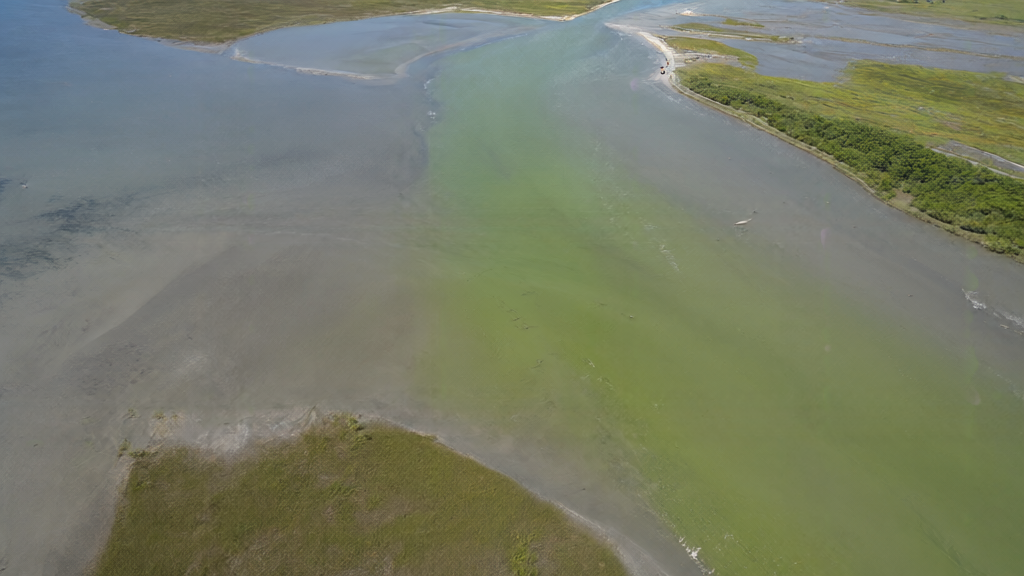
Coastal ecosystems serve as vital hubs for food production, employment, and recreation for billions of people worldwide. However, these environments face increasing threats from nutrient pollution, which can trigger harmful algae blooms, create oxygen-depleted dead zones, and shift biodiversity patterns. A new study led by Washington State University provides a comprehensive assessment of these threats by measuring and mapping the human impact on nitrogen, phosphorus, and silicon inputs to the planet’s coastal waters. The research highlights that in a significant portion of the world’s coastal waterways, human contributions to harmful nitrogen levels now exceed those of all natural sources combined.
The study, published in the journal Global Biogeochemical Cycles, was led by John Harrison, the Edward R. Meyer Distinguished Professor in WSU’s School of the Environment. Harrison, who directs the Global Change and Watershed Biogeochemistry Laboratory, noted that while the ocean is vast, the contribution of land-based nutrients to coastal zones has been a subject of debate among oceanographers. The research aims to resolve this uncertainty by integrating data on what enters coastal waters from land with data on offshore marine sources. The findings suggest that the scientific community studying the coastal impacts of land-based nutrients has been correct in emphasizing the importance of these inputs.
Human activities introduce nitrogen and phosphorus into rivers and coastal waters through various pathways. These include fertilizer and manure runoff from agricultural lands, wastewater emissions from sewage systems, urban runoff from lawns and streets, and emissions from vehicles and power plants. The researchers developed a novel database that covers global sources of nitrogen, phosphorus, and silicon across both pre-industrial and contemporary time spans. This database allows for an evaluation of how land-based human activities have altered nutrient ratios and increased the potential for eutrophication, a condition that promotes excessive algae growth and degrades water quality.
One of the key findings of the study is that while natural marine sources remain the largest overall contributor of nutrients globally, land-based sources constitute the majority of nutrients for more than half of the world’s coastlines. This indicates that in a substantial number of coastal regions, the balance of nutrient input is dominated by terrestrial processes rather than open-ocean dynamics. The study distinguishes between different types of nutrients, noting that the impact of human activity varies significantly depending on the specific element being measured.
Regarding nitrogen, the research found that human activities add more nitrogen than all natural sources in approximately a quarter of the planet’s coastal waterways. This human-driven excess is also evident in a fifth of the Large Marine Ecosystems, which are the large ocean areas extending outward from the coasts. For phosphorus, the human contribution exceeds natural sources in 11% of coastal waterways. These figures underscore the localized but significant nature of nutrient pollution, where specific regions experience disproportionate impacts due to concentrated human activity and land use practices.
The influence of human activity on silicon presents a contrasting trend. Rather than increasing levels, human activities tend to lower silicon levels in coastal waters. A primary mechanism for this reduction is the construction of river dams, which block the natural flow of silicon from land to the coast. Silicon is essential for certain marine organisms, such as diatoms, and its reduction can have cascading effects on marine food webs. This finding highlights that nutrient pollution is not a uniform issue; while some nutrients are being added in excess, others are being depleted, both of which can disrupt the delicate balance required for healthy marine ecosystems.
The study identifies specific geographic areas of greatest concern, including the Gulf of Mexico and the coastlines surrounding Europe and Asia. These regions are characterized by high levels of human impact and significant nutrient loading. By pinpointing these areas, the research provides a framework for prioritizing management efforts. Harrison emphasized that understanding where nutrient inputs are most critical is essential for effective resource allocation. The study serves as a first step in creating a framework to manage coastal zones efficiently, ensuring that mitigation strategies are directed where they will have the most substantial impact.
Several strategies could be adopted to reduce the nutrient load entering rivers and coastal waters. These range from implementing advanced technology in wastewater treatment plants to improving fertilizer management practices and adopting no-till farming methods. The study identifies areas where the health of coastal waters could be directly improved by changes in human contributions. Harrison noted that there are stretches of coastline globally where a significant increase in nutrient inputs would push the ecosystem into a danger zone, while a significant decrease would remove it from that zone. This distinction is crucial for policymakers and managers, as it identifies locations where intervention can yield clear benefits versus areas where high natural background nutrient loads may complicate management efforts.
The research underscores the importance of a holistic approach to coastal management. By integrating data on land, sea, and human inputs, the study provides a more complete picture of nutrient dynamics than previous global assessments. The findings suggest that while the challenge is significant, targeted interventions can make a meaningful difference. As coastal populations grow and economic activities intensify, the need for precise data to guide management decisions becomes increasingly urgent. The study offers a valuable tool for scientists, policymakers, and stakeholders seeking to protect the health and productivity of the world’s coastal waters.
Subject of Research: Marine Science
Article Title: Study maps where humans are driving harmful nutrient levels along coasts
Article References: Study maps where humans are driving harmful nutrient levels along coasts. (n.d.). Original publication
Image Credits: AI Generated
DOI: Not provided
Keywords: coastal ecosystems, nutrient pollution, nitrogen, phosphorus, silicon, eutrophication, Washington State University, Global Biogeochemical Cycles, maps, humans, driving, harmful
Cite Scienmag News
Violet Maxwell. (October 2, 2026). New Global Map Reveals Where Human Activity Drives Harmful Nutrient Levels in Coastal Waters. Scienmag. https://scienmag.com/new-global-map-reveals-where-human-activity-drives-harmful-nutrient-levels-in-coastal-waters/
Violet Maxwell. "New Global Map Reveals Where Human Activity Drives Harmful Nutrient Levels in Coastal Waters." Scienmag, 2 October 2026, https://scienmag.com/new-global-map-reveals-where-human-activity-drives-harmful-nutrient-levels-in-coastal-waters/. Accessed 2 October 2026.
Violet Maxwell. "New Global Map Reveals Where Human Activity Drives Harmful Nutrient Levels in Coastal Waters." Scienmag. October 2, 2026. https://scienmag.com/new-global-map-reveals-where-human-activity-drives-harmful-nutrient-levels-in-coastal-waters/


