


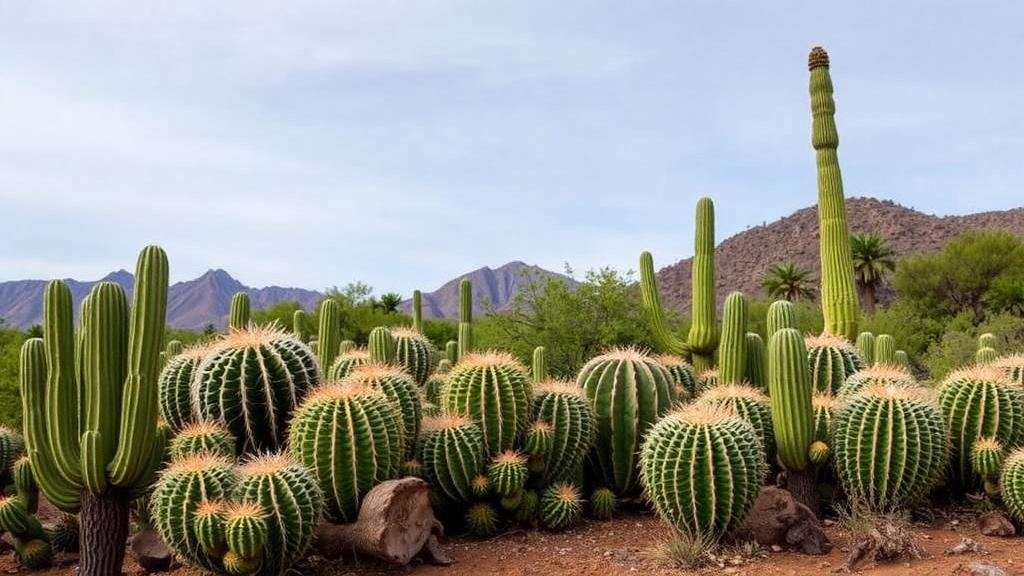
Cacti have long captured the human imagination, from the saguaro-studded deserts of Arizona to the hallucinogenic rituals of the Andes. Yet one of the most urgent stories in cactus conservation is unfolding far from the iconic deserts of North America, in the humid grasslands and rocky outcrops of southern Brazil and central Argentina. A new perspective article published in Discover Ecology by researchers Rodrigo Bustos Singer, Diego E. Gurvich, Rosana Farias-Singer and Josy Zarur de Matos lays bare a troubling picture: some of the world’s most threatened cacti are quietly disappearing from the Pampas and Atlantic Forest biomes, squeezed between poachers, plantations, invasive mammals and a taxonomic literature that often does more harm than good.
The scale of the global problem is striking. In a landmark assessment covering roughly 99.86 percent of all known cactus species, researchers concluded that 31 percent of the family is threatened with extinction under IUCN criteria, making Cactaceae the fifth most imperiled major biological group on Earth, behind cycads, amphibians, conifers and corals. Of the nearly 1,500 species evaluated, 6.7 percent were classified as Critically Endangered, 12 percent as Endangered and 9.4 percent as Vulnerable. The main drivers are illegal collection, livestock farming and agricultural expansion. The family, which comprises about 1,480 species in 142 genera and is almost entirely restricted to the Americas, originated in the Central Andes and radiated spectacularly into arid environments, with Mexico serving as its principal diversity center. But South America holds a wealth of endemic genera and species, many of them barely studied.
The situation in Rio Grande do Sul, Brazil’s southernmost state, is particularly alarming. The state harbors 65 cactus species in 11 genera, of which 17, just over 26 percent, are endemic, and a remarkable 87.7 percent are considered threatened under IUCN criteria. The genus Frailea, almost entirely restricted to the Pampa Biome that stretches into Argentina, Paraguay and Uruguay, includes 11 species in the state, all of them endangered. Parodia, the richest genus with 33 species, fares no better: every single species falls under some threat category, and roughly two-thirds of them are not represented in any Conservation Unit at all. Silviculture is a major culprit, with plantation area doubling between 2001 and 2013, while livestock trample and occasionally eat the plants. The authors argue that creating additional protected areas and establishing effective ex-situ collections are now essential palliative measures.
Central Argentina presents a contrasting picture. The mountains of Córdoba and neighboring regions host around 35 cactus species, 13 of them endemic, but none has so far been classified under any IUCN threat category. The most diverse genus there is Gymnocalycium, familiar to cactus growers worldwide. The relative good news, the researchers suggest, may be a simple matter of landscape: because central Argentina is drier, rocky outcrops are far more common, cactus populations are larger and more widespread, and the plants are therefore less vulnerable to localized extinction. It is a reminder that rarity is often a function of how little suitable habitat remains, not just how few individual plants exist.
Beneath these conservation statistics lies a deeper scientific problem: shaky taxonomy. Few South American cactus genera have been studied with modern phylogenetic or phylogeographic tools, and several traditional genera appear to be artificial assemblages that will require substantial rearrangement to reflect true evolutionary relationships. Even more troubling, a large share of new cactus species are described by amateur botanists without formal training, often in non-peer-reviewed outlets, and mere morphological variants of well-known species are frequently elevated to species status. This taxonomic inflation, the authors warn, diverts scarce time, money and expertise away from genuine conservation priorities. They endorse minimum evidence standards proposed by Demaio and Chiapella for accepting new species and call for funding agencies to invest in phylogenetic and alpha-taxonomic work as a prerequisite for effective protection. Their message to readers of taxonomic literature is blunt: publication alone does not make a species real.
Then there are the poachers. The authors document how quickly populations can be wiped out, sometimes between one growing season and the next. In 2024, a Russian collector was arrested at Espinilho State Park in southern Rio Grande do Sul carrying juvenile plants, fruits and seeds of several Parodia and Frailea species, each meticulously numbered and bagged with collector codes. More damning still, he carried the coordinates of specific rare populations, apparently obtained in advance. The case illustrates a growing dilemma for conservation biologists: publishing the location of a newly discovered rare species can be a death sentence for it. The authors advocate strict confidentiality for the coordinates of threatened cactus populations and warn that citizen-science platforms such as iNaturalist, which encourage attaching coordinates to photographic records, are inadvertently putting endangered cacti at risk. The Critically Endangered Parodia rechensis offers a cautionary tale: its original population, inside a protected area, was reduced to fewer than ten individuals by collectors who located it through information freely available online. When new populations were recently found, researchers kept the locations secret, and the plants survived.
Invasive species compound the crisis in ways that are both subtle and brutal. In southern Brazil, Eucalyptus monocultures threaten some 27 local cactus species through land conversion and shading, while Pinus plantations smother Parodia species not only with shade but with a thick cushion of needles that effectively suffocates the plants beneath. Pines have spread far beyond the plantations themselves and have been legally classified as invasive in Rio Grande do Sul since 2013, though enforcement is minimal outside protected areas. Conversion of native grasslands to soybean monoculture adds further pressure. In central Argentina, the threats differ: exotic woody plants such as Pyracantha and Cotoneaster colonize the rocky outcrops that cacti depend on, and the invasive fountain grass Pennisetum setaceum is spreading, likely competing for space and light while altering fire regimes.
Perhaps the most visceral threat comes on four trotters. Eurasian wild boars, deliberately introduced for hunting, have spread across much of the Americas, and since 2019 the authors have watched them devastate populations of Echinopsis oxygona and Parodia crassigiba in Brazil and Gymnocalycium monvillei and G. andreae in Argentina. Boars do not eat the cacti; they simply root around them and pluck the plants out by their roots, and most uprooted individuals die. Surviving seedlings persist only beneath spiny neighbors such as Mimosa and Dyckia species, which offer accidental shelter. Barbed-wire fencing has proven effective at excluding semi-adult and adult boars in trials around Caxias do Sul, and the authors urge that fencing be promoted in Conservation Units and subsidized for conservation-minded landowners. Rio Grande do Sul’s environment secretariat is already running awareness and capacity-building programs targeting invasive boars and gorse, an approach the authors believe could be replicated elsewhere.
Basic biology remains the missing piece of the conservation puzzle. Most South American cacti studied so far depend on native bees for pollination, with hummingbirds and sphingid moths also playing roles; notably, the ubiquitous introduced honeybee is not an effective pollinator of these species. Breeding systems matter enormously for recovery potential. Self-compatible species can rebuild populations from a single founding plant, while self-incompatible ones require cross-pollination and are far more sensitive to population crashes. Recent work on Argentine Gymnocalycium even revealed functional dioecy, with some individuals acting purely as pollen donors and others as receivers, making cross-pollination obligatory. Ex-situ efforts offer hope: the Porto Alegre Botanical Garden already holds about 80 percent of Rio Grande do Sul’s native cactus species in cultivation, though fewer than 10 percent have well-characterized germination requirements, and long-term seed viability studies are urgently needed. The authors also point to Mexico’s UMAs, legal wildlife management units that allow sustainable propagation and commercialization, as a model that could reduce poaching pressure while creating rural livelihoods. Combined with international cooperation against smuggling and rigorous science, they argue, such measures may yet keep South America’s hidden cacti rooted in the wild.
Subject of Research: Conservation challenges facing threatened and endemic cactus species in southern Brazil and central Argentina
Article Title: On the challenges of cactus (Cactaceae) conservation in Southern Brazil and Central Argentina
Article References: Singer, R. B., Gurvich, D. E., Farias-Singer, R., & de Matos, J. Z. (2025). On the challenges of cactus (Cactaceae) conservation in Southern Brazil and Central Argentina. Discover Ecology, 1(1), Article 5. https://doi.org/10.1007/s44396-025-00005-w
Image Credits: AI Generated
DOI: 10.1007/s44396-025-00005-w
Keywords: cacti, Cactaceae, conservation biology, poaching, invasive species, Pampa, Rio Grande do Sul, Argentina, taxonomy, pollination, ex-situ conservation, biodiversity
Cite Scienmag News
Margaret Porter. (October 2, 2026). Smugglers, Boars and Pines: South America’s Cacti Face a Fight for Survival. Scienmag. https://scienmag.com/smugglers-boars-and-pines-south-americas-cacti-face-a-fight-for-survival/
Margaret Porter. "Smugglers, Boars and Pines: South America’s Cacti Face a Fight for Survival." Scienmag, 2 October 2026, https://scienmag.com/smugglers-boars-and-pines-south-americas-cacti-face-a-fight-for-survival/. Accessed 2 October 2026.
Margaret Porter. "Smugglers, Boars and Pines: South America’s Cacti Face a Fight for Survival." Scienmag. October 2, 2026. https://scienmag.com/smugglers-boars-and-pines-south-americas-cacti-face-a-fight-for-survival/


