


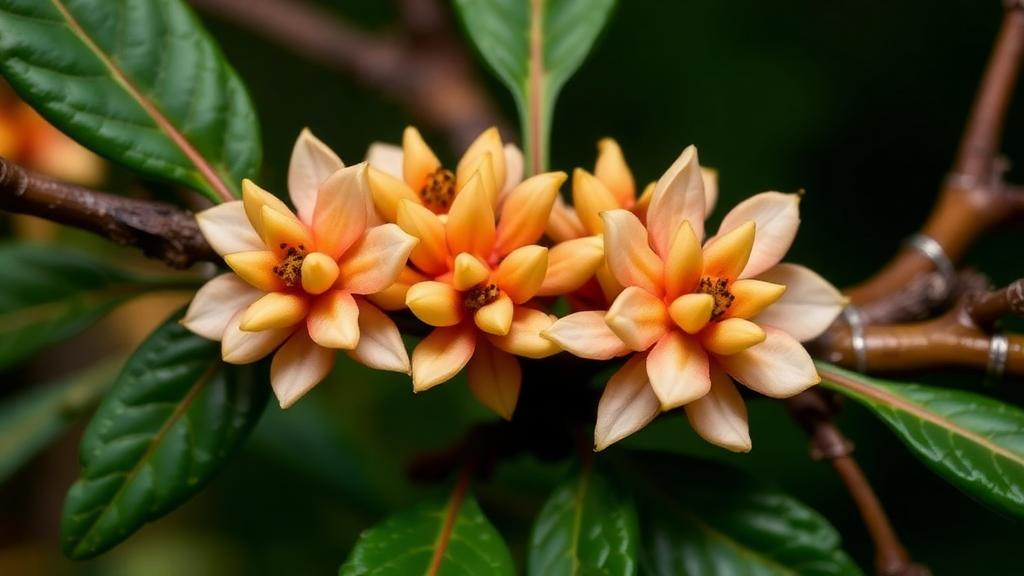
A humble tree that blankets the hills of southern China may be hiding one of the most promising plant-based sources of medium-chain triglycerides ever characterized. New research published in Food Chemistry: X has examined the seeds of Cinnamomum camphora, the camphor tree, across its three principal chemotypes and found striking differences in seed size, oil content, fatty acid composition, and antibacterial power. The findings could reshape how the food industry thinks about natural sources of medium-chain fats, a market that reached 2.8 billion dollars in 2025 and continues to grow at more than six percent annually.
Medium-chain triglycerides, or MCTs, have become a darling of nutrition science for good reason. Unlike the long-chain triglycerides that dominate ordinary cooking oils, MCTs carry fatty acids of eight to twelve carbon atoms that are rapidly hydrolyzed in the gut, absorbed directly by intestinal epithelial cells, and oxidized in mitochondria without the need for carnitine shuttling. This metabolic shortcut drives quick ketone body production, supports gut microbiota balance, promotes mitochondrial biogenesis, and has been linked to improved metabolic disorders, seizure control, enhanced memory, and potential protection against neurodegeneration in Alzheimer’s disease. Yet natural MCT-rich sources remain scarce, with coconut oil and palm kernel oil serving as the industrial mainstays, both requiring chemical or enzymatic processing that generates by-products and environmental waste.
The camphor tree offers a compelling alternative. A member of the laurel family, it produces roughly one million tons of seeds annually in China alone, and those seeds contain between 46 and 62 percent oil, with medium-chain fatty acids accounting for up to 92 percent of the total fatty acid pool. Despite preliminary animal studies suggesting antioxidant, anti-inflammatory, lipid-metabolism, and antiobesity benefits, the seed oil has remained largely untapped by the food industry. What makes the new study distinctive is its chemotype-driven approach. Cinnamomum camphora trees are classified by their dominant terpene, and the researchers focused on the three main types: the camphor chemotype, the linalool chemotype, and the eucalyptol chemotype, each named for the monoterpene that makes up more than 41 percent of its total terpene content.
Working with 30 to 35 year old trees at Zhejiang A&F University, the team collected seeds in November 2025 and measured everything from seed dimensions and weights to lipid content and fatty acid profiles. The morphological differences alone were remarkable. Camphor-chemotype seeds appeared light tawny, linalool seeds light cyan brown, and eucalyptol seeds brown, with statistically significant color differences among all three. Camphor-chemotype seeds were the longest and widest, and their fresh weight exceeded that of linalool seeds by 21.7 percent and eucalyptol seeds by 40.9 percent. Kernel dry weights followed the same pattern, with camphor-chemotype kernels 26.8 to 29.2 percent heavier than their counterparts. The researchers attribute this to the camphor chemotype’s superior photosynthetic performance, which floods developing seeds with the primary metabolites needed for growth and lipid accumulation.
Lipid content mirrored the size advantage. Camphor-chemotype seeds contained 56.1 percent lipid, compared with 53.7 percent for linalool and 51.6 percent for eucalyptol seeds. While these differences may seem modest, the authors note that in large-scale industrial production they translate into meaningful variations in yield and economic return, compounded by the larger seed mass of the camphor chemotype. Gas chromatography-mass spectrometry identified eight fatty acids across all seeds, including caprylic, capric, lauric, myristic, palmitic, stearic, oleic, and linoleic acids. Medium-chain fatty acids dominated every chemotype, comprising 97.2, 96.8, and 96.6 percent of total fatty acids in camphor, linalool, and eucalyptol seeds respectively, confirming the species’ extraordinary potential as a natural MCT source.
The most consequential discovery lay in the ratio of the two principal medium-chain fatty acids. Capric acid reached 307.52 milligrams per gram in camphor-chemotype seeds, representing 60.8 percent of total fatty acids, whereas lauric acid peaked in linalool seeds at 196.76 milligrams per gram, or 41.9 percent of the total. In other words, the camphor chemotype is proportionally richer in capric acid, while the linalool and eucalyptol chemotypes favor lauric acid. Notably, no terpenoids were detected in the kernel lipid extracts above the detection limit, suggesting the characteristic aromatic compounds of the tree are not deposited in the seeds, an advantage for developing neutral-tasting functional foods.
The antibacterial experiments delivered the study’s most striking results. Lipid extracts from all three chemotypes significantly suppressed the growth of Bacillus subtilis, a Gram-positive bacterium, with mortality climbing to between 80.2 and 88.6 percent at the highest extract concentration of 0.5 milligrams per milliliter. Against Pseudomonas aeruginosa, a Gram-negative pathogen, inhibition required far higher concentrations but was still evident. Critically, linalool and eucalyptol extracts proved significantly more lethal than camphor-chemotype extracts against both bacteria, as shown by their lower LC50 values. Correlation analysis revealed that antibacterial activity tracked closely with capric and lauric acid content, with correlation coefficients between 0.950 and 0.985.
Purified fatty acid assays pinpointed lauric acid as the stronger antimicrobial agent. At 0.2 millimolar, capric acid reduced B. subtilis density by 99.8 percent, but lauric acid achieved lower LC50 values against both test organisms, consistent with the more pronounced membrane-disrupting effects of its slightly longer twelve-carbon chain. The mechanism is well understood in principle: medium-chain fatty acids insert into the phospholipid bilayer, increase membrane permeability, and interfere with membrane proteins, while lauric acid additionally disrupts the respiratory electron-transport chain and inhibits membrane-associated enzymes. The differential susceptibility of the two bacterial types fits established structural biology, since Gram-negative bacteria such as P. aeruginosa wrap themselves in an outer membrane of tightly packed lipopolysaccharides that impedes passive diffusion of hydrophobic fatty acids, whereas Gram-positive species lack this barrier.
The implications ripple outward in several directions. For food preservation, the results suggest that camphor seed lipids could serve as natural antimicrobial additives, with linalool and eucalyptol chemotype oils offering the strongest protection against spoilage organisms. For nutrition, the seeds represent a plant-based MCT source that could reduce reliance on coconut and palm kernel oil and the catalytic processing they require. And for agriculture, the work demonstrates that chemotype selection matters profoundly: growers seeking maximum oil yield should plant camphor-chemotype trees, while those targeting antimicrobial applications may prefer linalool or eucalyptol varieties with their higher lauric acid loads. The researchers also caution that mixing chemotypes in harvests, as has likely occurred in previous surveys that did not distinguish them, can skew reported fatty acid ratios, which may explain why some of their measurements exceeded previously published ranges.
What began as a botanical classification exercise has thus converged on a practical question with billion-dollar stakes: which version of a common Chinese tree makes the best functional oil? The answer, it turns out, depends on the goal. Bigger seeds and more oil point one way, stronger bacteria-killing power points another, and the medium-chain fatty acid chemistry underlying both is now mapped with a precision that should accelerate the camphor tree’s journey from roadside ornamental to industrial crop. As demand for natural MCTs and clean-label antimicrobials continues to climb, the seeds of this aromatic laurel may finally get their moment.
Subject of Research: Chemotype-dependent variation in seed lipids and antibacterial activity of Cinnamomum camphora
Article Title: Differences in lipids and antibacterial activities among three chemotypes of Cinnamomum camphora seeds
Article References: Wang, Z., Peng, F., Xu, H., Wu, X., & Zuo, Z. (2026). Differences in lipids and antibacterial activities among three chemotypes of Cinnamomum camphora seeds. Food Chemistry: X, 39, Article 104507. https://doi.org/10.1016/j.fochx.2026.104507
Image Credits: AI Generated
DOI: 10.1016/j.fochx.2026.104507
Keywords: Cinnamomum camphora, medium-chain triglycerides, capric acid, lauric acid, antibacterial activity, seed oil, chemotypes, fatty acid composition, food preservation, functional foods, Gram-positive bacteria, Gram-negative bacteria
Cite Scienmag News
Daisy Hatcher. (October 2, 2026). Camphor Tree Seeds Reveal Chemotype Secrets for Healthier Oils. Scienmag. https://scienmag.com/camphor-tree-seeds-reveal-chemotype-secrets-for-healthier-oils/
Daisy Hatcher. "Camphor Tree Seeds Reveal Chemotype Secrets for Healthier Oils." Scienmag, 2 October 2026, https://scienmag.com/camphor-tree-seeds-reveal-chemotype-secrets-for-healthier-oils/. Accessed 2 October 2026.
Daisy Hatcher. "Camphor Tree Seeds Reveal Chemotype Secrets for Healthier Oils." Scienmag. October 2, 2026. https://scienmag.com/camphor-tree-seeds-reveal-chemotype-secrets-for-healthier-oils/


