


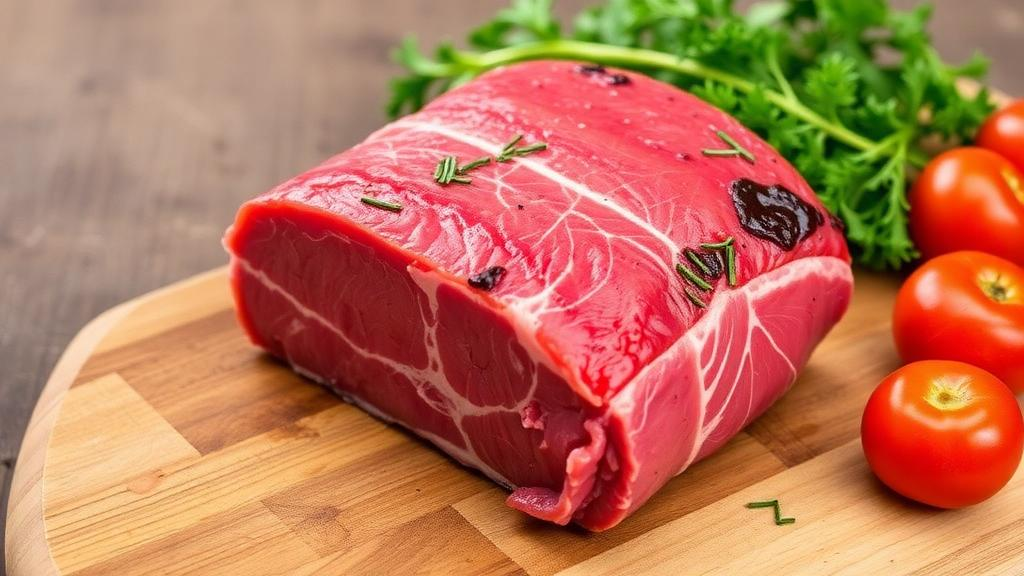
Meat has long been a dietary staple, but a new review argues that the way we choose, cook, and treat it could transform a modest portion into a far more powerful nutritional package for the two groups that need it most: infants and the elderly. Writing in the journal Food Science of Animal Resources, food scientist Michelle Ji Yeon Yoo of Auckland University of Technology lays out a technical roadmap for maximizing the digestibility and amino acid delivery of mammalian meat, from beef tenderloin to lamb shank, using tools that range from high-pressure processing to enzymes extracted from kiwifruit peels. The central insight is deceptively simple: the nutritional value of meat is not fixed at slaughter. It is a dynamic property that can be engineered, cut by cut and process by process, to suit bodies whose digestive systems are either still developing or quietly declining.
The biological case for targeting these populations is grounded in protein physiology. Infants require between roughly 0.85 and 1.31 grams of protein per kilogram of body weight daily to fuel rapid tissue growth, organ development, and neurocognitive maturation, according to European Food Safety Authority reference values. Older adults, meanwhile, face a subtler problem known as anabolic resistance: their muscles respond less vigorously to dietary protein, demanding higher quality inputs to maintain the same rate of muscle protein synthesis. Compounding the challenge, both groups digest protein less efficiently. Infants produce reduced gastric acid and protease activity, while seniors experience diminished mastication, lower digestive enzyme secretion, and slower gastrointestinal transit. A piece of steak that delivers a full complement of amino acids to a healthy adult may pass through a fragile or aging gut with much of its nutritional payload unabsorbed and ultimately wasted.
Red meat is uniquely positioned to meet these demands because it is a complete protein, containing all nine essential amino acids, alongside heme iron, zinc, phosphorus, selenium, vitamins B6 and B12, and bioactive molecules such as creatine, taurine, and carnitine. Protein makes up roughly 20 to 25 percent of raw red meat, and its quality metrics are exceptional. Using the Digestible Indispensable Amino Acid Score, the method now endorsed by the Food and Agriculture Organization of the United Nations, beef, pork, and lamb all score above 100, indicating highly digestible proteins with balanced essential amino acid profiles. By contrast, many plant-based protein products fall short on lysine, methionine, and cysteine. For vulnerable populations who cannot afford to lose amino acids to poor digestion, that quality gap matters.
One of the review’s most striking arguments is that not all cuts are created equal. Amino acid profiles vary across species, anatomical locations, and muscle fiber types. Slow-twitch, oxidative muscles are richer in free amino acids such as glutamine, glutamate, aspartate, serine, and histidine, and their higher protein turnover yields a larger pool of readily digestible substrates. Fast-twitch muscles, by contrast, concentrate dipeptides like carnosine and anserine along with free glycine and alanine, but produce tougher, firmer textures. The differences are quantifiable. In raw pork, glutamine levels in the masseter muscle of the cheek reach 808.57 micromoles per 100 grams, compared with 447.37 in the longissimus dorsi of the back. In beef, cardiac muscle contains 96.24 milligrams of histidine per 100 grams against just 9.71 in the full back, while taurine in the masseter measures 111.21 milligrams per 100 grams, well above the knuckle or inside round.
These compositional nuances translate directly into functional benefits. Beef tenderloin stands out for its leucine content, and leucine is the branched-chain amino acid that most potently stimulates mTOR signaling and skeletal muscle protein synthesis, precisely the pathway that anabolic resistance blunts in the elderly. Collagen-rich cuts such as shank, chuck, and brisket deliver abundant glycine and proline, and glycine supplementation has been linked to improvements in metabolic syndrome markers including diabetes, obesity, hyperlipidemia, and hypertension, conditions disproportionately relevant to aging populations. Taurine, concentrated in oxidative muscles, supports cardiovascular function, the retina, and the central nervous system, and has been proposed as a therapeutic candidate for bone disorders and neurodegenerative disease. Selecting the right cut, in other words, is a form of precision nutrition.
Once the cut is chosen, processing becomes the lever. Conventional boiling yields protein digestibility of roughly 85 to 88 percent, but gentler thermal approaches do better. Sous vide cooking, in which vacuum-packed meat is held in a water bath at 55 to 60 degrees Celsius for extended periods, pushes digestibility to 90 to 92 percent by limiting thermal aggregation while still gelatinizing collagen in tough cuts. The temperature window is critical. Moderate heat unfolds proteins and exposes cleavage sites to digestive enzymes, but prolonged heating above 100 degrees Celsius promotes aggregation and intermolecular cross-linking that resist proteolysis. Grilling and frying can also degrade lysine through Maillard reactions, whereas moist-heat methods like braising and stewing preserve amino acid integrity while softening connective tissue, a combination well suited to infants and older adults who need tender, easily masticated food.
High-pressure processing offers an even more powerful intervention. Treating meat at pressures between 100 and 300 megapascals disrupts actomyosin complexes, converts alpha-helix structures toward beta-sheets, and unfolds myofibrillar proteins such as myosin and actin, making them far more accessible to digestive proteases. Studies compiled in the review show that moderate pressure enhances free amino acid liberation by approximately 15 to 40 percent, with the greatest gains, up to 50 percent, observed in beef longissimus dorsi treated at 600 megapascals. The mechanism appears to involve lysosomal disruption: pressures above 200 megapascals destroy lysosomes, releasing endogenous proteases that continue degrading proteins during storage. But the dose-response curve is unforgiving. Beyond 300 to 400 megapascals, hydrophobic interactions and disulfide bonding drive protein aggregation, and aminopeptidases and carboxypeptidases are inactivated, partially reversing the digestibility gains. Combining high-pressure processing with mild thermal treatment maximizes digestibility to 95 to 97 percent, and infant-model digestion studies confirm that pressure-treated beef outperforms untreated controls.
Ageing the meat adds a third dimension. Dry ageing and its more controlled variant, in-bag dry ageing, harness endogenous calpains, cathepsins, and exopeptidases to progressively fragment myofibrillar and cytoskeletal proteins during storage. The result is an accumulation of low-molecular-weight peptides below 3 kilodaltons and free amino acids that act as pre-digested intermediates, accelerating gastric-phase hydrolysis without necessarily changing total digestibility. In-bag dry ageing, which uses semi-permeable packaging to permit moisture loss while limiting microbial contamination, achieves comparable or greater amino acid accumulation than conventional dry ageing with reduced trimming losses. Dry-aged lamb shows greater gastric digestibility and free amino acid release than wet-aged counterparts, suggesting the technique tunes digestion kinetics rather than overall protein utilization. For consumers with intact dentition, aged meat offers a degree of pre-digestion without the need for industrial hydrolysates.
The final tool is enzymatic, and it draws on an unexpected resource: fruit waste. Papain from papaya, bromelain from pineapple, actinidin from kiwifruit, and ficin from fig are all generally recognized as safe proteases capable of cleaving both myofibrillar proteins and collagen. Actinidin treatment increases protein solubility, reduces beef shear force, and generates low-molecular-weight fragments that hydrolyze rapidly in simulated gastric and intestinal conditions. Papain treatment of beef raises intestinal degrees of hydrolysis to roughly 34 to 44 percent while cutting shear force by more than 40 percent, improving both digestibility and ease of chewing. Because these enzymes can be extracted from peels that would otherwise be discarded, the approach doubles as food waste valorization. The review’s synthesis is a layered protocol: actinidin pre-treatment at refrigeration temperatures, followed by high-pressure processing at 200 to 300 megapascals, then sous vide cooking, applied to leucine-rich tenderloin, represents the optimal combination for infants, toddlers, and seniors with swallowing difficulties.
Yoo frames the strategy as more than a nutritional refinement. By extracting maximal absorbable nutrition from a given quantity of meat, cut selection and processing optimization support a more sustainable food system, potentially unlocking value from lower-value, collagen-rich cuts that currently command premium prices only after lengthy cooking. The author acknowledges that significant work remains: quantifying digestion kinetics in vivo, tracking leucine bioaccessibility and post-prandial amino acid absorption, and conducting full sustainability assessments of energy use and yield. But the underlying premise is compelling. If the goal is to feed growing populations with limited resources while protecting those whose bodies struggle to extract nutrition from ordinary food, the future of meat may lie less in what we raise and more in how we prepare it.
Subject of Research: Optimizing the nutritional profile and protein digestibility of mammalian meat for infant and geriatric nutrition
Article Title: Strategies to optimize the nutritional profile of mammalian meat for infants and geriatric population
Article References: Yoo, M. J. Y. (2026). Strategies to optimize the nutritional profile of mammalian meat for infants and geriatric population. Food Science of Animal Resources, 46(1), Article 71. https://doi.org/10.1007/s44463-026-00094-5
Image Credits: AI Generated
DOI: 10.1007/s44463-026-00094-5
Keywords: meat protein digestibility, infant nutrition, geriatric nutrition, high-pressure processing, sous vide, dry ageing, free amino acids, leucine, actinidin, sarcopenia, protein quality, food processing
Cite Scienmag News
Beatrice Stafford. (October 2, 2026). How Processing Tricks Could Turn Ordinary Meat Into Superfood for Babies and Seniors. Scienmag. https://scienmag.com/how-processing-tricks-could-turn-ordinary-meat-into-superfood-for-babies-and-seniors/
Beatrice Stafford. "How Processing Tricks Could Turn Ordinary Meat Into Superfood for Babies and Seniors." Scienmag, 2 October 2026, https://scienmag.com/how-processing-tricks-could-turn-ordinary-meat-into-superfood-for-babies-and-seniors/. Accessed 2 October 2026.
Beatrice Stafford. "How Processing Tricks Could Turn Ordinary Meat Into Superfood for Babies and Seniors." Scienmag. October 2, 2026. https://scienmag.com/how-processing-tricks-could-turn-ordinary-meat-into-superfood-for-babies-and-seniors/


