


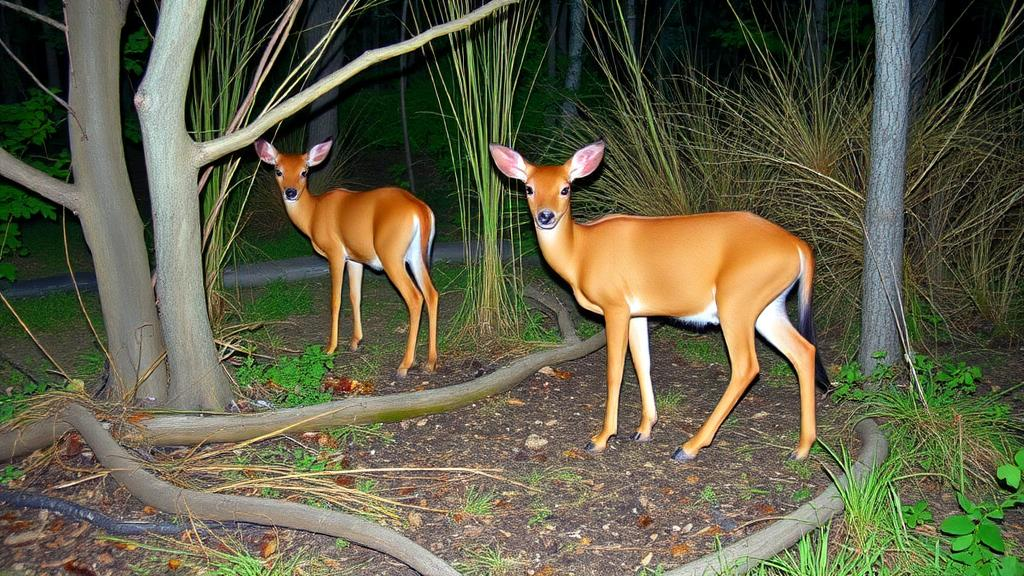
Deep learning has quietly become one of the most powerful tools in the fight against biodiversity loss, according to a sweeping new review published in iScience. The study, led by Donghua Xuan and colleagues, systematically analyzed 159 primary research studies published between 2014 and 2026, all focused on applying artificial intelligence to the monitoring of species listed by CITES or classified as threatened on the IUCN Red List. Its central message is striking: the bottleneck that once made wildlife monitoring impossible at scale—mountains of unanalyzed camera trap imagery—has become a tractable computational problem, with automated systems now matching or exceeding human expert performance across a growing range of taxa.
The scale of the data problem is hard to overstate. Camera trap networks around the world generate millions of images every year, yet analysis capacity lags far behind. In 2023, the 500,000 images collected by Wolong National Nature Reserve’s giant panda monitoring program were estimated to require a full year of expert labor to process manually. Meanwhile, modern vertebrate extinction rates are estimated to run up to 100 times higher than natural background levels, and genus-level extinctions are already 35 times above baseline. Effective conservation demands timely, accurate data on where species live, how many remain, and what they are doing—precisely the information that traditional methods such as line transects and mark-recapture surveys struggle to deliver quickly or cheaply.
The review traces three successive waves of neural network architecture that have redefined what automated monitoring can achieve. The first era, beginning around 2015, belongs to convolutional neural networks, or CNNs. Building on the 2012 breakthrough of AlexNet, architectures such as ResNet enabled dramatically deeper networks through residual connections. The landmark demonstration came when researchers applied ResNet-152 to 3.2 million images from the Snapshot Serengeti camera trap dataset, achieving 96.6 percent accuracy across 48 species—performance comparable to crowdsourced human volunteers, but delivered in seconds rather than months. Detection pipelines such as the YOLO (You Only Look Once) family and Faster R-CNN then solved the harder problem of localizing animals in full-scene images, with wildlife-adapted YOLO variants reaching 93.8 percent mean average precision at more than 30 frames per second, fast enough for real-time applications such as preventing human-wildlife conflict.
The second wave, emerging around 2020, brought attention-based architectures. Vision Transformers, which process images as sequences of patches and model global context through self-attention, excel at relating animals to distant environmental cues, handling severe occlusion by attending to visible body parts, and modeling temporal dynamics across video frames—capabilities crucial for behavior analysis. State-space models such as Mamba offer a linear-complexity alternative to self-attention for sequence modeling. The third and most recent paradigm is that of foundation models: large-scale pre-trained systems such as CLIP, SAM, and DINOv2 that emerged after 2021. These models address a core dilemma of rare-species monitoring—what to do when no labeled training images exist at all. CLIP enables open-vocabulary recognition of species never seen during training, SAM can delineate individual animals in cluttered field imagery without species-specific training, and DINOv2’s self-supervised features have supported everything from age estimation in wild mandrills to re-identifying individual western lowland gorillas.
Beyond simply naming species, the review organizes the field into four technical domains. The second of these, individual re-identification, exploits the natural markings animals carry—tiger stripes, leopard spots, primate facial features, whale shark spot patterns—to recognize specific individuals without ever touching them. Deep metric learning lies at the heart of these systems: networks learn an embedding space in which images of the same individual cluster together while different individuals are pushed apart, using techniques such as Siamese networks and triplet loss with hard negative mining. Part-based models that learn separate embeddings for the head, torso, and legs keep matching reliable when vegetation or frame edges hide parts of the animal. The results are remarkable: Amur tiger re-identification has reached 99.37 percent Rank-1 accuracy, snow leopards 98.6 percent, hawksbill sea turtles 95.1 percent on a 13-year dataset, and chimpanzees over 90 percent from unconstrained field video in Uganda’s Budongo Forest.
These capabilities transform population ecology. Traditional mark-recapture estimation requires physically capturing animals to attach tags or collars—a stressful, expensive, and sometimes dangerous procedure. Photo-based re-identification allows the same statistical frameworks, including spatially explicit capture-recapture, to run on natural markings instead, eliminating capture stress while dramatically increasing sample sizes. Multi-site camera networks with individual identification reveal home ranges, dispersal corridors, and population fragmentation; tiger re-identification across reserve boundaries documents transboundary movements that demand coordinated international conservation. Repeated observations of known individuals also enable social network inference—identifying keystone animals, dominance hierarchies, and information flow—without the years of human habituation that close behavioral observation traditionally requires.
The third domain, soft biometrics, extracts demographic information—age, sex, and body condition—directly from images. Because age is inherently ordered, methods such as ordinal regression respect the structure of the problem, and relative error turns out to be the more meaningful cross-species metric: a mean absolute error of 3.6 years represents 8 percent of a chimpanzee’s lifespan but a much larger fraction for shorter-lived species. The most precise result reported came from a dual-branch model combining facial appearance with nose melanin patterns in Amur tigers, achieving an error of just 0.568 years, or 4.1 percent of the species’ mean lifespan. For giant pandas, facial-image age classification reaches 85 to 90 percent accuracy and cut manual analysis time from 12 months to two weeks, enabling real-time tracking of population age structure, recruitment rates, and even pregnancy status through behavioral analysis.
The fourth domain, behavior and pose estimation, moves from stills to video. Two-stream networks that separate appearance and motion gave way to 3D CNNs, and later to efficient SlowFast architectures that pair a low-frame-rate pathway for spatial semantics with a high-frame-rate pathway for fine motion. Video Transformers now handle complex multi-step behaviors such as social interactions, as demonstrated by systems recognizing wild giant panda behavior. Pose estimation—localizing anatomical keypoints—has expanded far beyond humans and laboratory animals thanks to benchmarks such as AP-10K, with 10,015 annotated images across 54 species, and Animal3D, which enables 3D reconstruction from monocular video. Applications range from quantifying activity budgets and detecting stereotyped behaviors in captive welfare monitoring to gait analysis that can flag injury or disease at population scale.
The review is also candid about the field’s structural biases. Mammals account for 79.8 percent of the 159 studies, with carnivores alone at 32.7 percent, while birds make up 10.1 percent, reptiles 5 percent, and insects and other invertebrates a mere 1.9 percent. Crucially, the authors show that this deep learning maturity tracks dataset richness and conservation funding rather than actual extinction risk: reptiles, all of them critically endangered in the analyzed sample, and insects have no published re-identification benchmarks at all. Geographic bias compounds the problem—North American and European studies show the narrowest species breadth and the highest rates of single-species research—and models trained at one site can collapse at another, with Serengeti-trained classifiers dropping from over 96 percent accuracy to 60 or 70 percent on different African ecosystems, a phenomenon known as domain shift.
The authors map these obstacles to proven remedies: focal loss and balanced sampling for extreme class imbalance, few-shot learning and synthetic data generation for rare species with almost no examples, domain adaptation and multi-site training for generalization, and model compression techniques such as quantization, pruning, and knowledge distillation that deliver 5 to 10 times speedups for solar-powered edge devices in the field. Looking forward, they identify four priorities: wildlife-adapted foundation models, multimodal sensor fusion combining cameras with acoustics and GPS tracking, spatiotemporal modeling of long-term behavioral sequences, and sustainable edge AI that minimizes the carbon footprint of computation. Cryptic species remain a sobering limit case—CNNs classifying Scottish wildcats against domestic cat hybrids achieved only 71 percent accuracy on genetically validated images, with direct legal consequences for misclassification—underscoring the authors’ call for uncertainty quantification and human review workflows. The path from pixels to conservation impact, the review concludes, depends less on marginal accuracy gains than on robustness, efficiency, interpretability, and genuine partnership between computer vision researchers and the conservation practitioners whose decisions the algorithms must ultimately serve.
Subject of Research: Deep learning applications for automated monitoring of rare and endangered wildlife
Article Title: From pixels to conservation: Deep learning for automated monitoring of rare and endangered wildlife
Article References: Xuan, D., Cai, Y., Xu, M., Long, C., & Cai, N. (2026). From pixels to conservation: Deep learning for automated monitoring of rare and endangered wildlife. iScience, 29(10), Article 116669. https://doi.org/10.1016/j.isci.2026.116669
Image Credits: AI Generated
DOI: Not provided
Keywords: deep learning, wildlife conservation, camera traps, species recognition, individual re-identification, foundation models, computer vision, biodiversity monitoring, endangered species, pose estimation, soft biometrics, edge AI
Cite Scienmag News
Margaret Porter. (October 2, 2026). Deep Learning Turns Millions of Wildlife Camera Trap Images Into Conservation Action. Scienmag. https://scienmag.com/deep-learning-turns-millions-of-wildlife-camera-trap-images-into-conservation-action/
Margaret Porter. "Deep Learning Turns Millions of Wildlife Camera Trap Images Into Conservation Action." Scienmag, 2 October 2026, https://scienmag.com/deep-learning-turns-millions-of-wildlife-camera-trap-images-into-conservation-action/. Accessed 2 October 2026.
Margaret Porter. "Deep Learning Turns Millions of Wildlife Camera Trap Images Into Conservation Action." Scienmag. October 2, 2026. https://scienmag.com/deep-learning-turns-millions-of-wildlife-camera-trap-images-into-conservation-action/


