


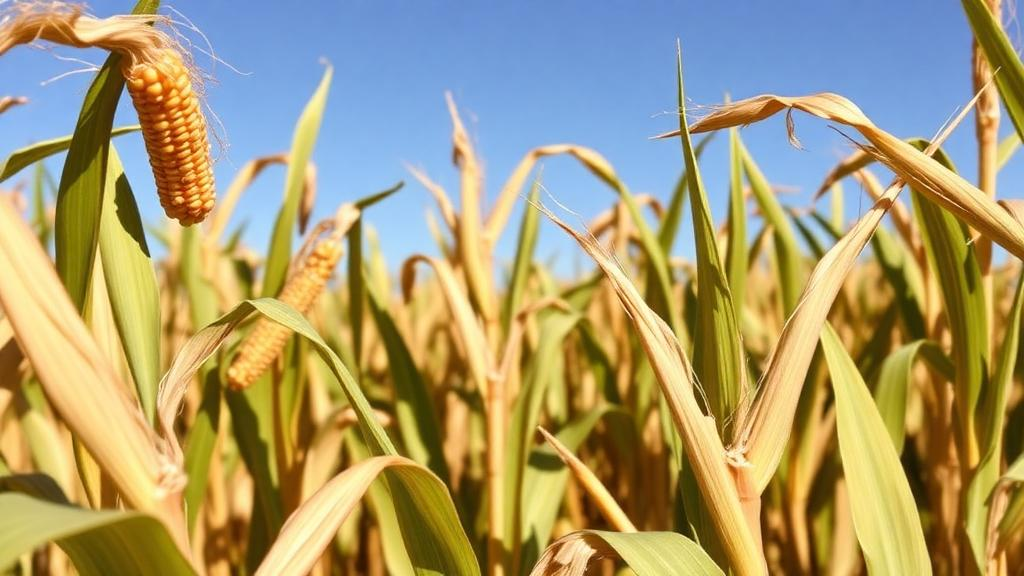
Drought is one of the most punishing forces in modern agriculture, and few crops feel its bite more acutely than maize. As climate volatility intensifies across arid and semi-arid farming regions, breeders have long sought to understand why some maize lines shrug off water scarcity while others collapse. A new study published in BMC Genomics by Tianyuan Qin and colleagues at the Xinjiang Academy of Agricultural Sciences, working with a collaborator at Ghana’s CSIR-Crops Research Institute, has now mapped the molecular fault line that separates drought tolerance from drought sensitivity in maize, and the findings offer a detailed blueprint for engineering more resilient crops.
The research team focused on two maize inbred lines with starkly contrasting behavior under water stress: PHBA6, a drought-tolerant genotype, and J63, a drought-sensitive one. Crucially, the researchers examined both lines at the flowering stage, the developmental window when water deficit does the most damage to yield. By holding drought conditions identical across genotypes and then interrogating both the transcriptome, the complete set of genes being transcribed, and the proteome, the actual protein machinery doing the cellular work, the team could see not just which instructions were being read but which molecular tools were actually being built.
The scale of the analysis was formidable. Across genotype- and tissue-based comparisons under drought stress, the researchers identified 9,595 differentially expressed genes and 3,140 differentially expressed proteins, using a fold-change threshold of at least 1.2 or at most 0.83 with a significance cutoff of p less than or equal to 0.05. This dual-layer approach matters because transcript abundance and protein abundance do not always align; a gene may be transcribed vigorously yet fail to yield a corresponding protein, and only by measuring both layers can researchers distinguish genuine regulatory shifts from transcriptional noise. The sheer number of moving parts underscores how profoundly drought reprograms plant biology.
Within that torrent of data, several molecular players emerged as decisive. In the tolerant PHBA6 line, two proteins stood out for their elevated abundance relative to the sensitive line: ZmHSP70, a heat shock protein that acts as a molecular chaperone, stabilizing other proteins and preventing them from misfolding when cellular conditions deteriorate, and ZmGST, a glutathione S-transferase involved in detoxification. Both are classic components of the cellular stress arsenal. Their enrichment in the tolerant genotype suggests that PHBA6 invests heavily in protecting its existing protein inventory and neutralizing toxic byproducts of stress, a strategy of preservation rather than panic.
That protective posture extended to the management of reactive oxygen species, the chemically unstable molecules that accumulate when photosynthesis is disrupted and that can shred membranes, proteins, and DNA if left unchecked. The study identified differentially expressed genes governing antioxidant metabolism and ROS scavenging, including peroxidase genes such as ZmPOD, alongside genes tied to sucrose synthesis and osmotic adjustment, such as ZmSPS, and trehalose biosynthesis, such as ZmTPP. Osmotic adjustment is the plant’s equivalent of keeping its cells inflated under drought: by accumulating compatible solutes like sucrose and trehalose, the tolerant line can maintain turgor pressure and keep water flowing through its tissues even as the soil dries.
The sensitive J63 line told a very different story. Rather than mounting an amplified defense, it showed reduced abundance of ZmRBCS, a component of the photosynthetic machinery responsible for carbon fixation, and ZmPR1, a pathogenesis- and stress-related protein. Other stress-associated proteins, including ZmPsbP, part of the oxygen-evolving complex of photosystem II, and ZmMDAR, an enzyme in the ascorbate recycling pathway that helps regenerate a key antioxidant, were also diminished. In effect, the sensitive genotype was losing ground on two fronts simultaneously: its photosynthetic apparatus was eroding, and its antioxidant recycling system was weakening, leaving it doubly exposed to the oxidative damage that drought provokes.
To move beyond lists of individual genes, the team applied weighted gene coexpression network analysis, or WGCNA, a statistical framework that clusters thousands of genes into modules based on correlated expression patterns across samples. This systems-level view identified key modules associated with genotype- and trait-related differences under drought stress, and those modules were significantly enriched in four functional domains: ion transport, hydrolase activity, oxidative phosphorylation, and carbon fixation. The enrichment pattern is telling. Ion transport points to stomatal regulation and ion homeostasis, hydrolase activity to the remodeling of cellular components, oxidative phosphorylation to the energy economy of the stressed cell, and carbon fixation to the photosynthetic engine itself. Drought tolerance, in other words, is not a single switch but a coordinated reallocation of resources across the entire metabolic network.
Taken together, the integrated transcriptomic, proteomic, and network analyses converge on a coherent model of what separates a drought survivor from a drought casualty. The tolerant genotype combines enhanced antioxidant capacity, sustained photosynthetic performance, and efficient energy utilization, while the sensitive genotype falters on all three fronts. The authors frame these coordinated differences as involving ROS detoxification, photosynthetic maintenance, energy metabolism, and stress signaling pathways, and they position the identified genes, including ZmHSP70, ZmGST, ZmPOD, ZmSPS, and ZmTPP, as candidate molecular targets for improving drought resilience in maize breeding programs.
The practical implications reach well beyond the laboratory. Flowering-stage drought is a principal cause of yield loss in maize worldwide, and the candidate genes identified here give breeders concrete markers to screen for when developing varieties for water-limited environments. Because the study compared genotypes under identical conditions at the same developmental stage, the molecular signatures it uncovered are directly attributable to genetic differences in drought response rather than confounding variation in stress exposure. That precision is what transforms a catalog of thousands of differentially expressed molecules into an actionable shortlist of breeding targets.
There are also broader lessons for plant science. The study demonstrates the power of pairing transcriptomics with proteomics: had the researchers measured only RNA, they might have missed the genotype-specific protein differences in ZmHSP70 and ZmGST that appear central to tolerance. And the WGCNA results show how network-level analysis can reveal functional themes, from oxidative phosphorylation to carbon fixation, that no single gene list could expose. As sequencing and mass spectrometry become faster and cheaper, this integrated multi-omics strategy is likely to become the standard for dissecting complex stress traits, not just in maize but across the crop species that humanity depends on. For a world where every growing season brings new uncertainty about water, understanding the molecular playbook of a drought-hardened maize line is more than an academic exercise; it is a step toward food security in the hottest, driest decades ahead.
Subject of Research: Genotype-specific transcriptomic and proteomic regulatory networks underlying drought stress tolerance in maize
Article Title: Comprehensive transcriptome and proteome analyses reveal genotype-specific regulatory networks under drought stress in Maize
Article References: Qin, T., Lv, Y., Abula, A., Dormatey, R., Han, D., Dong, Y., Zhang, X., Li, M., & Yang, J. (2026). Comprehensive transcriptome and proteome analyses reveal genotype-specific regulatory networks under drought stress in Maize. BMC Genomics. https://doi.org/10.1186/s12864-026-13427-x
Image Credits: AI Generated
DOI: 10.1186/s12864-026-13427-x
Keywords: maize, drought stress, transcriptome, proteome, gene coexpression network, reactive oxygen species, antioxidant defense, photosynthesis, osmotic adjustment, WGCNA, plant molecular biology, crop breeding
Cite Scienmag News
Alan Morgan. (October 1, 2026). Drought-Hardened Maize Reveals Its Molecular Survival Playbook. Scienmag. https://scienmag.com/drought-hardened-maize-reveals-its-molecular-survival-playbook/
Alan Morgan. "Drought-Hardened Maize Reveals Its Molecular Survival Playbook." Scienmag, 1 October 2026, https://scienmag.com/drought-hardened-maize-reveals-its-molecular-survival-playbook/. Accessed 1 October 2026.
Alan Morgan. "Drought-Hardened Maize Reveals Its Molecular Survival Playbook." Scienmag. October 1, 2026. https://scienmag.com/drought-hardened-maize-reveals-its-molecular-survival-playbook/


