


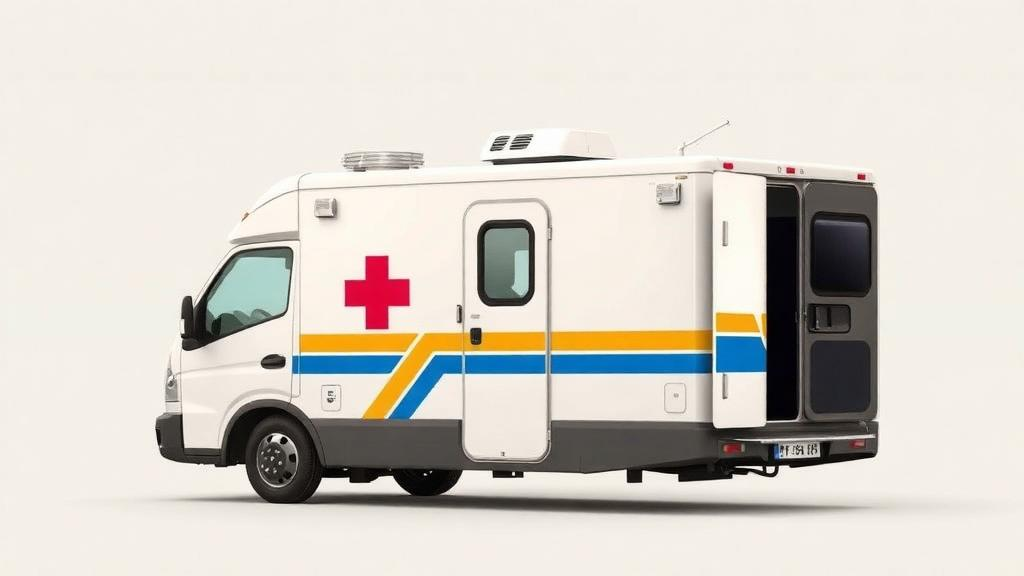
When disasters strike, the physical infrastructure of healthcare is often among the first casualties. Earthquakes crush clinics, hurricanes flood hospitals, and pandemics force the closure of the very facilities people depend on for routine and urgent care. A new qualitative study published in Public Health in Practice examines how mobile health units, or MHUs, adapted their operations during the COVID-19 pandemic, and what their experience can teach emergency planners about keeping care flowing when conventional systems fail. The research, led by Abby H. Storm and colleagues at the University of Delaware, including Yendelela L. Cuffee, Laurie Ruggiero, Michael Maguire, and Jennifer A. Horney, draws on firsthand accounts from leaders of regional mobile health coalitions across the United States to identify the operational strengths, weaknesses, and workarounds that defined pandemic-era mobile healthcare.
The rationale for studying mobile units in disaster contexts is grounded in a well-documented pattern of care interruption. After the 2011 Christchurch earthquake, all appointments were canceled for two weeks because neither patients nor providers could reach offices, laboratories, or electronic medical records. Hurricane Katrina produced a longer and larger disruption, contributing to a 15.9 percent increase in morbidity among older, nonwhite residents of New Orleans in the year after the storm. When the Boston Marathon bombing occurred in 2013, hospitals activated emergency responses and canceled inpatient and outpatient services to free resources for the surge of blast victims. In some cases, disaster aid can temporarily expand capacity, as when international funding after the 2010 Haiti earthquake rebuilt seven of eight damaged facilities and brought twelve new ones online. Yet the COVID-19 pandemic was unique in its temporal and geographic scope, and about half of surveyed U.S. hospital leaders reported reduced quality of care and worse outcomes for non-COVID patients between November 2020 and June 2021.
Mobile health units occupy a distinctive niche in this landscape. They are community-based vehicles that deliver direct clinical services, from primary and preventive care to dental work, cancer screenings, substance use treatment, and maternal and child health. After Hurricane Sandy, MHUs delivered services disrupted by damage to New York’s healthcare infrastructure and reached residents displaced from damaged homes. Globally, they range from basic nutrition and infectious disease surveillance to urgent surgical care. The mobile healthcare field in the United States and Canada is represented largely by the Mobile Healthcare Association, founded in 2005, and the Mobile Health Map. During the pandemic, the MHA hosted virtual meetings on the strengths and limitations of MHUs for pandemic response, and members contributed to a resource library of seminars and literature. One member, an Atrium Health unit in Charlotte, North Carolina, documented key lessons from its COVID-19 vaccination program for vulnerable communities, including the need to reach people where they live, address financial and legal barriers, confront longstanding mistrust of healthcare, and overcome logistical challenges.
To capture operational lessons systematically, the research team conducted key informant interviews with leaders of the MHA’s fourteen regional coalitions, which span Florida, Illinois, the Mid-Atlantic, Missouri, Native American communities, New England, New York City, North Carolina, Northern California, Ohio, the Pacific Northwest, the Southeast, Southern California, and Texas. Coalition leadership teams totaling forty-one individuals were contacted by email with up to three reminders. The five-question interview guide, developed with Delaware-based mobile health clinicians, asked about roles in the COVID-19 response, alterations to services, experience with other disasters, impacts of emergency orders and control measures, and lessons that might carry into routine operations. Thirty-minute interviews were conducted over Zoom, recorded with verbal consent, and transcribed. Analysis followed Braun and Clarke’s six-phase thematic coding approach, with themes mapped onto the public health emergency preparedness constructs of Handler and colleagues and Mays and colleagues. The University of Delaware Institutional Review Board determined the study exempt.
Ten interviews were completed, a 71.4 percent response rate from the fourteen coalitions, conducted over eleven months in 2023 and 2024. Respondents represented clinics in the Northeast, Midwest, South, and West, providing primary and preventive care, maternal and child health, substance use services, cancer screening, dental care, and vision services. Most were funded by hospitals or universities, with others supported by state government, federal funds, or grants. Eight units were operational before the pandemic public health emergency declaration; two launched during it. Four themes emerged from the analysis: the temporary halt of care during COVID-19, adjustments made when operations resumed, the evolving complexity of preparedness needs, and concerns about other natural disasters and emergencies.
The halt of services was universal among pre-pandemic units, and the consequences for vulnerable patients were stark. One respondent described people struggling with addiction who lost access to counseling and mutual support meetings, leading to a visible uptick in use, overdoses, and deaths. Dental clinics faced longer shutdowns because CDC guidance on aerosol-producing procedures halted their work entirely. Community partnerships proved decisive during this period. A Mid-Atlantic hospital system was inspired to create its own mobile health program after witnessing a community organization’s unit at a COVID-19 response event, and the two now partner to build engagement and trust. A Southeast clinic emphasized tailoring services to what the community says it needs. Perhaps most striking was a Midwest substance use clinic once viewed with suspicion as a so-called Pied Piper by its host community. When it began providing COVID-19 tests required for work, school, and nursing home visits, perceptions shifted. The clinic director recalled that the unit suddenly became a solution to the problem, forming partnerships with shelters, community centers, schools, and group homes.
When operations resumed, the pace and shape of recovery varied. Independently operated clinics returned to service faster than those affiliated with hospitals or academic institutions, while specialty providers such as dental and cancer screening units faced longer interruptions under stricter federal safety protocols. Staffing was restructured to reduce exposure and improve efficiency: volunteers and part-time staff were reduced, check-in processes were streamlined with prepopulated forms, and some clinics spaced appointments across alternating weekends to avoid becoming vectors of transmission. Units that did not pivot to testing or vaccination instead targeted disparities that widened during the pandemic, particularly childhood immunizations. One respondent noted that many people fell behind on mammograms, blood pressure checks, HPV vaccinations, and childhood shots because they were afraid to leave their houses, and that mobile units are a way to bring people back up to date on multiple types of health screenings.
Preparedness itself evolved during the pandemic, sometimes in durable ways. Local and state policies and cultural norms often complicated vaccination and masking efforts, with respondents noting hesitancy in their states and contrasting American norms with the governmental mandates common in European countries. Yet many clinics institutionalized improvements born of necessity. One translated its consent forms into Spanish and migrated operations into the Epic electronic medical record system. Others redesigned vehicles: a new unit with two completely separated lanes and entrances more than six feet apart can still see forty patients during a future pandemic, while another clinic converted its vehicle into a mobile command center with a removable exam table, a conference table, full teleconferencing capability, and updated satellite-based internet connectivity. Seventy percent of informants said flexibility was essential to preparedness planning, and while most parent organizations had formal disaster response plans, not all specifically included mobile health. One leader cautioned that in novel situations, teams must stay educated and give the best advice they can based on the knowledge available at the time.
Concerns about non-pandemic hazards revealed the physical vulnerabilities of mobile operations. Half of respondents relied on the National Weather Service, the National Oceanic and Atmospheric Administration, and school or government closures for guidance, and three specifically cited air quality and high temperature warnings. Heat, snow, and poor air quality regularly forced cancellations or relocations. A Western clinic that has operated for years adjusts its schedule around snow, avalanches, and wildfires, staying in the metro area through winter and early spring, and when wildfires canceled a planned trip in 2022, its contingency plan allowed it to load the vehicle with donated supplies and hygiene items for the affected community. Flooding and hurricanes pose harder problems: respondents doubted an RV could traverse floodwater, and one noted that during hurricanes the unit must be moved to higher ground because its usual campus parking spot floods completely. Some newer clinics have yet to face a disaster but imagine distributing water or food after a severe hurricane, when utilities may take more than a month to restore.
The study’s discussion distills several factors critical to mobile health resilience. Leaders who advocated for continuous provision or rapid restart of services were pivotal, pushing governing healthcare systems to resume operations with new safety protocols, though pandemic-era burnout and turnover made such leaders difficult to replace. Strong community support emerged as the other major ingredient: clinics with existing collaborations with community and governmental partners adapted faster and reached their target populations more reliably, and three coalition leaders confirmed their operations resumed more rapidly because parent organizations prioritized community-based initiatives. The authors acknowledge limitations, including possible recall bias from interviews conducted up to four years after the pandemic began, a small sample of ten of forty-one potential participants, a sampling frame limited to coalition leaders, and the possibility that thematic saturation was not reached. Still, the implications are clear. Because local systems are generally expected to be self-sufficient for the first seventy-two hours after a disaster, mobile health units, with authentic community-engaged needs assessments, strong support from parent organizations and funders, and trust-building marketing in non-disaster times, should be embedded in emergency preparedness planning, training, and exercises as a resource for shortening care interruptions when disasters strike.
Subject of Research: Operational adaptations of mobile health units during the COVID-19 pandemic and their implications for disaster and emergency preparedness
Article Title: Mobile health units adapt to COVID-19: Lessons for operations in emergencies and disasters
Article References: Storm, A. H., Cuffee, Y. L., Ruggiero, L., Maguire, M., & Horney, J. A. (2026). Mobile health units adapt to COVID-19: Lessons for operations in emergencies and disasters. Public Health in Practice, 12, Article 100860. https://doi.org/10.1016/j.puhip.2026.100860
Image Credits: AI Generated
DOI: 10.1016/j.puhip.2026.100860
Keywords: mobile health units, COVID-19, disaster preparedness, public health, healthcare access, emergency response, community partnerships, health equity, surge capacity, qualitative research, Mobile Healthcare Association, care disruption
Cite Scienmag News
Phoebe Ingram. (October 1, 2026). Mobile Health Units Prove Vital Lifelines During COVID-19 and Future Disasters. Scienmag. https://scienmag.com/mobile-health-units-prove-vital-lifelines-during-covid-19-and-future-disasters/
Phoebe Ingram. "Mobile Health Units Prove Vital Lifelines During COVID-19 and Future Disasters." Scienmag, 1 October 2026, https://scienmag.com/mobile-health-units-prove-vital-lifelines-during-covid-19-and-future-disasters/. Accessed 1 October 2026.
Phoebe Ingram. "Mobile Health Units Prove Vital Lifelines During COVID-19 and Future Disasters." Scienmag. October 1, 2026. https://scienmag.com/mobile-health-units-prove-vital-lifelines-during-covid-19-and-future-disasters/


