


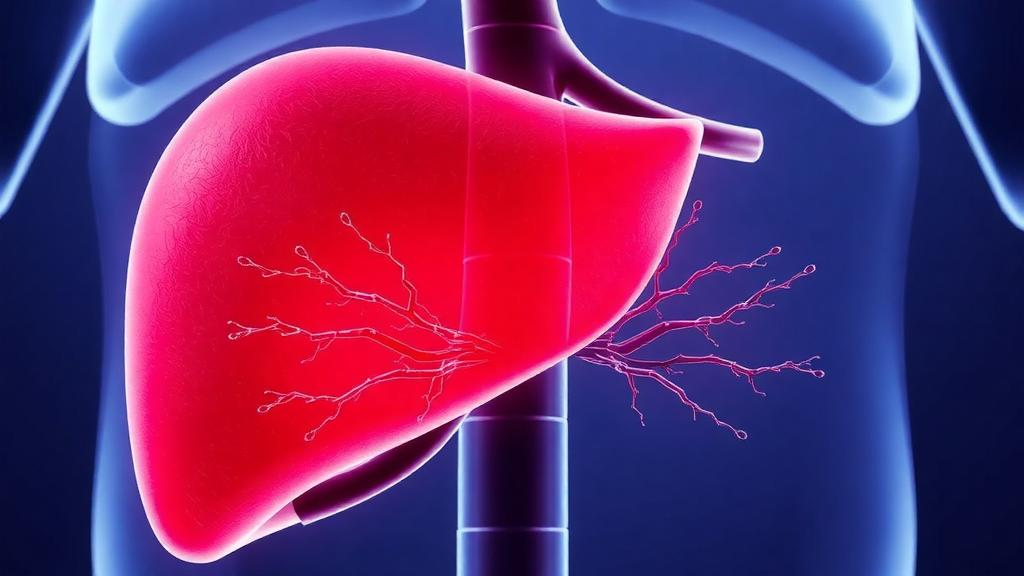
A standard weapon against liver cancer may be quietly redrawing the map of the blood vessels it travels through. A new retrospective study from a quaternary care center in India has systematically documented, for the first time, how the hepatic arterial tree changes after conventional transarterial chemoembolization, the widely used catheter-based treatment for hepatocellular carcinoma. The findings suggest that while the large arteries feeding the liver emerge essentially unscathed, the smallest branches deep inside the organ suffer measurable, sometimes severe, damage within weeks of treatment.
Hepatocellular carcinoma is the most common primary liver malignancy, accounting for 85 to 90 percent of cancers that originate in liver cells, and it ranks as the third leading cause of cancer-related death worldwide. For patients with intermediate-stage disease and preserved liver function, transarterial chemoembolization, or TACE, is a cornerstone of care under the Barcelona Clinic Liver Cancer staging system. The procedure exploits a biological quirk: liver tumors draw their blood supply almost exclusively from the hepatic arteries, while healthy liver tissue depends on the portal vein. By threading a catheter into the arteries feeding the tumor and delivering a mixture of chemotherapy and an oily contrast agent called lipiodol, followed by embolization with gel foam slurry, interventional radiologists can concentrate a cytotoxic assault on the tumor while starving it of blood.
Yet the very act of delivering that assault exposes the hepatic vasculature to a barrage of insults. Catheters and guidewires scrape the vessel walls. Lipiodol and antimitotic drugs such as epirubicin exert corrosive and chemical effects on the delicate endothelial lining. Temporary embolization produces ischemic stress, and patients with chronic liver disease already harbor dysfunctional endothelium that may be poorly equipped to recover. Despite decades of TACE practice, the literature on what actually happens to the native hepatic arteries after treatment has remained surprisingly thin, prompting the research team to investigate systematically.
The researchers, led by interventional radiologists at the Sree Chitra Tirunal Institute for Medical Sciences and Technology in Thiruvananthapuram, Kerala, combed hospital records for all adult patients with chronic liver disease who underwent more than one session of TACE between January 2018 and June 2023. Of 394 patients treated during that window, 69 had undergone repeat sessions, and 58 had angiographic images of sufficient quality for analysis. The team deliberately excluded patients who had received other locoregional therapies, such as radiofrequency ablation, between TACE sessions, to keep the vascular picture as clean as possible.
The analytical framework was elegantly simple. The hepatic vasculature was divided into three anatomical zones: the proximal zone comprising the common hepatic artery and hepatic artery proper, the intermediate zone covering lobar and segmental branches, and the distal zone encompassing the subsegmental branches that represent the liver’s microvascular frontier. Injury was graded on a four-point ordinal scale, ranging from Grade 0 for a normal appearance or mild irregularity, through Grade 1 for mild stenosis of about 50 percent, to Grade 2 for severe stenosis or complete occlusion, and Grade 3 for the presence of pseudoaneurysms or dysplastic arterial changes. Grades 0 and 1 were classified as low-grade injury, while Grades 2 and 3 counted as high-grade. Two radiologists with ten and five years of gastrointestinal imaging experience independently reviewed paired angiograms obtained at least six weeks apart, blinded to clinical details.
The results painted a strikingly zonal picture. In the proximal vessels, 98.3 percent of patients showed Grade 0 injury and the remainder Grade 1, with no high-grade damage at all, and statistical testing confirmed no significant change before and after the first TACE session. The intermediate zone told a different story: 84.5 percent of patients had Grade 0 injury, but 13.8 percent showed Grade 1 and 1.7 percent showed Grade 2, a distribution that shifted significantly after treatment. The distal subsegmental vasculature fared worst of all, with 53.4 percent of patients at Grade 0, 31 percent at Grade 1, 13.8 percent at Grade 2, and 1.7 percent at Grade 3, meaning roughly 12 to 15.5 percent of patients developed high-grade injury to the liver’s smallest arteries. The Mann-Whitney U-test yielded p-values of 0.002 for the intermediate zone and 0.001 for the distal zone, while the proximal zone showed no significant difference. Interobserver agreement was strong, with a correlation coefficient of 0.913.
To understand why some patients’ microvasculature fared worse than others, the team turned to multinomial logistic regression, feeding in demographic, biochemical, clinical and procedural variables. Three factors emerged as independent predictors of high-grade distal arterial injury: the Child-Pugh score, a measure of liver functional reserve; the presence of diabetes; and the delta time, the interval in weeks between successive TACE sessions. Each carried a statistically significant association, with p-values of 0.031, 0.045 and 0.004 respectively. Notably, no variable predicted high-grade injury in the lobar and segmental vessels, reinforcing the impression that the microvasculature is uniquely vulnerable.
The biology behind these predictors is plausible. Diabetes is well known to impair endothelial function and blunt vascular healing, and prior work has shown that adequate glycemic control in TACE patients is associated with improved progression-free survival. Deteriorating liver function, captured by the Child-Pugh score, is likewise linked to poor endothelial resilience and impaired microvascular recovery. The delta time finding may be the most immediately actionable: shorter intervals between embolization sessions give the injured native vasculature less time to recover, so repetitive injury at close intervals compounds itself. This inverse relationship between retreatment interval and vascular damage could inform scheduling decisions, suggesting that clinicians may want to prioritize vascular recovery when planning repeat interventions rather than compressing the timeline.
The clinical stakes are considerable. Patency of segmental and subsegmental arteries is paramount for delivering a second round of chemoembolization to residual or recurrent tumor, so distal vascular injury could compromise both the feasibility and efficacy of retreatment, and may even encourage the tumor to recruit alternative extrahepatic blood supplies. Conversely, the apparent invulnerability of the proximal hepatic arteries is reassuring for the substantial subset of patients who undergo TACE as a bridge to liver transplantation, since damage to the main hepatic artery could complicate the transplant operation itself. Prior multicenter analyses of more than 800 patients who received TACE before transplantation found no increased need for intraoperative hepatic artery interventions, a conclusion this study’s proximal findings echo. The authors also raise the possibility that transarterial radioembolization, generally considered gentler on the vasculature, may be preferable for patients anticipated to need multiple locoregional treatments.
The study has limitations that temper but do not erase its message. It assessed only the changes following the first TACE session to maintain homogeneity, so cumulative injury from multiple sessions remains unmeasured. It was a single-center analysis with a modest sample, and all patients received conventional TACE rather than drug-eluting bead or balloon-occlusion variants, so the findings may not generalize to those techniques. Still, the authors report that no previous study has systematically documented the incidence of hepatic arterial injury after chemoembolization, making this a genuine first. Larger, prospective, multicenter trials will be needed to confirm the predictors and to determine whether protecting the liver’s smallest arteries can translate into better outcomes for patients facing repeated rounds of therapy against one of the world’s deadliest cancers.
Subject of Research: Vascular injury to hepatic arteries following transarterial chemoembolization for hepatocellular carcinoma
Article Title: Angio-architectural changes in hepatic arteries following conventional transarterial chemoembolization for hepatocellular carcinoma and the factors influencing them: a retrospective observational study
Article References: Arunachalam, V. S., Sharma, S., Ayyappan, A., Alex, A., & Valakkada, J. (2025). Angio-architectural changes in hepatic arteries following conventional transarterial chemoembolization for hepatocellular carcinoma and the factors influencing them: a retrospective observational study. CVIR Oncology, 1(1), Article 28. https://doi.org/10.1007/s44343-025-00028-w
Image Credits: AI Generated
DOI: 10.1007/s44343-025-00028-w
Keywords: hepatocellular carcinoma, transarterial chemoembolization, hepatic artery, vascular injury, interventional radiology, angiography, microvasculature, Child-Pugh score, diabetes, lipiodol, liver cancer, endothelial dysfunction
Cite Scienmag News
Nathaniel Bowman. (October 1, 2026). Chemoembolization Reshapes the Liver’s Smallest Arteries, Study Finds. Scienmag. https://scienmag.com/chemoembolization-reshapes-the-livers-smallest-arteries-study-finds/
Nathaniel Bowman. "Chemoembolization Reshapes the Liver’s Smallest Arteries, Study Finds." Scienmag, 1 October 2026, https://scienmag.com/chemoembolization-reshapes-the-livers-smallest-arteries-study-finds/. Accessed 1 October 2026.
Nathaniel Bowman. "Chemoembolization Reshapes the Liver’s Smallest Arteries, Study Finds." Scienmag. October 1, 2026. https://scienmag.com/chemoembolization-reshapes-the-livers-smallest-arteries-study-finds/


