


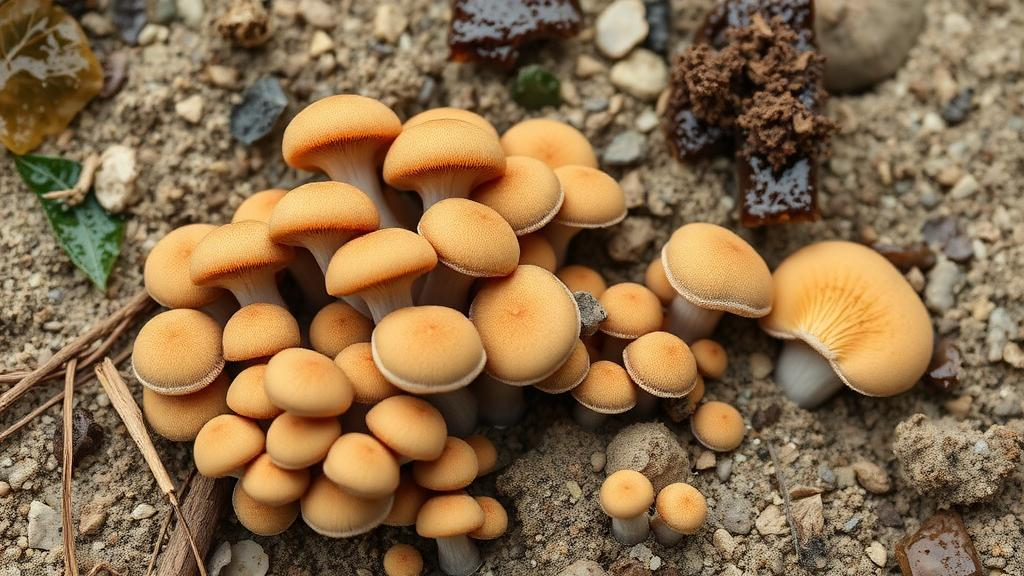
Along the southeastern coast of China, where mangrove forests grip the boundary between land and sea, the mud beneath the roots is home to a fungal world that scientists have only now begun to map in detail. A new study published in Mycology: An International Journal on Fungal Biology reports one of the most systematic surveys to date of fungal communities in mangrove sediments, and its central finding is striking: the forces that shape which fungi live where depend fundamentally on the scale at which you look. At the regional level, temperature and the difficulty of dispersal dominate; at the local level, salinity and nutrient chemistry take over; and at the smallest scale, the interactions between fungi and their prokaryotic neighbors leave their mark on community structure.
The research was led by Dr. Meng Li of the Institute for Advanced Study at Shenzhen University, working with colleagues across six national nature reserves that protect seven representative mangrove wetlands along the Chinese coast. In total, the team collected 300 sediment samples, a sampling intensity that allowed them to compare fungal assemblages both among distant wetlands and within individual sites. Mangrove wetlands are among the most demanding habitats on Earth for microbial life. They sit at the tropical and subtropical land-sea interface, where sediments experience high salinity, low oxygen availability, and an abundance of organic matter, conditions that together create a powerful environmental filter for any organism attempting to persist there.
Fungi matter enormously in these systems. They are among the few organisms capable of efficiently decomposing lignocellulose, the tough structural material of plant tissues, and their activity drives much of the nutrient cycling that sustains mangrove food webs. Despite this ecological importance, the diversity, biogeographic distribution, and assembly mechanisms of sediment fungal communities in mangroves had remained poorly characterized, a gap the new study set out to close with a combination of high-throughput sequencing and ecological modeling.
Methodologically, the team employed dual-amplicon high-throughput sequencing, simultaneously targeting the fungal internal transcribed spacer 2 region and the prokaryotic 16S rRNA gene. This design allowed fungal and prokaryotic communities to be characterized from the same samples, opening the door to direct analysis of cross-kingdom relationships. The sequencing effort recovered 14,771 fungal operational taxonomic units, distributed across 15 phyla, 51 classes, and 594 genera. Perhaps the most humbling number in the dataset is this: roughly one-third of the observed fungal diversity could not be assigned to any known phylum. Mangrove sediments, it turns out, harbor a substantial reservoir of fungi that are effectively unknown to science, lineages whose ecological roles remain entirely unexplored.
The survey also highlighted the prominence of early-diverging fungal lineages. Rozellomycota and Chytridiomycota, groups that branch near the base of the fungal tree of life, proved to be relatively diverse and widely distributed across the sampled wetlands. Their prevalence in these sediments suggests that mangrove ecosystems may serve as important refugia for ancient fungal lineages, and it underscores how much of fungal evolutionary history remains concentrated in environments that have historically been undersampled by mycologists, who have traditionally focused on soils, forests, and freshwater systems.
When the researchers examined biogeographic patterns, a clear hierarchy of influences emerged. Geographic location exerted a stronger effect on fungal community composition than the identity of the mangrove plants themselves. Fungal communities clustered primarily by sampling site rather than by vegetation type, and two factors were associated with these patterns: mean annual temperature and dispersal limitation. The explanation likely lies in the fragmented geography of mangrove forests themselves. Because mangroves occur in patchy stands separated by stretches of unsuitable coastline, long-distance dispersal of fungal propagules between wetlands is restricted. Each forest effectively functions as a partially isolated microbial island, allowing communities to diverge over time through the combined action of environmental sorting and limited gene flow.
Zooming in to the local scale, the picture changes. Within individual wetlands, salinity and the carbon-to-nitrogen ratio emerged as the main environmental factors associated with variation in fungal community structure. Salinity acts as a physiological gatekeeper: high salt concentrations limit fungal growth to taxa capable of tolerating osmotic stress, filtering out sensitive lineages and favoring halotolerant specialists. The carbon-to-nitrogen ratio reflects the balance between carbon availability and nitrogen supply in the sediment. When this ratio is elevated, it signals an imbalance that may constrain which taxa can persist, because decomposer fungi require nitrogen to build the enzymes that break down carbon-rich plant litter. Intriguingly, total phosphorus showed an indirect positive association with fungal diversity, likely operating through its influence on nutrient availability and on the connectivity of the microbial co-occurrence network, rather than through any direct effect on fungal physiology.
To probe these biotic interactions, the team constructed a co-occurrence network from the most abundant fungal and prokaryotic taxa. The resulting network contained 777 nodes and 3,680 edges, and a remarkable 99 percent of those edges represented positive correlations, suggesting that coexistence and cooperation, rather than exclusion, dominate the visible structure of the mangrove sediment microbiome. Bacteria and archaea exhibited higher average connectivity than fungi and formed the structural backbone of the network. Yet certain fungal nodes occupied central positions, acting as potential bridges that link fungal and prokaryotic components of the community. These hub fungi may represent keystone taxa whose activities, perhaps through the decomposition of complex organic matter, create resources and conditions that shape the surrounding microbial neighborhood.
The analytical centerpiece of the study is a piecewise structural equation model, a statistical framework that allows researchers to test networks of hypothesized causal pathways rather than isolated correlations. Using this approach, the authors integrated their results into a three-tier model of fungal community assembly. At the regional scale, temperature and dispersal limitation filter which lineages can reach and survive in a given wetland. At the local scale, salinity and nutrient conditions, including the carbon-to-nitrogen ratio and phosphorus availability, further sort the regional species pool. At the micro scale, cross-kingdom interactions with bacteria and archaea fine-tune community structure. No single factor explains who lives in the mud; instead, nested layers of environmental and biological filtering operate simultaneously across spatial scales.
The implications extend beyond basic mycology. Mangrove wetlands are under sustained pressure from coastal development, sea-level rise, and changing salinity regimes, and the microbial communities that power their nutrient cycles will respond to these changes in ways that are only beginning to be understood. By establishing that salinity and nutrient chemistry govern local fungal assemblages while temperature and dispersal shape regional patterns, the study provides a predictive framework for anticipating how sediment fungal communities might shift as coastal environments warm and saltwater intrusion intensifies. Just as importantly, the large fraction of unclassified fungal diversity signals that a vast amount of functional novelty remains hidden in these sediments, potentially including enzymes relevant to lignocellulose degradation and other biotechnological applications. For now, the muddy forests of the Chinese coast have offered a rare, scale-resolved glimpse of the hidden fungal architecture beneath one of the planet’s most productive ecosystems, and that architecture turns out to be built layer by layer, from the regional climate down to the microscopic handshakes between species.
Subject of Research: Scale-dependent assembly and biogeography of fungal communities in Chinese mangrove sediments
Article Title: Chinese mangrove sediments reveal scale-dependent assembly of fungal communities
Article References: Chinese mangrove sediments reveal scale-dependent assembly of fungal communities. (n.d.). Original publication
Image Credits: AI Generated
DOI: Not provided
Keywords: mangrove, fungal communities, sediment microbiology, biogeography, dispersal limitation, salinity, carbon-to-nitrogen ratio, co-occurrence network, structural equation modeling, Rozellomycota, Chytridiomycota, high-throughput sequencing
Cite Scienmag News
Morgan Morrow. (October 1, 2026). Fungi in Chinese mangrove sediments assemble in ways that shift with scale. Scienmag. https://scienmag.com/fungi-in-chinese-mangrove-sediments-assemble-in-ways-that-shift-with-scale/
Morgan Morrow. "Fungi in Chinese mangrove sediments assemble in ways that shift with scale." Scienmag, 1 October 2026, https://scienmag.com/fungi-in-chinese-mangrove-sediments-assemble-in-ways-that-shift-with-scale/. Accessed 1 October 2026.
Morgan Morrow. "Fungi in Chinese mangrove sediments assemble in ways that shift with scale." Scienmag. October 1, 2026. https://scienmag.com/fungi-in-chinese-mangrove-sediments-assemble-in-ways-that-shift-with-scale/


