


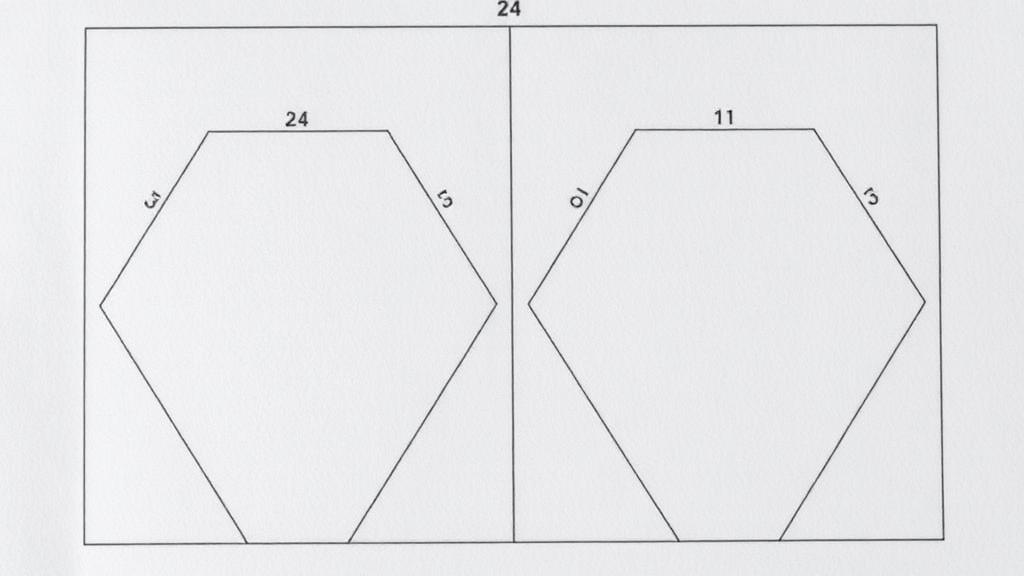
For more than four decades, one of the most quietly consequential tasks in medicine has been the moment a patient is handed a pen and asked to copy two overlapping pentagons. The instruction takes seconds. The drawing, however, can betray the earliest fingerprints of neurodegeneration. Now a team of Italian neurologists has shown that this humble sketch, long treated as a crude pass-or-fail checkbox on the Mini-Mental State Examination, can be transformed into a quantitative marker that helps separate Parkinson’s disease from its most dangerous clinical mimics.
The study, published in the Journal of Neurology by researchers at the University of Catania led by Giulia Donzuso and Mario Zappia, tackles one of the most stubborn problems in movement disorders: telling idiopathic Parkinson’s disease apart from the atypical parkinsonian syndromes, namely progressive supranuclear palsy, multiple system atrophy, and corticobasal degeneration. In the early stages, these conditions can look almost identical in the clinic. All produce slowness of movement, rigidity, and gait disturbance. Yet their underlying pathology, prognosis, and response to therapy diverge dramatically, and misdiagnosis carries real consequences, from inappropriate dopaminergic treatment to exclusion from disease-targeted clinical trials.
The diagnostic stakes are high. Even in specialist centers, clinical accuracy for Parkinson’s disease is estimated at roughly eighty percent, with the highest misdiagnosis rates occurring within the first two years of symptom onset. That is precisely the window in which disease-modifying therapies, should they emerge, would matter most. The Catania team reasoned that a simple, zero-cost bedside test already embedded in routine cognitive screening could be squeezed for far more diagnostic information than the traditional binary scoring allows.
Their instrument of choice was the Qualitative Scoring Pentagon Test, or QSPT, a method first developed by Caffarra and colleagues to distinguish dementia with Lewy bodies from Alzheimer’s disease. Instead of judging the interlocking pentagons as simply correct or incorrect, the QSPT breaks the drawing into five graded components. The number of correctly reproduced internal angles, out of ten, is scored from zero to four. The accuracy of the intersection where the two shapes overlap is scored from zero to four. The degree to which the figure’s contours are closed contributes zero to two points, as does angular rotation away from the model. Finally, the presence of the so-called closing-in phenomenon, in which the drawing crowds against or overlaps the printed model, subtracts a point. The maximum score is thirteen, and in the study every drawing was rated by two trained raters blinded to the patients’ diagnoses.
The cohort comprised one hundred and forty patients, including ninety-one with Parkinson’s disease, twenty-three with progressive supranuclear palsy, seventeen with multiple system atrophy, and nine with corticobasal degeneration, alongside ninety-two healthy controls matched to the Parkinson’s group for age and overall MMSE performance. The results were strikingly graded. Healthy controls performed near the ceiling, averaging 12.7 out of 13, confirming that pentagon copying is essentially intact in healthy aging when global cognition is preserved. Patients with Parkinson’s disease averaged 11.5, those with multiple system atrophy fell in between, patients with progressive supranuclear palsy scored lower still, and those with corticobasal degeneration achieved the lowest mean of all, at 7.7. The differences between Parkinson’s disease and each atypical syndrome were statistically significant, and the effect size between controls and corticobasal degeneration was among the largest reported, at nearly one full standard deviation.
Which features of the drawing carried the diagnostic signal? The sub-item analysis pointed to rotation errors and the accuracy of the ten internal angles as the most discriminating parameters. In progressive supranuclear palsy, prominent rotation errors may reflect the oculomotor dysfunction and impaired spatial reference frame processing that are hallmarks of the condition, particularly its classic Richardson’s syndrome phenotype. In corticobasal degeneration, the profound visuoconstructive failure is consistent with the parieto-frontal cortical degeneration and ideomotor apraxia that define the disease. The closing-in phenomenon, meanwhile, distinguished Parkinson’s disease from the atypical group as a whole, especially corticobasal degeneration, and is thought to arise from a loss of spatial inhibition tied to posterior parietal cortical degeneration.
The quantitative scores did not float free of the rest of the clinical picture. QSPT performance correlated significantly with the MMSE, the Frontal Assessment Battery, and the time taken on the Trail Making Test Part A, a measure of processing speed and visual scanning that depends on fronto-striatal and parietal networks. This convergence suggests that the pentagon task taps a shared substrate of cortical-subcortical network integrity that is preferentially damaged in atypical parkinsonism. Notably, QSPT scores showed no relationship with disease duration or with levodopa equivalent daily dose, indicating that the signal reflects disease biology rather than treatment burden or time since diagnosis.
Perhaps the most intriguing finding emerged from the brain imaging data. In the one hundred and six patients who had undergone MRI, the researchers computed the Magnetic Resonance Parkinsonism Index, a morphometric ratio combining pons and midbrain areas with the widths of the middle and superior cerebellar peduncles. This index is typically elevated in progressive supranuclear palsy, and indeed PSP patients in this cohort showed markedly high values while multiple system atrophy patients showed the lowest. Across the whole patient sample, QSPT scores correlated negatively with the MRPI, meaning that worse pentagon drawing tracked with progressive brainstem neurodegeneration. The finding gives the cognitive-neuroimaging relationship a plausible structural anchor: prior work on isolated brainstem lesions and functional imaging of visually guided motor control both implicate the pons and midbrain in visuospatial integration, positioning the brainstem as an activating hub within broader cognitive networks.
The statistical performance of the test was then distilled into diagnostic cutoffs. In multivariate logistic regression adjusted for motor severity, medication dose, and disease duration, lower QSPT scores were independently associated with atypical parkinsonian syndromes, with an odds ratio of 0.620 per point. Receiver operating characteristic analysis showed that a score of twelve or below separated all parkinsonian patients from healthy controls with an area under the curve of 0.759, while a score of eight or below separated Parkinson’s disease from the atypical syndromes with an area under the curve of 0.764 and a specificity of 92.3 percent. Most impressively, a cutoff of eleven or below distinguished synucleinopathies, meaning Parkinson’s disease and multiple system atrophy, from tauopathies, meaning progressive supranuclear palsy and corticobasal degeneration, with an area under the curve of 0.804. That such a neuropathology-level division, alpha-synuclein aggregation versus tau aggregation, can be glimpsed in a pencil sketch is the study’s most provocative implication.
The authors are careful to frame the tool as supportive rather than definitive. Sensitivity at the chosen cutoffs was modest, at 49 percent for the Parkinson’s-versus-atypical comparison and 65 percent for the patient-versus-control comparison, and the score distributions overlap at the individual level, so a high QSPT score cannot rule out atypical disease and must be paired with other clinical markers. The study was also retrospective, the atypical subgroups were small, diagnoses were clinical rather than neuropathologically confirmed, and the MRI analysis was limited to brainstem morphometry without assessment of the parietal and frontal cortex most directly implicated in visuoconstruction. Healthy controls were not formally matched for education, a known influence on drawing tasks. Still, the core message stands: a task that costs nothing, takes under a minute, and already sits inside the most widely used cognitive screen in the world can, when scored quantitatively, offer a graded, biologically meaningful window into which kind of parkinsonism a patient has. The team calls for prospective validation in early-stage cohorts and longitudinal follow-up, but the vision is clear: the next revolution in neurological diagnosis may arrive not from an expensive scanner or a spinal fluid assay, but from watching, carefully and systematically, how a patient draws two simple shapes.
Subject of Research: Quantitative pentagon-copying assessment of visuospatial deficits for differentiating parkinsonian syndromes
Article Title: Interlocking pentagons task and visuospatial deficit in parkinsonian syndrome: a quantitative approach
Article References: Donzuso, G., Cilio, F., Ferrante, E., D’Agate, C., Fazzina, G., Cicero, C. E., Mostile, G., Nicoletti, A., & Zappia, M. (2026). Interlocking pentagons task and visuospatial deficit in parkinsonian syndrome: a quantitative approach. Journal of Neurology, 273(10), Article 628. https://doi.org/10.1007/s00415-026-14163-8
Image Credits: AI Generated
DOI: 10.1007/s00415-026-14163-8
Keywords: Parkinson's disease, atypical parkinsonism, progressive supranuclear palsy, multiple system atrophy, corticobasal degeneration, MMSE pentagon copying, Qualitative Scoring Pentagon Test, visuospatial function, differential diagnosis, MRI morphometry, tauopathies, synucleinopathies
Cite Scienmag News
Cassandra Pierce. (October 1, 2026). Two Overlapping Pentagons on a Dementia Test May Help Tell Parkinson’s Disease Apart From Its Look-Alikes. Scienmag. https://scienmag.com/two-overlapping-pentagons-on-a-dementia-test-may-help-tell-parkinsons-disease-apart-from-its-look-alikes/
Cassandra Pierce. "Two Overlapping Pentagons on a Dementia Test May Help Tell Parkinson’s Disease Apart From Its Look-Alikes." Scienmag, 1 October 2026, https://scienmag.com/two-overlapping-pentagons-on-a-dementia-test-may-help-tell-parkinsons-disease-apart-from-its-look-alikes/. Accessed 1 October 2026.
Cassandra Pierce. "Two Overlapping Pentagons on a Dementia Test May Help Tell Parkinson’s Disease Apart From Its Look-Alikes." Scienmag. October 1, 2026. https://scienmag.com/two-overlapping-pentagons-on-a-dementia-test-may-help-tell-parkinsons-disease-apart-from-its-look-alikes/


