


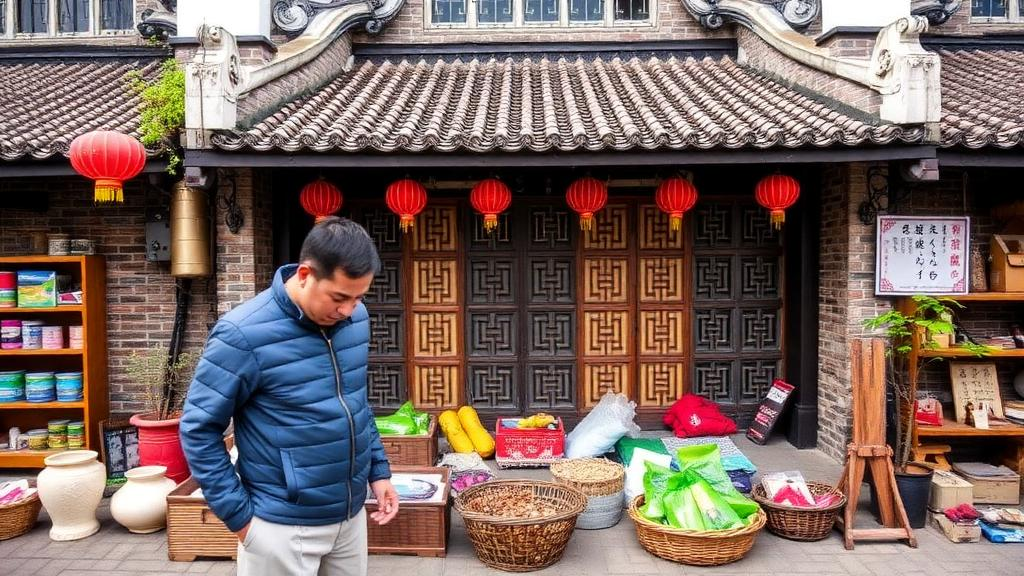
Nearly half of all adults in China’s Hubei Province turned to traditional Chinese medicine services within a single year, according to a large cross-sectional survey published in BMC Complementary Medicine and Therapies. The study, led by Wen-Jie Huang and Zhi-Peng Huang of Wuhan University’s School of Public Health together with colleagues at Hubei University of Chinese Medicine and Huazhong University of Science and Technology, surveyed 3,639 residents across six cities between August and October 2023. Overall, 48.67 percent of respondents reported using traditional Chinese medicine services in the previous twelve months, a figure that underscores how deeply embedded these therapies remain in everyday Chinese healthcare. Yet the headline number conceals a more complicated picture: use of these services was not evenly spread across the population, and the factors that predicted utilisation shifted depending on who was being asked.
The most striking demographic divide was generational. Among respondents aged 45 and older, 54.99 percent reported using traditional Chinese medicine services in the past year, compared with 47.21 percent of those under 45. That gap of nearly eight percentage points suggests that the therapeutic traditions of herbal medicine, acupuncture, tuina massage and related practices continue to resonate more strongly with older cohorts, even as younger Chinese consumers increasingly encounter wellness products and traditional remedies through modern commercial channels. The researchers also found a geographic gradient: urban registered residents reported a utilisation rate of 49.98 percent, while their rural counterparts lagged at 46.61 percent. Although the urban-rural difference was smaller than the generational one, it points to persistent structural inequities in who can actually reach traditional Chinese medicine providers, from hospital departments staffed by licensed practitioners to township clinics offering herbal prescriptions.
Methodologically, the study is notable for the care taken in sampling. The team used stratified multistage sampling across six cities in Hubei, a central Chinese province of roughly 58 million people that includes both the major metropolis of Wuhan and extensive rural hinterlands. By layering the sampling frame, the investigators ensured that their final sample of 3,639 respondents reflected the province’s demographic composition rather than over-representing easily surveyed urban populations. The researchers then applied multivariable logistic regression, a statistical technique that estimates the independent effect of each factor on the odds of service use while holding all other measured variables constant. Crucially, they did not stop at a single pooled model. Instead, they repeated the analysis separately within two strata, splitting the sample by generation, with 45 years as the cutoff, and by registered residence status, the hukou designation that in China still shapes access to schools, hospitals and social services.
The overall regression model identified several factors associated with higher utilisation. Employment in traditional Chinese medicine itself, or in integrated Chinese and Western medicine settings, was linked to greater use of these services, an intuitive finding that likely reflects both occupational exposure and cultural affinity among practitioners and their families. More telling was the role of supply: greater regional availability of traditional Chinese medicine resources was associated with higher utilisation, indicating that access to practitioners, pharmacies and clinics is a genuine bottleneck rather than a constraint that demand simply routes around. In health services research, this pattern is often described as supply-induced utilisation, and it carries a practical implication for policymakers, because expanding the physical footprint of traditional Chinese medicine services can measurably change who receives care.
Health status emerged as another powerful predictor, but in the opposite direction. Respondents who rated their own health as good were less likely to have used traditional Chinese medicine services in the previous year. This inverse association is consistent with a need-driven model of healthcare seeking: people who feel well have less reason to consult any provider, whether they prescribe herbs or pharmaceuticals. The finding also aligns with the traditional framing of Chinese medicine as a resource people draw on when managing chronic conditions, pain, or the accumulating ailments of middle and older age, rather than as a routine preventive service for the healthy. For health planners, the implication is that demand for traditional Chinese medicine will tend to rise with the burden of chronic disease, which is itself climbing as China’s population ages.
One of the study’s more intriguing results concerned household income. The middle income category showed a positive association with utilisation, but the upper category did not. This non-linear pattern complicates any simple assumption that wealthier households simply buy more traditional medicine. One plausible reading is that middle-income families have both the financial means and the motivation to seek these services, while the wealthiest households may preferentially use high-end Western-style private care or have less need for any subsidised service. The authors note that the observed patterns of association varied across the generation and registered-residence strata, meaning that a factor that predicted use among older or urban respondents might behave differently among younger or rural ones. This heterogeneity is precisely why the team argued for population-specific planning rather than one-size-fits-all policy.
The stratified analyses carry weight for China’s ongoing health equity debates. The hukou system, which ties social benefits to a person’s registered place of origin, has long produced a two-tier healthcare landscape in which rural migrants and rural residents face longer travel distances, thinner insurance coverage and fewer specialist options. The finding that rural respondents used traditional Chinese medicine services less often, despite these therapies being historically rooted in rural communities and folk practice, suggests that the modern institutional form of traditional Chinese medicine, delivered through hospitals and licensed clinics, has not fully penetrated the countryside. Meanwhile, the generational gap raises questions about whether younger Chinese, who grew up in an era of rapid biomedical expansion and digital health platforms, will sustain demand for traditional services as the current older cohort ages, or whether utilisation patterns will converge over time.
From a technical standpoint, the study’s design has both strengths and limits that readers should keep in mind. As a cross-sectional survey, it captures a snapshot in time and cannot establish causal direction: it remains possible, for example, that people who work in traditional medicine develop stronger cultural commitments, or that unmeasured health conditions drive both income patterns and service use. The analysis relied on self-reported utilisation over the previous twelve months, which is vulnerable to recall error, and the published materials indicate a complete-case analysis, meaning respondents with missing data on key variables were excluded. The team also encoded a local-customs indicator, reflecting regional cultural practices, which speaks to their effort to capture the cultural context that the abstract identifies as a determinant of use alongside health needs, socioeconomic resources and accessibility. Ethics approval was obtained from the Medical Ethics Committee of Wuhan University, and all participants provided written informed consent.
The research was supported by the National Natural Science Foundation of China, the Fundamental Research Funds for the Central Universities, and the Knowledge Innovation Project of Wuhan, with the funders playing no role in study design, analysis or the manuscript. The authors, including corresponding author Chao Wang, declared no competing interests. The article was published open access on 30 September 2026, making the full questionnaire, variable definitions and coding rules available in supplementary materials for other researchers to scrutinise or replicate.
What makes this study resonate beyond Hubei is its methodological lesson: aggregate statistics about traditional medicine use can mask the very disparities that policy most needs to address. A provincial average of nearly 49 percent tells planners little about where to build clinics, how to design insurance benefits, or which outreach programs might close the gap between urban and rural residents or between generations. By disaggregating the data and showing that the drivers of utilisation differ across strata, the Wuhan University team has provided a template for evidence-based planning of traditional medicine services, not just in China but in any health system where traditional and complementary therapies coexist with biomedical care. As China’s national strategy continues to promote the integration of Chinese and Western medicine, studies of this kind will be essential for ensuring that the promised benefits reach older and younger, urban and rural populations alike, rather than accruing only to those who already live closest to the services they need.
Subject of Research: Determinants of traditional Chinese medicine service utilisation across generations and urban-rural populations in Hubei Province, China
Article Title: Factors associated with traditional Chinese medicine service utilisation across generations and urban-rural populations in Hubei Province, China: a cross-sectional study
Article References: Huang, W.-J., Huang, Z.-P., Cai, Y.-M., Li, X., Zhu, R., Cheng, X., Lu, Z.-X., & Wang, C. (2026). Factors associated with traditional Chinese medicine service utilisation across generations and urban-rural populations in Hubei Province, China: a cross-sectional study. BMC Complementary Medicine and Therapies. https://doi.org/10.1186/s12906-026-05606-w
Image Credits: AI Generated
DOI: 10.1186/s12906-026-05606-w
Keywords: traditional Chinese medicine, healthcare utilisation, Hubei Province, urban-rural disparity, cross-sectional study, health equity, generational differences, logistic regression, complementary medicine, healthcare access, China, aging population
Cite Scienmag News
Beatrice Stafford. (September 30, 2026). Nearly Half of Hubei Residents Use Traditional Chinese Medicine, but Age and Geography Divide Who Does. Scienmag. https://scienmag.com/nearly-half-of-hubei-residents-use-traditional-chinese-medicine-but-age-and-geography-divide-who-does/
Beatrice Stafford. "Nearly Half of Hubei Residents Use Traditional Chinese Medicine, but Age and Geography Divide Who Does." Scienmag, 30 September 2026, https://scienmag.com/nearly-half-of-hubei-residents-use-traditional-chinese-medicine-but-age-and-geography-divide-who-does/. Accessed 30 September 2026.
Beatrice Stafford. "Nearly Half of Hubei Residents Use Traditional Chinese Medicine, but Age and Geography Divide Who Does." Scienmag. September 30, 2026. https://scienmag.com/nearly-half-of-hubei-residents-use-traditional-chinese-medicine-but-age-and-geography-divide-who-does/


