


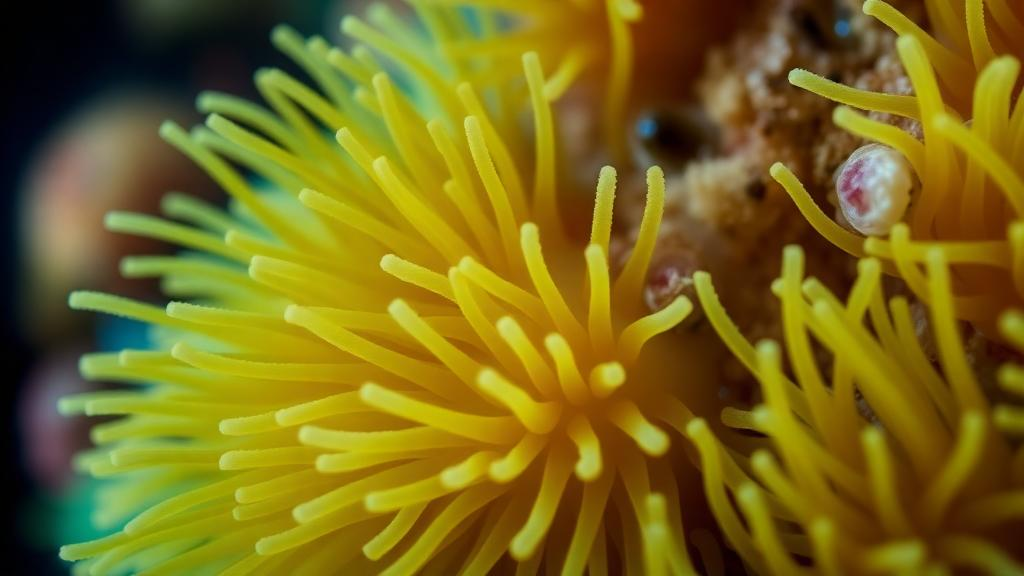
Beneath the sand-encrusted polyps of a colonial zoanthid collected off the Calicut coast in Kerala, India, scientists have uncovered a microbial world of remarkable richness, one that may hold answers to one of aquaculture’s most pressing problems. A research team led by Anitha Antony of Kerala University of Fisheries and Ocean Studies has published the first detailed portrait of the prokaryotic community living in association with the zoanthid Palythoa sp. from Indian waters, combining culture-independent metagenomics with classical microbiology. Their findings, published in the journal Blue Biotechnology, reveal a community dominated by bacterial phyla famed for producing antimicrobial compounds, and two cultured isolates that can inhibit three of the most destructive pathogens in fish farming.
Palythoa is a genus of colonial cnidarians belonging to the order Zoantharia, closely related to corals and sea anemones. Like sponges, bryozoans and other sessile, soft-bodied invertebrates, these animals live permanently anchored to reefs and rocky intertidal zones, unable to flee predators, competitors or disease. Their survival strategies often depend on the microorganisms that surround and inhabit them, and these partnerships frequently yield biologically active chemicals known as marine natural products. Such compounds are of intense interest for pharmaceuticals, nutraceuticals, biofuels and industrial enzymes, and they have placed marine invertebrates and their microbial symbionts at the center of marine bioprospecting. Palythoa itself is famous as the source of palytoxin, one of the most potent non-protein toxins known, which has demonstrated diverse enzymatic, biochemical and pharmacological activities.
Despite growing evidence that microbes contribute to the biosynthesis of bioactive metabolites in these animals, the ecological roles and functional potential of Palythoa-associated microbes remained poorly understood, particularly in relation to aquaculture. As global demand for fish rises, disease outbreaks caused by microbial pathogens impose severe economic losses on the industry, and the search for sustainable alternatives to conventional antibiotics has become urgent. Earlier work had shown that the Mediterranean zoanthid Parazoanthus axinellae displays antibacterial activity against several fish-pathogenic Vibrio species, but the specific contribution of microbial symbionts to such defenses was largely unexplored. The new study set out to close that gap by characterizing the prokaryotic community of Palythoa sp. from Indian waters and screening cultured isolates for activity against major aquaculture pathogens.
Samples were collected from the Calicut coast in July 2023, transported frozen to the laboratory, rinsed with sterile seawater and surface-sterilized before analysis. For the culture-independent arm of the study, the team extracted metagenomic DNA and sequenced the V3-V4 hypervariable region of the prokaryotic 16S rRNA gene on an Illumina MiSeq platform. Raw paired-end reads were quality-filtered with Trimmomatic, stitched with FLASH, and processed through the QIIME 2 pipeline, with denoising and chimera removal performed by DADA2 and taxonomic classification against the SILVA database. The sequencing yielded 172,005 raw reads, of which 122,615 passed quality control, and 1,117 distinct features were identified in the sample. Good’s coverage of 1.0 indicated that sequencing depth was sufficient to capture the core microbiota.
The diversity statistics were striking. The Shannon index reached 8.05 and the Simpson diversity index 0.99, with a Simpson reciprocal index of 133.45, values that together point to a highly diverse and evenly distributed community. Four bacterial phyla dominated: Firmicutes at 35.99 percent, Proteobacteria at 26.4 percent, Bacteroidota at 16.64 percent and Actinobacteriota at 4.95 percent. All four are known as prolific producers of antimicrobial secondary metabolites. At finer taxonomic resolution, the class Bacilli accounted for 27.38 percent of the community, with the genus Bacillus alone making up 14.89 percent. Gammaproteobacteria were strongly represented within Proteobacteria at 20.9 percent, including members of Vibrionales, Pseudomonadales, Enterobacterales and Burkholderiales. Archaea were also present, dominated by Euryarchaeota, with an uncultured Methanobrevibacter species the most abundant archaeal taxon.
Notably, the community structure deviated from patterns reported for other Palythoa species elsewhere. In corals, Firmicutes are usually recorded at lower proportions than Proteobacteria, yet here Firmicutes took the top position. Alpha-proteobacteria, reported as prevalent in Palythoa australiae and Palythoa caribaeorum in earlier studies, accounted for only 6.11 percent, and Acidobacteriota, a dominant constituent of the Palythoa microbiome in the Mexican Caribbean, was detected at just 1.85 percent. The authors attribute these differences to the influence of geographic location, environmental parameters and the metabolic requirements of the host, underscoring that each zoanthid population may harbor a distinct microbial assemblage shaped by its local context.
Beyond cataloguing diversity, the study inferred possible ecological functions from the taxa present. Photoautotrophic Cyanobacteria may contribute to primary production and carbon fixation, meeting some of the host’s energy demands, while also producing secondary metabolites involved in photoprotection and grazing deterrence. Bacteroidota, proficient degraders of complex polymers such as chitin, and Dadabacteria, known for consuming dissolved organic matter, could participate in carbon cycling within the holobiont. Methanobrevibacter, a CO2-utilizing methanogen, may contribute to carbon turnover, and members of Methylomirabilota perform anaerobic methane oxidation coupled with denitrification, linking the carbon and nitrogen cycles. The team also detected a notable presence of diazotrophs, including Cyanobacteria, Klebsiella, Vibrio, Rhodospirillum and Clostridium, alongside groups capable of dissimilatory nitrate reduction to ammonia, suggesting a meaningful microbial contribution to the nitrogen budget of the host in oligotrophic reef environments.
On the culture-dependent side, ten isolates with distinct colony morphologies were recovered on Zobell’s Marine Agar, with a Shannon-Wiener diversity index of 1.085 for the cultured fraction. Two isolates showing potent antibacterial activity were identified by 16S rRNA sequencing as Stenotrophomonas maltophilia and Micrococcus luteus, each with 99 percent similarity to reference strains, and their sequences deposited in GenBank. Ethyl acetate extracts of their cell-free supernatants were tested by the agar well diffusion method against three notorious aquaculture pathogens: Edwardsiella tarda, Aeromonas hydrophila and Streptococcus agalactiae. All three cause mass mortalities and major economic losses in fish farming; E. tarda is linked to multidrug-resistant outbreaks in ornamental and cultured fish, A. hydrophila commonly afflicts tilapia, goldfish, koi carp and guppy, and S. agalactiae is an emerging zoonotic threat to farmed tilapia. The extracts inhibited all three pathogens, producing clear zones of inhibition on the assay plates.
Molecular screening added a genetic dimension to the results. Using degenerate primers targeting the ketosynthase domain, the researchers detected polyketide synthase-I (PKS-I) genes, with an amplicon size of 1100 base pairs, in both isolates, confirming their genetic potential to produce bioactive secondary metabolites. Intriguingly, non-ribosomal peptide synthetase (NRPS) genes were absent from both. This pattern contrasts with previous findings: terrestrial S. maltophilia strains have been reported to carry NRPS genes, and some sponge-associated Micrococcus strains lack PKS-I domains entirely. The authors suggest the discrepancy may reflect ecological or evolutionary adaptations specific to the marine environment, where selective pressures could favor certain biosynthetic pathways over others, though they caution that comparative genomics and functional studies would be needed to distinguish gene loss, horizontal transfer or niche-specific specialization.
The study’s implications extend in several directions. If the zoanthid’s microbial partners help defend the host against pathogens, the same bacteria, or the compounds they produce, could be harnessed as sustainable biocontrol agents in fish farming, reducing reliance on conventional antimicrobials at a time when antimicrobial resistance is spreading through aquaculture systems. Other taxa detected in the community hint at further applications, from quorum-sensing quenching by Bacillus and Acinetobacter, which could disrupt pathogenic biofilm formation, to heavy-metal detoxification by Lysinibacillus. The authors are careful to note the limits of their work: functional assignments based on taxonomic identity remain speculative without direct evidence, the nature of the association, whether resident or transient, is unresolved, and questions of host specificity and evolutionary dynamics await deeper investigation. They propose that whole-genome sequencing, transcriptomics and controlled experiments will be essential to validate these ecological roles and to determine the chemical identity, toxicity and production potential of the antibacterial compounds. For now, the sand-encrusted polyps of Palythoa have revealed themselves as more than a curiosity of the intertidal zone; they are a reservoir of microbial diversity whose chemical arsenal may one day help keep the world’s farmed fish healthy.
Subject of Research: Microbial diversity and antimicrobial potential of bacteria associated with the zoanthid Palythoa sp.
Article Title: Microbial diversity and functional potential of prokaryotic community associated with zoanthid, Palythoa sp
Article References: Antony, A., Choweth, A. J., Parambath, P. M., Jayadradhan, R. K. V., Mathew, V., & Preena, P. G. (2025). Microbial diversity and functional potential of prokaryotic community associated with zoanthid, Palythoa sp. Blue Biotechnology, 2(1), Article 16. https://doi.org/10.1186/s44315-025-00038-6
Image Credits: AI Generated
DOI: 10.1186/s44315-025-00038-6
Keywords: Palythoa, zoanthid, marine microbiome, metagenomics, 16S rRNA, marine natural products, antimicrobial activity, aquaculture, PKS-I, NRPS, Stenotrophomonas maltophilia, Micrococcus luteus
Cite Scienmag News
Alan Morgan. (September 30, 2026). Hidden Microbes of a Toxic Sea Anemone Relative Show Promise Against Fish Farm Pathogens. Scienmag. https://scienmag.com/hidden-microbes-of-a-toxic-sea-anemone-relative-show-promise-against-fish-farm-pathogens/
Alan Morgan. "Hidden Microbes of a Toxic Sea Anemone Relative Show Promise Against Fish Farm Pathogens." Scienmag, 30 September 2026, https://scienmag.com/hidden-microbes-of-a-toxic-sea-anemone-relative-show-promise-against-fish-farm-pathogens/. Accessed 30 September 2026.
Alan Morgan. "Hidden Microbes of a Toxic Sea Anemone Relative Show Promise Against Fish Farm Pathogens." Scienmag. September 30, 2026. https://scienmag.com/hidden-microbes-of-a-toxic-sea-anemone-relative-show-promise-against-fish-farm-pathogens/


