


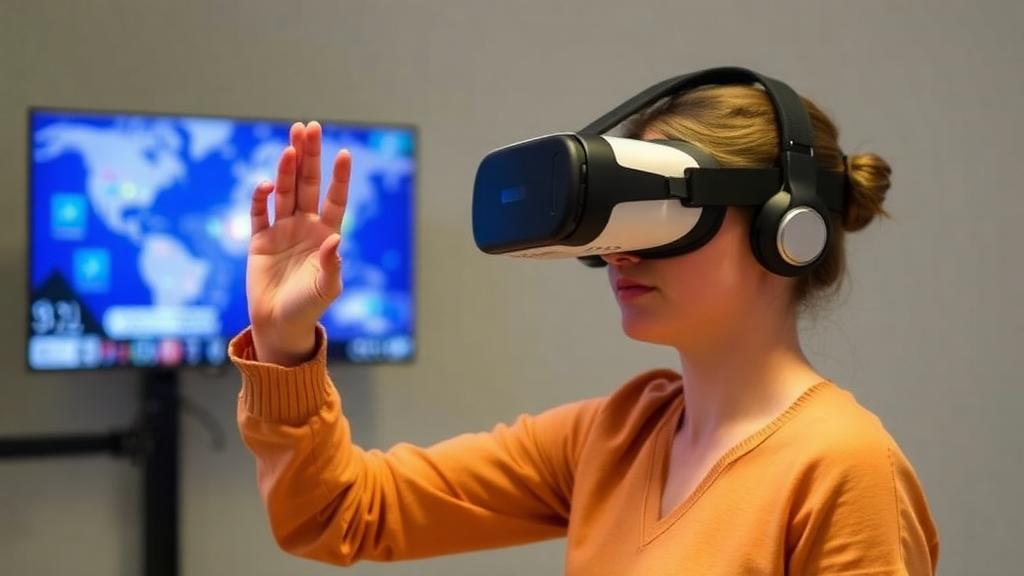
Virtual reality has become one of the most seductive promises in modern education: strap on a headset, step inside a simulation, and learning supposedly follows. But a new conceptual framework published in Discover Education argues that this equation is fundamentally flawed. Miriam Mulders of the University of Duisburg-Essen has developed the Integrative Model of Experience-Based Immersive Learning, or I-MEIL, which positions a VR-supported activity not as a self-contained intervention but as one episode within a longer, biographically rooted stream of experiences. The model’s central claim is provocative: neither the technological sophistication of a VR system nor the subjective intensity of a virtual encounter is sufficient to explain whether learning actually occurs.
At the heart of the framework lies a three-level distinction that challenges how VR research is often reported. Technological immersion refers to objectively describable properties of a media system, such as representational fidelity, interactivity, sensorimotor contingency, and the range of sensory channels addressed. Subjective immersive experience, by contrast, describes the temporally variable ways learners perceive and interpret their interaction with a virtual environment, including presence, engagement, embodiment, and perceived agency. Immersive learning, the third level, denotes a pedagogically designed process in which a potentially immersive activity is connected with prior experiences, preparation, situated tasks, educator guidance, and subsequent reflection and transfer. Confusing these levels, the paper argues, leads to the widespread but unjustified assumption that wearing a headset automatically produces presence, engagement, or understanding.
The theoretical backbone of the model draws on John Dewey’s pragmatist conception of experience, particularly his principles of continuity and interaction. Continuity means that every experience draws on preceding experiences and shapes how later ones are interpreted. Interaction refers to the relationship between a learner’s existing dispositions and the objective conditions of a situation. Under this view, learners never enter a virtual environment as neutral recipients of stimuli; they arrive with prior knowledge, expectations, values, emotions, media experience, and culturally shaped interpretive frameworks. The same virtual scenario may become a challenging learning opportunity for one student, confirm an existing belief for another, or remain confusing or irrelevant for a third. Dewey’s warning that not every experience is educative, and that some may even restrict future learning, sits uncomfortably beside the enthusiasm that often surrounds educational VR.
The I-MEIL organizes VR-supported learning into three interrelated phases: prior and preparatory experience, situated immersive experience, and reflective and transfer-oriented experience. The first phase encompasses learners’ biographical and educational backgrounds alongside instructional preparation, such as activating prior knowledge, clarifying tasks, establishing expectations, and developing technical familiarity. The second phase concerns situated interaction with the designed environment and the cognitive, affective, and excitative response states that may arise within it. The third phase comprises pedagogically supported opportunities to articulate, contextualize, critically appraise, consolidate, and transfer what was experienced. Crucially, these phases are not conceived as automatically completed stages or a fixed causal sequence; they identify analytically distinct yet interdependent parts of a learning design whose relationships vary with learners, tasks, content, facilitation, and context.
Technological features, in this framework, function as affordances rather than direct causes. Drawing on James Gibson’s ecological psychology, the model treats possibilities for action as arising in the relationship between an environment and an acting individual. Manipulating a virtual object may support procedural exploration when aligned with a learning goal, but it may be irrelevant or distracting when peripheral to the task. Multisensory information may aid orientation in one application while imposing unnecessary processing demands in another. Fidelity itself should not be equated with visual realism; a highly realistic representation may be unnecessary or even distracting when schematic information better supports the intended task, while detailed spatial representation may be essential when learners must distinguish subtle features or navigate complex environments.
During the situated phase, the model draws on the Differential Susceptibility to Media Effects Model to describe three transient response states. Cognitive responses concern attention, interpretation, and mental effort; affective responses include interest, curiosity, enjoyment, discomfort, or frustration; excitative responses refer to physiological arousal. These states may fluctuate constantly during a VR activity because of distraction, task difficulty, technical disruption, cybersickness, or deliberate disengagement. Constructs frequently measured in VR studies, such as presence, agency, embodiment, and cognitive load, serve as indicators of selected aspects of this experience, but the model insists they are not interchangeable and not evidence of learning in themselves. A high presence score documents a subjective response; it does not demonstrate conceptual understanding, reflection, or transfer.
The framework also takes a cautious stance on one of VR’s most hyped applications: perspective-taking. Virtual environments can present situations from a particular visual position and invite learners to consider other people’s experiences, but occupying a first-person perspective or controlling an avatar does not reproduce another person’s cognitive standpoint, identity, or lived experience. Learners continue to interpret representations from their own social, cultural, and biographical positions. When simulations address marginalization, discrimination, homelessness, or migration, the model warns against equating perspective-taking with becoming another person, a critique that echoes longstanding concerns about so-called cybernetic tourism and the reduction of situated identities to temporarily consumable representations.
Reflection and transfer form the third instructional function, and the model argues they cannot be assumed to occur spontaneously. Learners may remove the headset with fragmented impressions, unresolved emotions, misconceptions, or unanswered questions. Post-VR reflection has distinctive objects: learners can examine not only the represented content but also how technological mediation shaped what they noticed, felt, or were able to do, and what the simulation omitted or whose perspective it privileged. Generative activities such as self-explanation, summarizing, and collaborative discussion can support integration, but the paper cites evidence that strategies effective in other contexts may yield no additional benefit in procedural VR learning and may even introduce competing demands. Preparation and reflection, in other words, are conditional design elements rather than universally effective additions.
The model’s implications for research are equally demanding. Studies should distinguish technological conditions, subjective response states, instructional processes, and learning outcomes, combining self-reports, behavioral and interaction data, physiological measures, and outcome assessments rather than relying on any single indicator. Longitudinal and process-oriented designs are prioritized because the educational meaning of a VR activity may emerge across time rather than during the virtual episode alone. For designers, the framework offers a sequence of questions rather than a prescription: identify a genuine educational or biographical need, compare VR against alternatives such as video, desktop simulation, or role-play, and select the technology only when its representational and interactive conditions contribute meaningfully to the task. Learning outcomes themselves are treated as multidimensional, spanning cognitive, affective, attitudinal, behavioral, and psychomotor domains, and as recursive: new understanding may generate fresh questions and needs, reconnecting the virtual episode with the learner’s continuing stream of experiences. In an era of accelerating VR adoption, the I-MEIL offers a sobering but constructive message: the headset is where the technology begins, not where the learning ends.
Subject of Research: A conceptual model of how virtual reality-supported immersive learning connects prior experience, preparation, situated engagement, reflection, and transfer
Article Title: An integrative model of virtual reality supported immersive learning within a biographical stream of experiences
Article References: Mulders, M. (2026). An integrative model of virtual reality supported immersive learning within a biographical stream of experiences. Discover Education, 5(1), Article 1070. https://doi.org/10.1007/s44217-026-02219-w
Image Credits: AI Generated
DOI: 10.1007/s44217-026-02219-w
Keywords: virtual reality, immersive learning, educational technology, instructional design, experiential learning, presence, embodiment, cognitive load, reflection, transfer of learning, Dewey, learner agency
Cite Scienmag News
Courtney Benton. (September 30, 2026). New Model Argues VR Learning Depends on Experience, Not Just Headsets. Scienmag. https://scienmag.com/new-model-argues-vr-learning-depends-on-experience-not-just-headsets/
Courtney Benton. "New Model Argues VR Learning Depends on Experience, Not Just Headsets." Scienmag, 30 September 2026, https://scienmag.com/new-model-argues-vr-learning-depends-on-experience-not-just-headsets/. Accessed 30 September 2026.
Courtney Benton. "New Model Argues VR Learning Depends on Experience, Not Just Headsets." Scienmag. September 30, 2026. https://scienmag.com/new-model-argues-vr-learning-depends-on-experience-not-just-headsets/


