


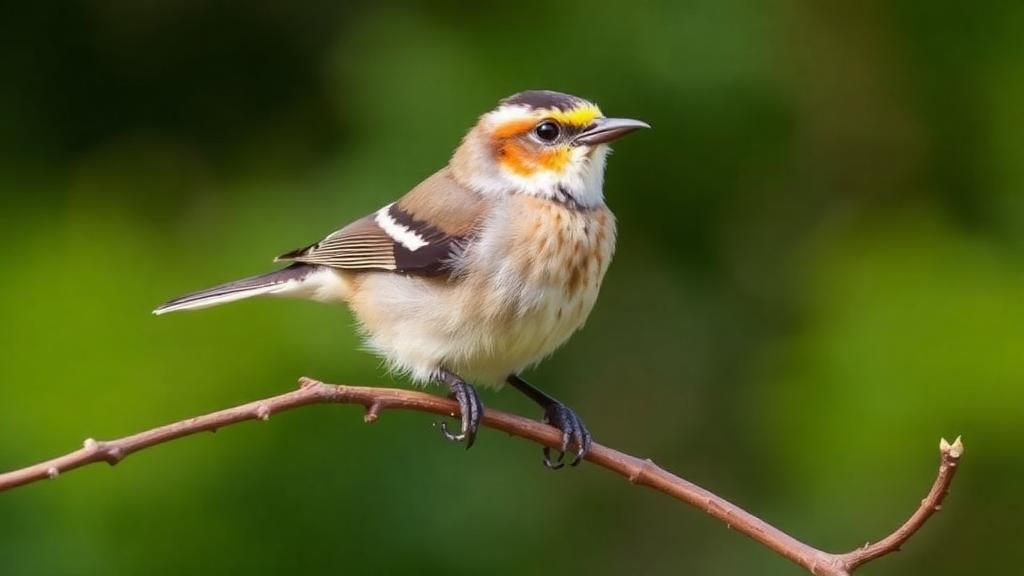
Every autumn, Bobolinks lift off from North American grasslands and begin a round trip of roughly 20,000 kilometers, ultimately threading their way to South American wintering grounds and back again. Along the way they must cross the Gulf of Mexico and the Caribbean in sustained overwater flights where landing is impossible, refuel at stopovers, and dodge predators and storms. For decades, scientists have debated how much of this extraordinary journey is written into a bird’s genes and how much is improvised in response to weather and conditions on the ground. A new study of a breeding population in Vermont now offers one of the most complete answers yet, and the verdict is striking: for this long-distance migrant, the calendar is largely inherited, while the weather plays a surprisingly minor role.
The research, published in Ecology and Evolution, combined three kinds of data that are rarely brought together at this scale. Between 2008 and 2022, the team fitted 306 adult Bobolinks with light-level geolocators weighing just 0.65 grams, retrieving 43 of the devices in subsequent years. From these, 29 birds with usable tracks and blood samples formed the core dataset, comprising 20 males and 9 females whose full annual cycles were reconstructed. The geolocators recorded ambient light, allowing researchers to estimate latitude and longitude with average errors of about 33 kilometers north-south and 21 kilometers east-west. Meanwhile, microsatellite markers from blood samples provided a picture of each bird’s genetic background, and historical climate reanalysis data from the European Centre for Medium-Range Weather Forecasts supplied daily temperature, precipitation, and pressure values along every route.
To distill a multi-continent journey into something statistically manageable, the researchers defined nine distinct migration events, from the first consistent southward movement of fall to the arrival back on the breeding grounds in spring. Seven of these events were analyzed directly, each with two response variables: the date of the event and its latitude. The team then asked which factors best explained variation in timing and location, testing composite genetic scores, sex, carryover effects from earlier stages of the annual cycle, and local weather conditions. Genetic relatedness was summarized using a paired ordination approach that combined principal components analyses of individual microsatellite loci through a multiple co-inertia analysis, producing three composite genotype scores that together captured 30 percent of the population’s genetic variation.
The results were clearest at the bookends of migration. The start of fall migration was significantly correlated with a bird’s composite genotype score, which alone accounted for roughly 22 percent of the variation in departure date. Males left earlier than females, departing on average around day 256 of the year compared with day 264 for females, and males also departed from higher latitudes. Genetics resurfaced at the other end of the cycle as well: the timing of winter departure, which marks the start of spring migration, was significantly linked to the first composite genotype score, with genetically similar birds leaving their wintering grounds on similar dates. Even the timing of arrival in South America, after the perilous overwater crossing, showed a genetic correlation, as did the timing of arrival back on the breeding grounds in spring.
By contrast, the evidence for weather as a driver of migration decisions was remarkably thin. Temperature, precipitation, and pressure did appear as significant terms in several models, but on closer inspection these correlations mostly tracked seasonal patterns, such as cooler temperatures at later dates in the North American fall, or reflected underlying differences between the sexes rather than genuine responses to weather. The researchers note that if weather were truly governing migration behavior, they would have expected consistent temperatures within each event or warmer conditions driving earlier departures, in line with broader trends of advancing migration phenology. Instead, most birds avoided flying in rain and experienced little to no precipitation before departing a migration event, suggesting that weather may shape decisions at spatial or temporal scales finer than geolocators can resolve.
One of the study’s most unexpected findings concerns sex. Males and females differed consistently in both timing and location throughout the annual cycle, patterns that had gone undetected in Bobolinks partly because the species’ nonbreeding plumage is not sexually dimorphic. During fall migration, females staged farther north than males and over a narrower range of latitudes, with 78 percent of females using the breeding grounds themselves as their pre-water-crossing staging sites, likely because their larger share of parental care leaves them needing more recovery time before departure. Males, meanwhile, congregated around latitude 38 degrees North, the most commonly used staging region, before launching flights of roughly 1,000 kilometers over water toward the Caribbean. Sexual segregation persisted onto the wintering grounds, where males wintered farther north and over a smaller latitudinal range than females.
Carryover effects proved to be a powerful organizing principle of the annual cycle. Birds that started fall migration early arrived at their pre-water-crossing staging grounds early, and the date of departure from South America strongly predicted the timing of breeding ground arrival, explaining about 32 percent of the variation in that event. Because male Bobolinks are polygynous and early arrival confers advantages in claiming high-quality territories capable of supporting multiple females, these cascading delays carry real fitness consequences. Males departing South America significantly earlier than females, around day 120 versus day 132, fit the well-documented pattern of protandry, which tends to be pronounced in populations with high rates of extra-pair paternity, as is the case in this Vermont population.
The conservation implications are sobering. Bobolinks number roughly 10 million individuals globally, but their population is projected to decline by half by 2069, with grassland habitat loss as the leading threat. If the timing of migration is genetically hardwired, birds may be unable to adjust quickly enough as climate change reshapes the environments they depend on. In Vermont, farmers have already advanced their haying dates by about 10 days in response to a changing climate, yet Bobolinks have not shifted their nest initiation dates, creating a widening phenological mismatch that brings mowing machines into ever-greater conflict with active nests. A migration calendar locked in by inheritance could similarly leave the species vulnerable if food availability and habitat conditions along the route shift faster than microevolution can respond.
The study’s authors caution that geolocator research carries an inherent bias: only birds that survived the full annual cycle were recovered, so the behavior of individuals that perished en route remains invisible. Experiments with captive migrants have shown that food availability can modulate the onset of endogenous migratory urges, meaning environmental conditions may still fine-tune the genetically anchored schedule in ways this study could not detect. Nevertheless, the work stands as one of the first to test genetic and environmental influences on a long-distance songbird’s behavior across its entire annual cycle using neutral genetic markers. The picture that emerges is of a bird whose most consequential migration decisions, when to leave, when to cross the water, and when to return home, are inscribed in its genome, with flexibility reserved mainly for the finer details of the journey.
Subject of Research: Genetic and environmental control of annual-cycle migration behavior in the Bobolink, a long-distance migratory songbird
Article Title: Genetics, Not Weather, Informs Migration Behaviors in a Long‐Distance Migrant Songbird
Article References: McGee, K. E., Travis, S. E., Strong, A. M., & Perlut, N. G. (2026). Genetics, Not Weather, Informs Migration Behaviors in a Long‐Distance Migrant Songbird. Ecology and Evolution, 16(9), Article e74245. https://doi.org/10.1002/ece3.74245
Image Credits: AI Generated
DOI: 10.1002/ece3.74245
Keywords: Bobolink, bird migration, migratory timing, genetics, geolocators, microsatellites, annual cycle, carryover effects, climate change, phenological mismatch, sexual segregation, grassland birds
Cite Scienmag News
Juliet Wilcox. (September 30, 2026). Genes, Not Weather, Drive the Migration Clock of a Long-Distance Songbird. Scienmag. https://scienmag.com/genes-not-weather-drive-the-migration-clock-of-a-long-distance-songbird/
Juliet Wilcox. "Genes, Not Weather, Drive the Migration Clock of a Long-Distance Songbird." Scienmag, 30 September 2026, https://scienmag.com/genes-not-weather-drive-the-migration-clock-of-a-long-distance-songbird/. Accessed 30 September 2026.
Juliet Wilcox. "Genes, Not Weather, Drive the Migration Clock of a Long-Distance Songbird." Scienmag. September 30, 2026. https://scienmag.com/genes-not-weather-drive-the-migration-clock-of-a-long-distance-songbird/


