


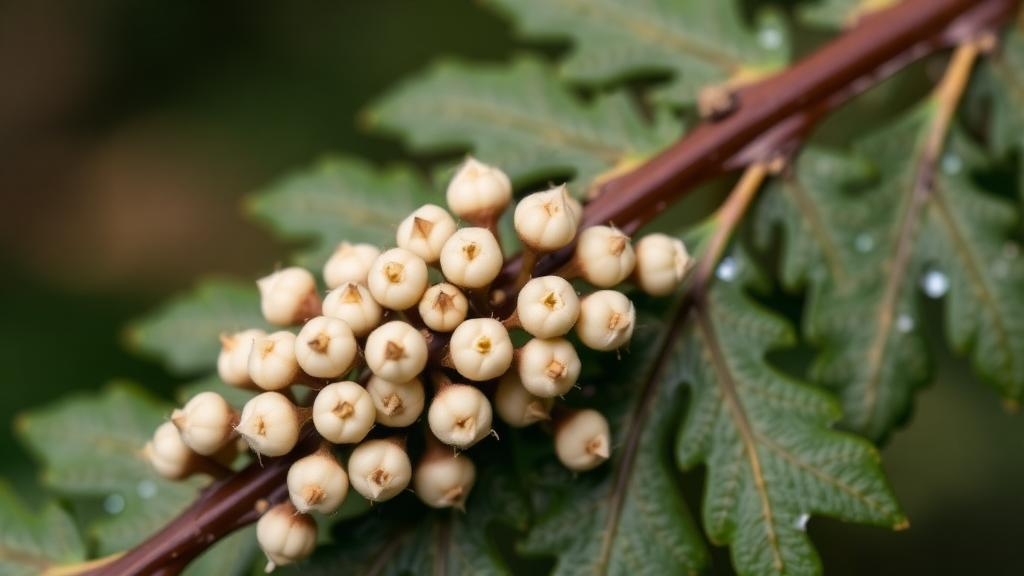
In the dry forests and savanna-forest transition zones of West Africa, one of the region’s most valuable trees is quietly disappearing. Afzelia africana, often called the African oak, is a towering legume prized for its dense, termite-resistant timber, its protein-rich leaves that feed livestock through the dry season, and its seeds, which yield oil used in food, cosmetics, and even biofuel. Yet the species is classified as vulnerable by the IUCN, its populations dominated by aging adults with few young trees coming up behind them. Illegal logging, chronic pruning, bushfires, and herbivory have combined to throttle natural regeneration, and even protected areas are not shielding it effectively. Now, a new study offers a surprisingly detailed answer to a deceptively simple question: if you want to plant this species back into the landscape, which trees should you collect seeds from?
The research, published in the journal Discover Forests, was conducted by a team led by Kolawolé Valère Salako of the University of Abomey-Calavi in Benin. Rather than treating seeds as interchangeable units, the researchers measured them the way a breeder might measure livestock, recording length, width, thickness, and weight for an extraordinary 9,330 seeds gathered from 63 mother trees across five protected areas and three distinct climatic zones in Benin, ranging from the humid Guineo-Congolian zone in the south to the dry Sudanian zone in the north. Each seed was individually labeled and measured with calipers precise to a hundredth of a millimeter, and mother trees were kept at least 100 meters apart to avoid sampling related individuals. The result is one of the most granular portraits of seed variation ever assembled for a threatened tropical timber species.
The first headline finding concerns climate. Across the rainfall gradient, seed traits shifted in a clear and consistent direction: the longest, heaviest, and thickest seeds came from the wettest zone, while the smallest and lightest came from the driest. Seed length averaged just over 20.8 millimeters in the wettest zone compared with about 18.8 millimeters in the driest, and seed weight followed the same trajectory. The only trait that refused to follow the trend was seed width, which remained remarkably stable no matter where the mother tree stood. The authors interpret this gradient as a possible adaptation strategy: under the biotic and abiotic stresses of drier climates, plants commonly produce smaller seeds, a pattern previously documented in other West African multipurpose trees such as tamarind. Seed weight, in particular, stood out as the most variable trait of all, with coefficients of variation exceeding 25 percent across zones and provenances.
But the deeper surprise lay in where the variation actually lived. Using linear mixed models and variance component analysis, the team decomposed the total phenotypic variation into its hierarchical sources: climatic zones, provenances within zones, trees within provenances, and seeds within trees. The answer upended the intuitive assumption that broad climate is the dominant driver. More than 75 percent of the variation occurred within climatic zones rather than among them, and the single largest share, ranging from roughly 31 to 56 percent depending on the trait, occurred within individual mother trees. Variation among trees accounted for 19 to 22 percent, and variation among climatic zones never exceeded 25 percent. In other words, a single Afzelia tree in one forest can produce a wider spread of seed forms than exists between entire regions hundreds of kilometers apart.
To probe this within-tree diversity further, the researchers turned to a technique borrowed from ecology: hypervolume analysis. After standardizing the four seed measurements and compressing them into a two-dimensional phenotypic space using principal component analysis, they constructed a hypervolume, essentially a multidimensional envelope, for each mother tree, quantifying how much of the total trait space that tree’s seeds occupied. The differences were striking. The most phenotypically expansive tree, designated AG4, produced a hypervolume of 45.06, while the most homogeneous, AG12, occupied only 9.39. Trees with large hypervolumes produce seeds spanning a broad range of sizes and shapes, whereas trees with small hypervolumes produce seeds of striking uniformity. Crucially, climatic zone had no statistically significant effect on either the hypervolumes or the within-tree coefficients of variation, pointing instead to microclimate and intrinsic maternal effects, the local conditions surrounding each individual tree and its own genetic makeup, as the primary architects of seed morphological diversity.
The team also estimated repeatability for each trait, a statistical proxy for heritability that asks how much of the variation in a trait is attributable to differences among mother trees rather than to environmental noise within them. Repeatability was highly significant for all four traits but varied in magnitude. Seed thickness and width showed low values, approaching zero in some cases, while seed length and seed weight showed moderate repeatability, between 0.33 and 0.37. That moderate figure matters enormously for restoration practice. It means that seed length and weight are partly inherited from the mother tree, so a nursery manager selecting seeds from trees that reliably produce large, heavy seeds has a reasonable chance of capturing that characteristic in the next generation. Traits with near-zero repeatability, by contrast, would offer no such predictive power.
Why does seed size matter so much for restoration? Previous work on Afzelia africana has shown that larger seeds germinate at higher final percentages, germinate faster on average, and produce seedlings with stronger early growth. Because the success of enrichment planting and assisted regeneration programs hinges on getting seedlings established in often harsh, fire-prone, and grazed landscapes, the morphological quality of the seed lot is not a trivial detail; it can be the difference between a restored stand and a failed one. The moderate heritability of length and weight, combined with their high variability, makes these traits the most promising targets for selection. The authors suggest that the wide within-tree variation itself may be an adaptive bet-hedging strategy: rather than putting all reproductive effort into one optimal seed type, a mother tree spreads the risk across a portfolio of offspring forms, ensuring that at least some are suited to whatever conditions the future holds.
Synthesizing the coefficient of variation and hypervolume results, the researchers identified nine mother trees as the most promising seed sources for restoration programs: AG4, RB1, AG3, AG7, PE14, 3R6, AG10, DK2, and 3R5. These elite individuals combine high morphological diversity with substantial intra-individual variability, meaning their seeds sample a wide slice of the species’ phenotypic space. Collecting from such trees, the argument goes, would maximize the adaptive potential of restored populations, giving the next generation the raw variation it needs to cope with uncertain and changing conditions. The authors are careful to note, however, that phenotypic diversity alone is not a complete selection criterion; germination performance, reciprocal transplantation trials, and genetic diversity assessments should complement the morphological data before any tree is crowned a definitive seed orchard founder.
The broader implications reach well beyond a single species. Restoration practitioners worldwide increasingly recognize that where seeds come from, and which individuals they come from, shapes the long-term resilience of planted forests. This study adds a crucial nuance: sourcing decisions based only on broad climatic matching, the standard provenance approach, would miss most of the relevant variation, because the majority of phenotypic diversity in Afzelia seeds resides within individual trees, driven by maternal micro-environments rather than regional gradients. For a vulnerable foundation species struggling to regenerate across sub-Saharan Africa, the message is both practical and hopeful. The genetic and phenotypic raw material for recovery may already be standing in the forest, scattered among a handful of remarkable mother trees, waiting to be identified, protected, and propagated. Future work combining common garden experiments with reciprocal transplants will test whether the elite trees identified here pass their advantages on through the full life cycle, from seed to sapling to canopy giant.
Subject of Research: Intraspecific phenotypic variation and repeatability of seed traits in Afzelia africana across climatic gradients in Benin
Article Title: Seed phenotypic variation and traits repeatability in Afzelia africana along a climatic gradient provide insights for seed sourcing in forest restoration
Article References: Salako, K. V., Lissanon, J.-E., Gandji, M. R. M., Kolawole, A. M., Akouete, P. L. E., Dogbo, F. S., Akakpo, A. D., & Glèlè Kakai, R. (2026). Seed phenotypic variation and traits repeatability in Afzelia africana along a climatic gradient provide insights for seed sourcing in forest restoration. Discover Forests, 2(1), Article 72. https://doi.org/10.1007/s44415-026-00131-7
Image Credits: AI Generated
DOI: 10.1007/s44415-026-00131-7
Keywords: Afzelia africana, seed phenotypic variation, forest restoration, climatic gradient, repeatability, heritability, seed sourcing, Benin, hypervolume analysis, maternal effects, phenotypic plasticity, tropical trees
Cite Scienmag News
Margaret Porter. (September 30, 2026). African Oak Seeds Reveal Hidden Diversity That Could Transform Forest Restoration. Scienmag. https://scienmag.com/african-oak-seeds-reveal-hidden-diversity-that-could-transform-forest-restoration/
Margaret Porter. "African Oak Seeds Reveal Hidden Diversity That Could Transform Forest Restoration." Scienmag, 30 September 2026, https://scienmag.com/african-oak-seeds-reveal-hidden-diversity-that-could-transform-forest-restoration/. Accessed 30 September 2026.
Margaret Porter. "African Oak Seeds Reveal Hidden Diversity That Could Transform Forest Restoration." Scienmag. September 30, 2026. https://scienmag.com/african-oak-seeds-reveal-hidden-diversity-that-could-transform-forest-restoration/


