


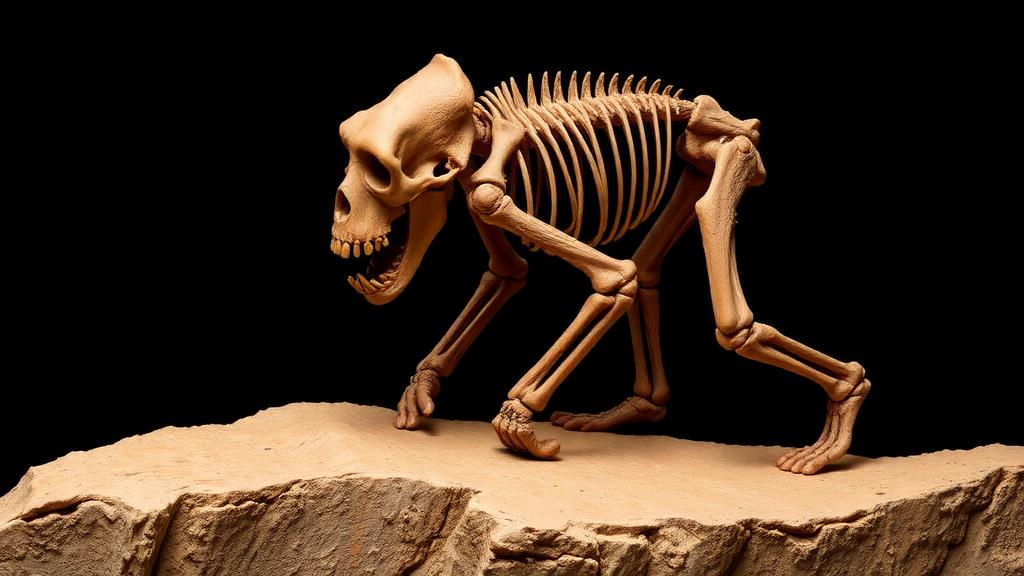
A quiet hillside north of Johannesburg has once again rewritten a chapter of the human story. At the Drimolen Main Quarry, located within South Africa’s celebrated Cradle of Humankind, archaeologists from La Trobe University and their collaborators in South Africa and the United States have described eighteen previously unpublished hominin fossils, including a second skull fragment belonging to Homo erectus. The new material confirms that this pivotal species, widely regarded as the earliest member of our own genus and a likely direct ancestor, first appeared in southern Africa around two million years ago, roughly 200,000 years earlier than the traditionally accepted timeline. The findings, published in Annals of Human Biology, come from a systematic re-examination of material excavated at Drimolen between the site’s discovery in 1992 and 2019, much of which had remained undescribed and therefore invisible to the broader scientific community.
The significance of the new adult specimen, catalogued as DNH 127, lies in what it resolves about an earlier and more ambiguous discovery. In 2020, researchers announced DNH 134, a Homo erectus skull fragment from Drimolen dated to two million years old, which at the time represented the oldest known evidence of the species anywhere in the world. But that original fossil belonged to a child estimated to have been between two and four years old at death, and juvenile cranial anatomy differs substantially from that of adults, leaving open questions about how the mature form of the species at this early date actually appeared. Lead researcher Dr Jesse Martin of La Trobe University explained that the uncertainty surrounding the adult morphology of early Homo erectus had been a persistent concern, and that the new adult fossil provides independent confirmation that the species was present in southern Africa at the two-million-year mark.
To appreciate why this matters, it helps to consider the geography and chronology of early Homo erectus as it stood before these discoveries. The species is famous for being the first hominin to spread far beyond Africa, with well-preserved adult fossils known from Dmanisi in the Republic of Georgia dated to approximately 1.8 million years ago. For decades, the conventional picture placed the origin of Homo erectus somewhere in Africa shortly before that dispersal, but the fossil record on the continent itself was frustratingly thin at the critical window. The Drimolen material now anchors the earliest appearance of the species firmly in southern Africa, pushing the lineage’s documented presence back to two million years ago and implying that Homo erectus had already been evolving and diversifying on the continent for a substantial interval before any population ventured into Eurasia.
Homo erectus occupies a singular position in paleoanthropology. It is the first species of hominin for which researchers broadly agree that it fits within our own genus, Homo, and it is widely considered likely to be directly ancestral to modern humans. The species combined an enlarged braincase with smaller molar teeth relative to earlier hominins, a suite of traits often associated with dietary shifts, particularly increased meat consumption and the use of tools to process food before chewing. The new adult specimen from Drimolen allows researchers to examine these traits in a fully mature individual from the very beginning of the species’ history, rather than extrapolating backward from later, better-sampled populations or reconstructing adult anatomy from a child’s skull.
Yet the eighteen fossils described in the paper tell a second, equally compelling story, and it belongs to a different species altogether. Alongside the Homo erectus material, the team attributed numerous specimens to Paranthropus robustus, a heavy-jawed, small-brained relative of our lineage that shared the same landscape and is abundantly preserved in the same cave deposits. By comparing the two-million-year-old Drimolen sample with the slightly younger Paranthropus robustus fossils from Swartkrans, another cave site in the Cradle of Humankind dated to about 1.8 million years ago, the researchers documented measurable microevolutionary change within the species across that 200,000-year span. The teeth of Paranthropus robustus became larger over time, and so did the chewing muscles that powered them, an evolutionary trajectory toward ever more powerful processing of tough and hard foods.
Dr Martin offered a vivid analogy for this anatomical specialization, describing the Paranthropus robustus chewing apparatus as functioning like a mortar and pestle, capable of grinding down resistant plant materials that other hominins could not easily exploit. This stands in sharp contrast to the direction our own ancestors were taking during the same period. While Homo erectus was evolving a larger brain and smaller molar teeth, changes plausibly linked to meat eating and food preparation, Paranthropus robustus maintained a brain size only slightly larger than that of a chimpanzee and instead doubled down on mechanical food processing in the mouth itself. The two species thus represent alternative evolutionary experiments unfolding side by side in the same South African caves, each responding to the climatic and ecological pressures of the early Pleistocene in its own way.
Perhaps the most striking revelation from the study concerns the relative abundance of these two species at Drimolen two million years ago. Paranthropus robustus outnumbered Homo erectus at the site by more than ten to one during this period, a demographic picture that inverts the familiar narrative of inevitable human success. As Dr Martin noted, during this window it was our own ancestors that looked like the long-odds chance to survive, the marginal population clinging to existence while the robust, heavily built Paranthropus thrived in the local environment. The eventual extinction of Paranthropus robustus and the worldwide expansion of the Homo erectus lineage were outcomes that no observer of the two-million-year-old landscape could have confidently predicted from the fossil counts alone.
The sheer quantity of material from Drimolen is what makes such fine-grained evolutionary analysis possible in the first place. Hominin fossils are so rare that researchers typically confront differences between samples that are enormous in both time and anatomy, forcing them to make educated guesses about what existed in the vast gaps of the fossil record. A single fragmentary jaw from one site and a handful of teeth from another, separated by half a million years, offer little basis for distinguishing genuine evolutionary change from ordinary variation within a population. The large Drimolen assemblage, parts of which are published for the first time in this paper, collapses that barrier by providing a dense, well-dated sample from a narrow window of time, allowing an unprecedented view of the small-scale changes that accumulated within a single hominin species across just 200,000 years.
That distinctiveness has now been given formal taxonomic recognition. The uniqueness of the Drimolen Paranthropus robustus population had previously been acknowledged with the assignment of a subspecies name, Paranthropus robustus ukusa, and the fossils described in the new research support that designation. In practical terms, this means the two-million-year-old population from Drimolen is not simply an earlier sample of the same animals later buried at Swartkrans, but a subtly yet importantly different population that was actively evolving under local selective pressures. The pattern illustrates how microevolution, the slow accumulation of small anatomical shifts within a lineage, can be captured directly in the fossil record when sampling is dense enough, transforming what is usually a coarse and speculative science into something approaching a documented population history.
The study was conducted by scientists from the Palaeoscience Labs in the Department of Archaeology and History at La Trobe University, the Palaeo-Research Institute at the University of Johannesburg, the Evolutionary Studies Institute at the University of the Witwatersrand, and the Department of Anthropology at Washington University, and it employed detailed imaging analysis of the cranial and mandibular remains. Taken together, the eighteen new fossils do more than fill gaps in a museum drawer. They confirm that the ancestor of every living human first walked the southern African landscape two million years ago, they reveal a rival species in the midst of rapid adaptive change under climatic stress, and they remind us that evolutionary success is never guaranteed in advance. Two million years ago, the future of the human lineage rested with a rare and newly emerged species whose survival was, by every available measure, far from certain.
Subject of Research: Early hominin fossils from Drimolen Main Quarry documenting the first appearance of Homo erectus and microevolution in Paranthropus robustus
Article Title: Fossils confirm human ancestors first appearance
Article References: Fossils confirm human ancestors first appearance. (n.d.). Original publication
Image Credits: AI Generated
DOI: Not provided
Keywords: Homo erectus, Paranthropus robustus, Drimolen Main Quarry, Cradle of Humankind, paleoanthropology, hominin fossils, human evolution, South Africa, microevolution, Annals of Human Biology, La Trobe University, early Pleistocene
Cite Scienmag News
Gavin Prescott. (September 30, 2026). New Fossil Trove Pushes Back the Dawn of Homo erectus by 200,000 Years. Scienmag. https://scienmag.com/new-fossil-trove-pushes-back-the-dawn-of-homo-erectus-by-200000-years/
Gavin Prescott. "New Fossil Trove Pushes Back the Dawn of Homo erectus by 200,000 Years." Scienmag, 30 September 2026, https://scienmag.com/new-fossil-trove-pushes-back-the-dawn-of-homo-erectus-by-200000-years/. Accessed 30 September 2026.
Gavin Prescott. "New Fossil Trove Pushes Back the Dawn of Homo erectus by 200,000 Years." Scienmag. September 30, 2026. https://scienmag.com/new-fossil-trove-pushes-back-the-dawn-of-homo-erectus-by-200000-years/


