


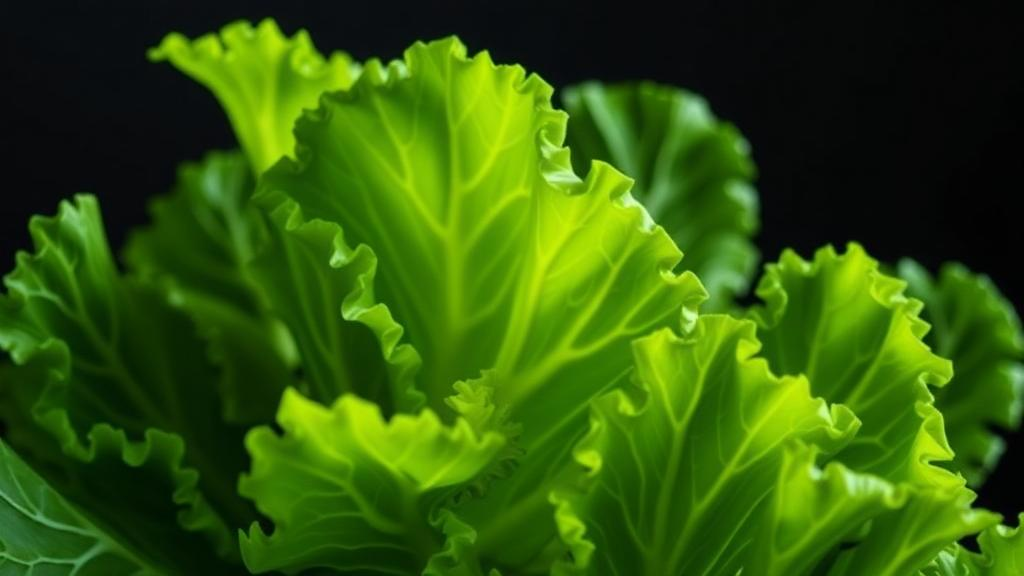
Tipburn has haunted lettuce growers for decades, appearing as papery, dead tissue at the edges and tips of leaves that can render an otherwise perfect head unsellable. For most of that time, the disorder has been blamed almost exclusively on calcium: when transpiration stalls inside a dense rosette, calcium delivery to rapidly growing tissues falters, and the cell walls of young leaves weaken. A new study published in BMC Plant Biology by Ian Byrnes of the Norwegian University of Life Sciences and colleagues now adds a striking twist to that story. Using a combination of bulk chemical analysis and high-resolution X-ray imaging, the team shows that when lettuce is exposed to elevated light, manganese and zinc pile up in the tips of mature outer leaves precisely where necrotic lesions form, while potassium and chlorine vanish from the same injured zones. The finding reframes outer tipburn not simply as a calcium starvation disease but as a localized metal imbalance, one that unfolds in a remarkably specific spatial pattern.
The researchers grew lettuce plants of the cultivar Frillice in a nutrient film technique system inside controlled growth chambers, where every environmental variable could be held constant except light. One group of plants received a moderate irradiance of 150 micromoles per square meter per second, delivered by high-pressure sodium lamps for eighteen hours each day, while a second group was shifted to a high irradiance of 300 micromoles per square meter per second under the same photoperiod. Day and night temperatures were maintained at 20 and 18 degrees Celsius respectively, with relative humidity at 70 percent. Within days, the high-light plants began to display the telltale symptoms of outer tipburn: chlorotic and necrotic margins on fully expanded leaves, while the young, unexpanded leaves at the heart of the rosette remained visually unaffected.
To quantify what was happening chemically, the team sampled leaf tissues separately, distinguishing young unexpanded leaves from mature outer leaves and, within the mature leaves, separating the outer one to two centimeters of margin from the inner tissues. Inductively coupled plasma atomic emission spectroscopy revealed that high irradiance drove up the concentrations of both calcium and manganese in the margins of mature leaves relative to inner leaf tissues. The contrast with young leaves was even more pronounced: those tender, unexpanded tissues contained substantially lower calcium and manganese concentrations than the margins of their mature counterparts. In other words, the two leaf types occupy very different mineral worlds, and the disorder strikes the mature leaves where certain metals concentrate rather than the young leaves where they are scarce.
Bulk chemistry, however, can only average across a tissue. What makes the new study unusual is its use of laboratory-based micro X-ray fluorescence imaging, a technique that maps the elemental composition of a sample point by point at microscopic resolution. By scanning healthy and necrotic tips of outer leaves, the researchers could see exactly where each element resided relative to the boundary between living and dying tissue. The maps showed high accumulation of manganese, zinc, and calcium within the injured parts of the tips, accompanied by a marked depletion of potassium and chlorine. Because potassium is highly mobile within the plant and abundant in living cells, its disappearance from necrotic zones is consistent with cell death and loss of membrane integrity, while the enrichment of manganese and zinc points to active sequestration or passive concentration of these metals in the damaged tissue.
The spatial detail proved decisive. The distribution of manganese and zinc differed sharply between healthy and injured regions of the same leaf tips in the high-light plants, indicating that local metal imbalances develop hand in hand with the progression of the lesion rather than being a uniform property of the leaf. In an early-detection experiment, the team compared elemental signatures at single points within injured cells and neighboring healthy cells on the same tip, finding the metal enrichment already associated with cells on the verge of collapse. A supplementary experiment reinforced the manganese connection: when extra manganese, at 100 milligrams per liter, was added to the nutrient solution of high-light plants, the resulting chlorotic tips developed black spots that the X-ray maps showed to be loaded with manganese and zinc.
Why would elevated light push manganese and zinc toward the leaf periphery? The authors’ data suggest a link to transpiration-driven mass flow. Higher irradiance increases photosynthesis and water demand, and the mature outer leaves, which intercept the most light and transpire most freely, receive the greatest share of the xylem stream. Manganese and zinc, transported primarily in the xylem, are therefore delivered preferentially to these tissues, whereas calcium, famously immobile in the phloem, accumulates wherever the transpiration stream ends. Under moderate light the plant appears to cope with this delivery pattern, but at 300 micromoles per square meter per second the flux intensifies until the margins of mature leaves become sinks for metals at concentrations that the tissue cannot tolerate.
The cellular consequences of that overload were visible under the microscope. The researchers detected accumulation of reactive oxygen species in the outer leaf tips in response to high irradiance, a hallmark of oxidative stress that can damage membranes, proteins, and DNA. They also identified callose deposition in injured cells, a beta-1,3-glucan polymer that plants deploy to seal off compromised tissue and reinforce cell walls at sites of stress. Together, these responses sketch a coherent sequence: excess metal delivery to the leaf tip, oxidative burst, cell wall and membrane failure, and finally the papery necrosis that growers recognize as tipburn. Scanning electron microscopy documented the structural variation between uninjured and injured tips, complementing the chemical maps with anatomical evidence of tissue breakdown.
The study’s methodological pairing is as important as its findings. Spatially resolved X-ray fluorescence has long been used in soil science and materials research, but combining it with traditional plant physiological analysis, growth experiments, and bulk spectroscopy offers a template for dissecting other physiological disorders in leafy vegetables. Inner tipburn, which affects the young unexpanded leaves and is classically attributed to calcium deficiency, may involve its own distinct elemental dynamics; the current data show those young leaves carry far lower calcium and manganese than mature margins, underscoring that the two forms of tipburn are likely mechanistically different. Disentangling them will require the same kind of element-by-element mapping applied here to outer leaves.
For the horticulture industry, the implications are immediate. Controlled-environment agriculture and vertical farming routinely push light intensities upward to maximize yield per square meter, and outer tipburn represents a direct economic loss, both in the field and as a postharvest problem that shortens shelf life. If manganese and zinc accumulation in leaf margins is a driver or reliable marker of the disorder, then managing irradiance, transpiration, and the composition of the nutrient solution becomes a more nuanced balancing act than simply ensuring adequate calcium. The work was supported by the Norwegian Research Council, Grofondet, and the Norwegian grower association, reflecting the practical stakes for producers. As light-emitting diode installations grow brighter and denser worldwide, understanding exactly which elements accumulate where, and at what threshold tissue injury begins, may prove essential to keeping lettuce green at the margins.
Subject of Research: Light-induced manganese and zinc accumulation and outer tipburn in lettuce leaves
Article Title: Increased light triggers accumulation of manganese and zinc in leaf tips and outer tipburn in lettuce
Article References: Byrnes, I., Lind, O. C., Nagy, N. E., Lee, Y.-K., & Torre, S. (2026). Increased light triggers accumulation of manganese and zinc in leaf tips and outer tipburn in lettuce. BMC Plant Biology. https://doi.org/10.1186/s12870-026-10025-7
Image Credits: AI Generated
DOI: 10.1186/s12870-026-10025-7
Keywords: tipburn, lettuce, manganese, zinc, calcium, micro X-ray fluorescence, reactive oxygen species, callose, high irradiance, nutrient film technique, plant physiology, leaf necrosis
Cite Scienmag News
Alan Morgan. (September 30, 2026). Too Much Light Piles Manganese and Zinc Into Lettuce Leaf Tips, Triggering Burn. Scienmag. https://scienmag.com/too-much-light-piles-manganese-and-zinc-into-lettuce-leaf-tips-triggering-burn/
Alan Morgan. "Too Much Light Piles Manganese and Zinc Into Lettuce Leaf Tips, Triggering Burn." Scienmag, 30 September 2026, https://scienmag.com/too-much-light-piles-manganese-and-zinc-into-lettuce-leaf-tips-triggering-burn/. Accessed 30 September 2026.
Alan Morgan. "Too Much Light Piles Manganese and Zinc Into Lettuce Leaf Tips, Triggering Burn." Scienmag. September 30, 2026. https://scienmag.com/too-much-light-piles-manganese-and-zinc-into-lettuce-leaf-tips-triggering-burn/


