


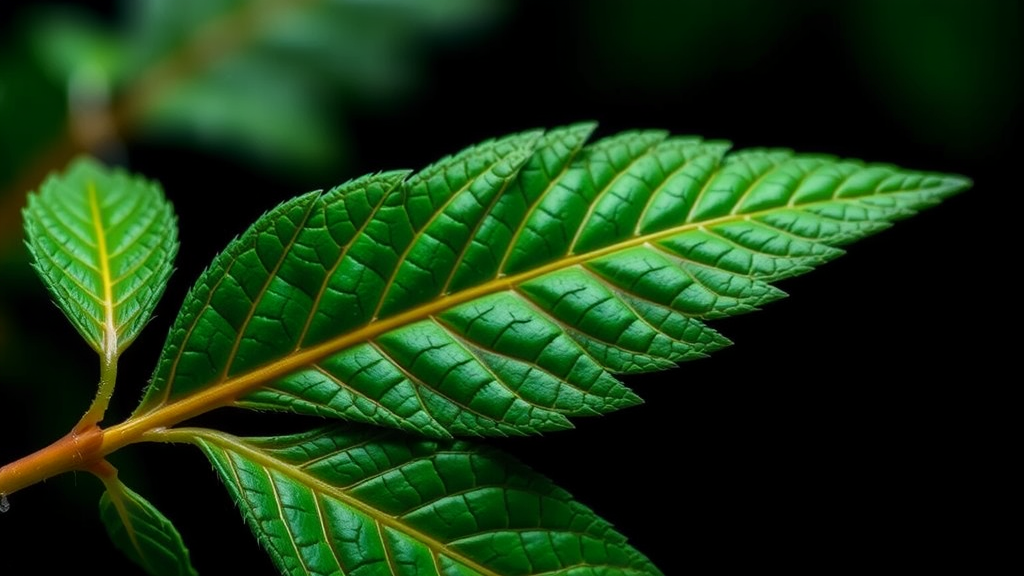
A humble herb that flavors sushi and traditional East Asian dishes may hold unexpected secrets to a longer, leaner life. In a study published in the journal Biogerontology, researchers in China report that an extract from the leaves of Perilla frutescens, a plant long used as both a food and a medicine, significantly extended the lifespan of Caenorhabditis elegans, the transparent roundworm that has become one of the most powerful model organisms in aging research. The treatment did more than simply add days to the worms’ lives. It improved their physical performance, reduced the buildup of age-related cellular damage, sharpened their defenses against oxidative stress, and dramatically lowered their fat stores, all through a well-known genetic circuit that governs how organisms respond to stress and scarcity.
The research team, led by scientists at Guangxi Medical University and the Guangxi Academy of Sciences, prepared an ethyl acetate extract of perilla leaves, a fraction enriched for the plant’s flavonoids and other secondary metabolites. Perilla frutescens is classified in China as a traditional medicine and food homologous plant, meaning it occupies the unusual dual status of being both a therapeutic agent and an everyday ingredient. Its leaves are packed with antioxidant compounds, and previous work has catalogued an impressive chemical repertoire including rosmarinic acid, luteolin, apigenin, and various terpenoids. What remained unclear was whether these compounds could meaningfully influence the biology of aging, and if so, by what mechanism.
To answer that question, the researchers turned to C. elegans, a nematode worm about one millimeter long that shares a startling degree of genetic conservation with humans. Many of the genes that control longevity in worms, including the insulin/IGF-1 signaling pathway at the heart of this study, have direct counterparts in human cells. Because worms live only a few weeks, age rapidly, and can be manipulated genetically with precision, they allow researchers to test lifespan interventions that would take decades to evaluate in mammals. When the worms were fed the perilla extract, the results were striking: their lifespans were significantly prolonged compared with untreated controls.
Longevity alone is not necessarily desirable if the extra time is spent in frailty, so the team also measured healthspan markers. Treated worms showed enhanced pharyngeal pumping, the rhythmic contraction that drives feeding and serves as a proxy for neuromuscular vitality, as well as increased head thrashing frequency, a measure of motility and muscular vigor. Both metrics suggest that the extract did not merely keep the worms alive longer but preserved their functional capacity into old age. The animals also accumulated less lipofuscin, the pigment-rich cellular debris that builds up in aging tissues and is widely used as a microscopic clock of biological age in these organisms.
A central thread of the study concerns oxidative stress, one of the canonical hallmarks of aging. Reactive oxygen species, or ROS, are chemically reactive molecules generated as byproducts of metabolism that can damage DNA, proteins, and lipids. Aging organisms lose the ability to neutralize these molecules efficiently, and the resulting damage accumulates over time. In the treated worms, ROS levels dropped markedly, and the activity of antioxidant enzymes rose. The researchers also measured malondialdehyde, or MDA, a well-established marker of lipid peroxidation, essentially the chemical rancidity of cell membranes, and found it reduced following extract treatment.
The worms’ stress resilience extended beyond their internal chemistry. When exposed to elevated temperatures, perilla-treated nematodes survived better than controls, indicating enhanced thermotolerance. They also withstood exposure to juglone, a compound deliberately used in the laboratory to induce severe oxidative stress. This dual protection against heat and chemical insult suggests that the extract activates a broad, coordinated stress-response program rather than a narrow defense against a single threat. In the language of biogerontology, the extract behaves like a nutritional hormetin, a mild stressor or bioactive compound that triggers adaptive, protective responses that ultimately benefit the organism, echoing the principle of hormesis in which a little stress makes the system stronger.
Perhaps the most visually dramatic finding involved fat. The treated worms stored markedly less lipid than their untreated counterparts, pointing to a genuine lipid-lowering effect. Fat metabolism and longevity are deeply intertwined in C. elegans, where lipid droplets serve not only as energy reservoirs but also as signaling hubs that influence aging. The interplay is complex, since some lipid species protect against age-related decline while excess storage is associated with shorter lifespans and metabolic dysfunction. The finding that a plant extract can reprogram lipid metabolism while simultaneously extending life makes perilla an intriguing candidate for further investigation as a nutraceutical, a food-derived compound with medicinal properties.
Mechanistically, the study traced these effects to the insulin/IGF-1 signaling pathway, one of the most intensively studied longevity circuits in biology. In worms, reducing signaling through this pathway triggers a cascade that activates DAF-16, the worm ortholog of the FOXO family of transcription factors, which then translocates to the nucleus and switches on an army of protective genes. The researchers found that the perilla extract activated this pathway and upregulated both DAF-16/FOXO and SKN-1, the worm equivalent of the mammalian Nrf2 transcription factor that masterminds antioxidant defenses. Consistent with this activation, downstream stress-response genes including sod-3, which encodes a superoxide dismutase enzyme, gst-4, a glutathione S-transferase, and hsp-16.2, a heat shock protein, all showed increased expression.
The upregulation of glutathione-related machinery is particularly noteworthy. Glutathione is the cell’s principal endogenous antioxidant, a tripeptide that mops up reactive molecules and maintains the cellular redox balance, and its depletion is implicated in aging and neurodegenerative disease. By enhancing glutathione metabolism alongside the DAF-16 and SKN-1 programs, the extract appears to reinforce the worm’s antioxidant architecture at multiple levels simultaneously. The authors also observed a reprogramming of lipid metabolism, suggesting that the extract coordinates metabolic and stress-response systems rather than acting on a single target, a multicomponent mode of action consistent with the behavior of complex botanical extracts rich in flavonoids and terpenoids.
The findings position perilla leaf extract as a promising candidate in the growing field of nutritional interventions against aging, though important caveats remain. The work was conducted entirely in nematodes, and many compounds that extend worm lifespan fail to translate to mammals, let alone humans. Dosing, bioavailability, and the identity of the specific active molecules within the extract all require further study. Nevertheless, the convergence of extended lifespan, improved physical function, reduced fat accumulation, and a clearly defined molecular mechanism centered on the insulin/IGF-1 pathway, DAF-16, and SKN-1 gives the results unusual coherence for a botanical study. As the search for safe, food-derived compounds that promote healthy aging intensifies, the leafy green herb on the sushi plate has earned a place in the conversation.
Subject of Research: Lifespan extension and lipid-lowering effects of Perilla frutescens leaf extract via insulin/IGF-1 signaling in Caenorhabditis elegans
Article Title: Perilla frutescens extract reduces fat accumulation and promotes longevity in Caenorhabditis elegans via modulation of the insulin/IGF-1 signaling pathway
Article References: Huang, L., Yin, F., Fu, X., Huang, Y., Tang, Y., Liao, G., Wang, B., Yang, T., Huang, G., & Chen, X. (2026). Perilla frutescens extract reduces fat accumulation and promotes longevity in Caenorhabditis elegans via modulation of the insulin/IGF-1 signaling pathway. Biogerontology, 27(5), Article 168. https://doi.org/10.1007/s10522-026-10507-z
Image Credits: AI Generated
DOI: 10.1007/s10522-026-10507-z
Keywords: Perilla frutescens, Caenorhabditis elegans, lifespan extension, insulin/IGF-1 signaling, DAF-16/FOXO, SKN-1/Nrf2, oxidative stress, lipid metabolism, flavonoids, hormesis, nutraceutical, biogerontology
Cite Scienmag News
Beatrice Stafford. (September 26, 2026). Perilla Leaf Extract Extends Lifespan and Cuts Fat in Worms by Rewiring Insulin Signaling. Scienmag. https://scienmag.com/perilla-leaf-extract-extends-lifespan-and-cuts-fat-in-worms-by-rewiring-insulin-signaling/
Beatrice Stafford. "Perilla Leaf Extract Extends Lifespan and Cuts Fat in Worms by Rewiring Insulin Signaling." Scienmag, 26 September 2026, https://scienmag.com/perilla-leaf-extract-extends-lifespan-and-cuts-fat-in-worms-by-rewiring-insulin-signaling/. Accessed 26 September 2026.
Beatrice Stafford. "Perilla Leaf Extract Extends Lifespan and Cuts Fat in Worms by Rewiring Insulin Signaling." Scienmag. September 26, 2026. https://scienmag.com/perilla-leaf-extract-extends-lifespan-and-cuts-fat-in-worms-by-rewiring-insulin-signaling/


