


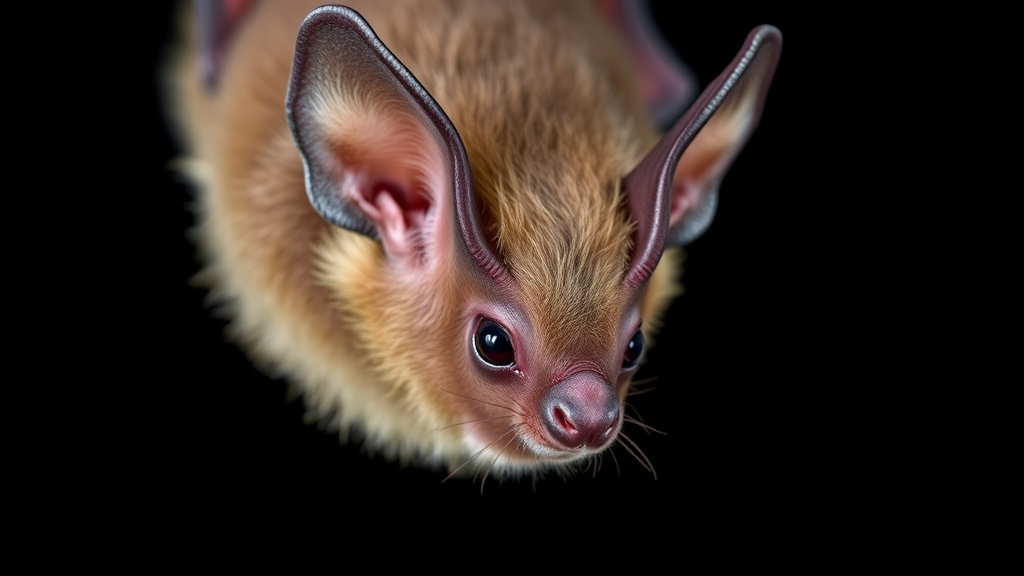
Bats are among the most ecologically valuable mammals on Earth, quietly devouring agricultural pests, dispersing seeds, pollinating plants and helping tropical forests regenerate. Yet roughly one in five of the world’s 1,500 known bat species is now threatened with extinction according to the IUCN Red List, and another 16 percent are so poorly studied that scientists simply do not have enough data to assess them. Tracking these animals across vast landscapes has long depended on eavesdropping on their ultrasonic voices, but a sweeping new analysis warns that the automated tools conservationists rely on to translate those voices into species identifications are far less trustworthy than many assume.
The study, published in the journal Discover Conservation, is a systematic review of more than three decades of bat bioacoustics research. Researchers Luna Pino-Aedo and Andrés Muñoz-Sáez of the Universidad de Chile searched the ISI Web of Science database for studies published between 1990 and 2022, the period since passive acoustic monitoring of terrestrial ecosystems began in earnest. Their initial queries returned 531 candidate articles, and after screening each one at full text, 207 studies met the criteria: they analyzed bat echolocation calls and specified exactly how those calls were analyzed. From this body of work the authors catalogued 34 distinct echolocation analysis methods, spanning commercial software packages and a growing arsenal of supervised machine learning techniques.
The review reveals a field that has expanded explosively. Most of the included studies appeared after 2010, a trend the authors attribute to the falling cost and rising availability of automated ultrasonic recorders, with a notable peak in publications in 2021 that may reflect pandemic-era restrictions pushing researchers toward data analysis rather than fieldwork. Geographically, the science is heavily skewed: the United States accounted for 36.28 percent of the articles, followed by China with 12.56 percent. That concentration matters, because reference libraries of bat calls and the classifiers trained on them are richest for Nearctic and Palearctic species, leaving tropical hotspots of bat diversity comparatively underserved.
Echolocation itself is a remarkable biological technology. Bats generate ultrasonic pulses in the larynx and emit them through the mouth or nose; the returning echoes build an acoustic image of the surroundings that the animals use to navigate, forage and communicate. Because each species tends to produce calls with characteristic frequencies, durations and shapes, researchers realized decades ago that recordings could be used to identify species without ever catching them. Bat detectors from manufacturers such as Pettersson, Titley Scientific, Wildlife Acoustics and Avisoft dominated the reviewed studies, capturing calls at high sampling frequencies for later analysis through spectrograms and oscillograms.
But turning a recording into a species name is where things get complicated. Among the 118 studies whose primary goal was species identification, only 29 relied on fully automated identification; 55 used manual identification by a specialist, and 34 used a mixed approach in which experts verified or complemented machine output. The most frequently used software packages were Kaleidoscope, Avisoft, Analook, BatSound and SonoBat, often made by the same companies that build the detectors. While all of these tools visualize calls and filter noise, only some, notably Kaleidoscope and SonoBat, were actually used for automated species classification; the rest served mainly for manual inspection and parameter measurement.
Alongside commercial software, the review documented a parallel rise of supervised learning methods implemented in platforms such as Python and RStudio. Discriminant function analysis, a statistical technique that models predefined classes from numerical acoustic features, was among the most common, followed by artificial neural networks, random forests and support vector machines. Each brings distinct trade-offs. In a benchmark study by Armitage and Ober, artificial neural networks achieved the highest training accuracy at 86.1 percent of calls correctly identified but demanded the most computational resources and training time. Random forests delivered the best overall combination of accuracy, sensitivity and specificity at 85.5 percent while remaining fast to train. Discriminant function analysis was quickest but least accurate on average at 75.9 percent. In Uruguay, Botto Nuñez and colleagues found random forests outperformed both support vector machines and neural networks, correctly identifying 92.9 percent of calls with lower variance than either alternative.
Head-to-head comparisons under controlled conditions expose the gap between machine learning and commercial packages most starkly. Tabak and colleagues built a deep learning model based on convolutional neural networks that achieved an average accuracy of 91 percent, while Kaleidoscope Pro and BCID managed only 65 percent and 61 percent respectively on the same task. Earlier discriminant function and neural network approaches also outperformed the modern software evaluated by Rydell and colleagues, whose study found that the best automated program still fell short of the top human expert, though the software did reliably classify calls at the genus level and distinguished species with highly distinctive calls. Brabant and colleagues, testing four programs on nine European species, found BatIdent achieved the highest proportion of correct species-level identifications but also produced more misclassifications, while Kaleidoscope left the largest share of calls unidentified. Sensitivity settings materially changed results: Kaleidoscope’s accuracy rose under more sensitive configurations, whereas SonoChiro stayed relatively stable across settings.
Perhaps most disquieting is what happens when there is no ground truth at all. Studies by Lemen and by Nocera that assessed agreement between software packages without a reference identification found concordance rates of only around 40 percent, varying by species and sampling period. Agreement between programs, the authors conclude, is not a reliable proxy for accuracy. Even software version matters in unpredictable ways: Goodwin and Gillam found the best performance from Kaleidoscope Pro version 4.3.0 and SonoBat version 3.2.2, meaning newer releases were not necessarily better classifiers. Accuracy reporting itself remains rare, with only 28 of the 207 studies quantifying how often their methods classified calls correctly.
The review also catalogues the tangled web of factors that influence identification beyond the algorithms themselves. Call type matters, since search, approach, feeding and social calls differ within a single species, and many species produce calls so similar that even experts struggle. Recording context matters, whether calls come from free-flying animals or hand-released individuals. Weather matters, with temperature shifting peak frequencies. So do geography, age, morphology and even the roost a population occupies, all of which inject intraspecific variation that classifiers trained on narrow libraries cannot handle. Habitat structure and detector placement also shape outcomes: models trained on calls recorded at structurally complex forest edges outperformed those trained in open spaces, and recording angle significantly affected correct classification.
The authors’ prescription is a hybrid future. Automated classifiers should be treated as accelerators that triage enormous audio volumes and flag candidate events for expert review, not as stand-alone oracles, and they should be deployed unsupervised only for taxa with highly distinctive calls. Capture-based methods such as mist-netting remain indispensable, both for species with highly directional sound beams that evade standard detectors and for building verified reference datasets; combined acoustic-and-capture designs consistently detect more species than either method alone. The researchers call for open, regionally representative call libraries with detailed metadata on habitat and recording context, versioned benchmark datasets spanning detectors and ecoregions, and transparent reporting of complete analysis pipelines. With bat populations declining worldwide amid accelerating biodiversity loss, the stakes of getting this right could hardly be higher: misidentified calls can translate directly into misinformed conservation decisions for one of the planet’s most important, and most imperiled, groups of mammals.
Subject of Research: Systematic review of bat echolocation call analysis methods for species identification and conservation monitoring
Article Title: A systematic review of bat echolocation analysis methods and their implications for monitoring and conservation
Article References: Pino-Aedo, L., & Muñoz-Sáez, A. (2026). A systematic review of bat echolocation analysis methods and their implications for monitoring and conservation. Discover Conservation, 3(1), Article 17. https://doi.org/10.1007/s44353-026-00087-x
Image Credits: AI Generated
DOI: 10.1007/s44353-026-00087-x
Keywords: bats, echolocation, bioacoustics, machine learning, acoustic monitoring, species identification, conservation, neural networks, random forests, Kaleidoscope, passive acoustic monitoring, biodiversity
Cite Scienmag News
Margaret Porter. (September 26, 2026). AI Outperforms Commercial Software at Decoding Bat Echolocation Calls, Review Finds. Scienmag. https://scienmag.com/ai-outperforms-commercial-software-at-decoding-bat-echolocation-calls-review-finds/
Margaret Porter. "AI Outperforms Commercial Software at Decoding Bat Echolocation Calls, Review Finds." Scienmag, 26 September 2026, https://scienmag.com/ai-outperforms-commercial-software-at-decoding-bat-echolocation-calls-review-finds/. Accessed 26 September 2026.
Margaret Porter. "AI Outperforms Commercial Software at Decoding Bat Echolocation Calls, Review Finds." Scienmag. September 26, 2026. https://scienmag.com/ai-outperforms-commercial-software-at-decoding-bat-echolocation-calls-review-finds/


