


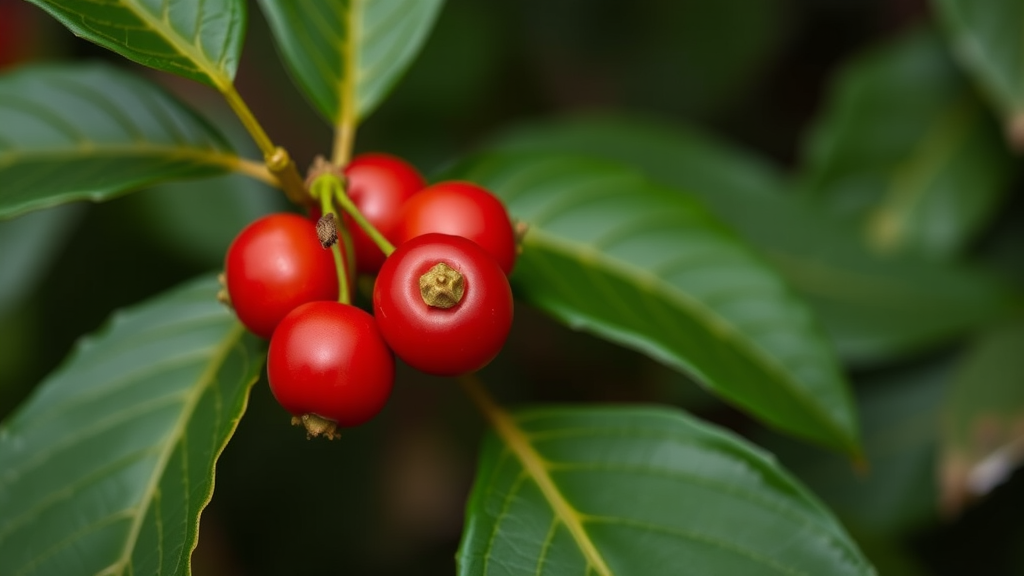
Botanists surveying the wayside vegetation of Assam’s Kamrup district have confirmed the presence of a ground cherry previously unknown to Northeast India, quietly rewriting the regional map of one of the plant world’s most recognizable genera. The species, Physalis cordata Houst. ex Mill., a member of the nightshade family Solanaceae, was collected in April 2026 near the village of Jambari and, after careful morphological comparison and a review of the taxonomic literature, identified as a new distributional record for the entire Northeast Indian region. The finding, published in the journal Discover Plants by Deepjyoti Medhi of Gauhati University together with Rakesh Kalita of Dhakuakhana College and Mustafizur Rahman of The Assam Royal Global University, raises the number of Physalis species known from Assam to three and adds a striking new entry to the flora of a biodiversity hotspot that continues to surprise researchers.
The genus Physalis is instantly familiar to anyone who has eaten a cape gooseberry or a tomatillo, and its signature feature is as charming as it is botanically distinctive: the fruiting calyx, an inflated, papery husk that partially or completely encloses the fleshy berry like a tiny lantern. Of the roughly 92 species recognized worldwide, the vast majority are native to Mexico and the United States, with only a handful extending naturally into Asia and Europe. Yet the genus has traveled far beyond its evolutionary homeland. Because several species bear sweet, edible fruits, they have been carried by cultivation across continents, and a number of them have escaped gardens to establish themselves as naturalized aliens in tropical and subtropical landscapes around the globe. That combination of economic value, weedy resilience, and confusing similarity between species has long made Physalis a taxonomically challenging group, one in which new records still surface with regularity.
The Indian chapter of this story began more than a century and a half ago. Hooker’s monumental Flora of British India, published in the 1880s, recognized just two species in the subcontinent, Physalis minima and P. peruviana. Since then, botanists have gradually added species as collections accumulated and taxonomic concepts were refined, bringing the national total to 21 species, including two recent records that underscore how incompletely the genus was understood in India until quite recently. In Assam specifically, the checklist stood at only two species, P. peruviana and P. angulata, both documented in earlier surveys of the state’s angiosperm diversity. Against that backdrop, the discovery of a third species in the state, and one never before reported from anywhere in Northeast India, represents a meaningful expansion of documented regional diversity rather than a mere footnote.
The specimen that triggered the new record was collected on 17 April 2026 at Jambari in Kamrup district, at coordinates 26.054207 N, 91.289283 E and an elevation of just 68 meters, in the low-lying Brahmaputra valley landscape that characterizes much of western Assam. The plant was growing in wild vegetation outside any protected area or reserve forest, on land whose village owners granted permission for the collection. Herbarium specimens were prepared following the standard field and herbarium methods of Jain and Rao, and a voucher specimen, catalogued as GUBH 21172, has been deposited at the Gauhati University Botany Herbarium, ensuring that the record can be independently verified by future researchers. The authors also provide a diagnostic taxonomic description, a key to the Physalis species now known from Assam, a full color photoplate, and a distribution map to make identification straightforward for others working in the field.
What distinguishes Physalis cordata from its relatives is a suite of characters that the authors distill into a practical identification key. The most decisive feature lies in the fruiting calyx: in P. cordata it is strongly five-ribbed and glabrous, smooth and hairless to the touch, whereas in P. peruviana and P. angulata the calyx bears ten ribs and a covering of fine hairs. Beyond the husk, the plant presents as an annual herb reaching up to a meter in height, with erect, branched, green to pale green stems that are sparsely pubescent or entirely glabrous. Its leaves are simple and alternate, ovate blades of roughly three to eight centimeters in length with serrate to dentate margins, acute tips, and bases ranging from obliquely rounded to slightly cuneate, borne on terete petioles of two to six centimeters. Both leaf surfaces are glabrous, with four to five lateral veins on each side sparsely puberulent along their length.
The reproductive structures complete the diagnostic picture. Flowers arise singly in the leaf axils on slender pedicels of three to seven millimeters, each bearing a five-lobed, campanulate corolla of four to eight millimeters in light yellow, marked near the base with pale lemon-yellow maculation and densely pubescent within the throat. The five stamens are epipetalous, attached near the base of the corolla, with filaments of four to seven millimeters that are hispid at the base and yellowish-white anthers. The gynoecium consists of a single carpel with a slender, glabrous style of four to eight millimeters. The fruit is a berry enclosed within a turbinate fruiting calyx of two to six by two to three millimeters, invaginated at the base and five-ribbed, while the seeds are discoid, yellowish-brown, and a mere one to one and a half millimeters across. The species flowers and fruits from December through May, a window that spans the region’s dry season and early monsoon buildup.
The nomenclatural history of the species adds a layer of scientific depth to the record. Physalis cordata was formally described by Philip Miller in the eighth edition of his Gardeners Dictionary in 1768, based on material collected by the Scottish surgeon and naturalist William Houston in Veracruz, Mexico, in 1730. The lectotype, designated by Pretz and Deanna in 2020, is preserved at the Natural History Museum in London, anchoring the name to a specimen gathered nearly three centuries ago in the genus’s Mesoamerican heartland. From that native range in North and South America, the species has been documented as far afield as Hainan in China, and within India it was previously known only from West Bengal, where Chowdhury and colleagues reported it as a new record for the country in the journal Rheedea in 2026. The Assam collection therefore extends the known Indian distribution eastward into a new biogeographic region and confirms the species’ continuing spread across South Asia.
Why a small yellow-flowered herb should warrant international attention comes down to what such records reveal about biodiversity, biogeography, and the movement of species in the Anthropocene. Naturalized alien plants are often dismissed as weeds, yet their distributions are sensitive indicators of trade routes, land-use change, and climate conditions, and documenting them precisely is the first step toward understanding whether they will remain benign components of the landscape or become invasive threats to native ecosystems. Northeast India, sitting at the junction of the Himalayan, Indo-Burmese, and Indo-Malayan biogeographic realms, is one of the world’s recognized biodiversity hotspots, and its flora is still being inventoried at a fundamental level. Every new distributional record, even of a weedy annual in a wayside habitat, refines the baseline against which future ecological change will be measured, and highlights how much basic survey work remains to be done in the region’s less-studied districts.
The methodology behind the discovery also illustrates the enduring value of classical taxonomy in an era of molecular biology. The identification rested on critical morphological observation, comparison against herbarium material and published descriptions, and the construction of an explicit, testable key that separates the three Assam species by calyx ribbing, vestiture, and leaf-base shape. Such work is unglamorous but foundational: molecular phylogenies of the physaloids, including the two-gene study by Whitson and Manos that helped untangle Physalis from its relatives, depend on accurately identified, vouchered collections as their raw material. By depositing the specimen at Gauhati University Botany Herbarium with full collection data, the authors have created a permanent, citable record that future DNA barcoding, ecological monitoring, or taxonomic revision can build upon.
The authors conclude their paper by emphasizing the need for future research on naturalized alien species such as Physalis cordata, a call that resonates well beyond a single district in Assam. Whether this species arrived as a seed contaminant, an escape from cultivation, or by some other route remains an open question, and tracking its spread across the Brahmaputra valley and neighboring states will require exactly the kind of sustained floristic exploration that produced this record. For now, the ground cherry with the five-ribbed lantern has claimed its place on the map of Northeast India, a reminder that even in the twenty-first century, a careful walk through village-edge vegetation can still yield a genuine first for science, and that the world’s flora continues to move, establish, and reveal itself one collection at a time.
Subject of Research: New distributional record of the ground cherry Physalis cordata (Solanaceae) in Assam, Northeast India
Article Title: Physalis cordata Houst. ex Mill. (Solanaceae) a new distributional record for Northeast India
Article References: Medhi, D., Kalita, R., & Rahman, M. (2026). Physalis cordata Houst. ex Mill. (Solanaceae) a new distributional record for Northeast India. Discover Plants, 3(1), Article 421. https://doi.org/10.1007/s44372-026-00895-4
Image Credits: AI Generated
DOI: 10.1007/s44372-026-00895-4
Keywords: Physalis cordata, Solanaceae, Assam, Kamrup district, Northeast India, new distributional record, plant taxonomy, naturalized alien species, floristic survey, herbarium, biodiversity, ground cherry
Cite Scienmag News
Alan Morgan. (September 25, 2026). Hidden Ground Cherry Turns Up in Assam, Extending a Wandering Species Into Northeast India. Scienmag. https://scienmag.com/hidden-ground-cherry-turns-up-in-assam-extending-a-wandering-species-into-northeast-india/
Alan Morgan. "Hidden Ground Cherry Turns Up in Assam, Extending a Wandering Species Into Northeast India." Scienmag, 25 September 2026, https://scienmag.com/hidden-ground-cherry-turns-up-in-assam-extending-a-wandering-species-into-northeast-india/. Accessed 25 September 2026.
Alan Morgan. "Hidden Ground Cherry Turns Up in Assam, Extending a Wandering Species Into Northeast India." Scienmag. September 25, 2026. https://scienmag.com/hidden-ground-cherry-turns-up-in-assam-extending-a-wandering-species-into-northeast-india/


