


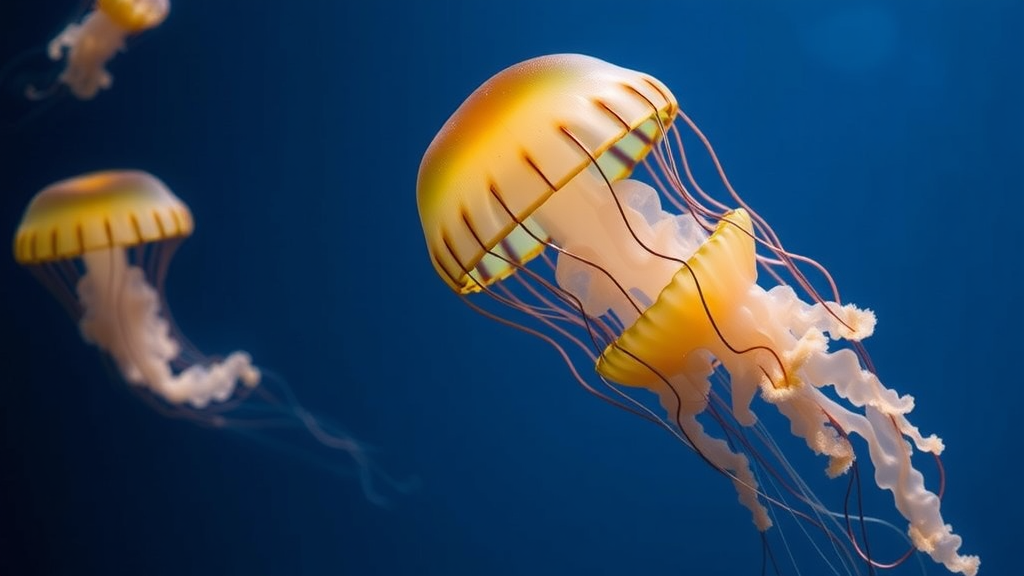
Transposable elements, the mobile DNA sequences often called jumping genes, have long been recognized as powerful architects of genome evolution. They copy and paste themselves into new genomic locations, sometimes inflating genome size dramatically, sometimes shattering genes, and sometimes supplying raw material for new regulatory functions. Yet while these elements have been catalogued exhaustively in mammals, insects and plants, early-diverging animal lineages remain strikingly underexplored. A new study published in BMC Genomics by Ayanna Mays, Feresa P Cabrera and Aide Macias-Muñoz of the University of California, Santa Cruz, delivers the first comparative analysis of transposable elements across all classes of Medusozoa, the cnidarian subgroup that includes jellyfish, hydroids, box jellyfish and stalked jellyfish. The work offers a systematic portrait of how mobile DNA has shaped the genomes of some of the most ancient animals on Earth.
Medusozoa is an ideal testing ground for questions about genome evolution. The group occupies an early branch on the animal tree of life, meaning its genomes preserve signals from deep evolutionary time. At the same time, medusozoans display an extraordinary range of life history strategies, body plans and physiological capabilities, from the free-swimming medusae of moon jellies to the sessile polyp colonies of hydroids. This combination of phylogenetic depth and biological diversity allowed the researchers to ask whether transposable element content tracks with genome size, whether particular element families have driven genome expansions, and whether closely related species differ in their mobile DNA dynamics. Answering these questions required a careful computational framework built on 26 cnidarian genomes.
A central technical challenge in comparative transposable element research is annotation consistency. Different genome assemblies are typically annotated with different repeat libraries, making cross-species comparisons unreliable. To overcome this, the team generated a custom repeat library derived from annotations of all 26 cnidarian genomes in their dataset and applied it uniformly across the group. This approach, combined with tools such as RepeatMasker for identifying repetitive sequence in genomes, allowed the researchers to characterize the full complement of transposable elements in each species on a comparable basis. The resulting dataset spans the major medusozoan classes, enabling comparisons at scales ranging from entire classes down to individual genera.
One of the clearest findings to emerge from the analysis is a strong positive relationship between repetitive element percentage and genome size, a correlation that holds even among the largest genomes in the dataset, those exceeding three gigabases. In many animal groups, genome size and repetitive content decouple at the high end of the size spectrum, but in medusozoans the relationship persists. This suggests that the accumulation of repetitive DNA, and transposable elements in particular, is a major driver of genome expansion throughout the group, even when genomes reach sizes more commonly associated with amphibians or flowering plants than with gelatinous marine invertebrates.
Delving into the large genomes revealed that different mechanisms may be responsible for their size increases. In some species, genome expansion appears to have been propelled by a single transposable element family or a small number of families that proliferated explosively, swamping the genome with copies of themselves. In others, the proliferation was far more even across many element types, producing a genome filled with a diverse mixture of mobile sequences rather than a monoculture of one successful family. These contrasting patterns indicate that there is no single route to a large genome in Medusozoa; instead, distinct evolutionary trajectories can converge on similar genomic outcomes.
Perhaps the most surprising results came from comparisons within genera. Even among closely related species, the researchers documented a remarkable degree of variation in transposable element dynamics. Specific elements had expanded within particular lineages, indicating that transposable element proliferation occurred after those species diverged from one another. In other words, closely related jellyfish and hydroids can carry substantially different loads of mobile DNA, shaped by lineage-specific bursts of transposition. This finding underscores how rapidly and independently transposable element landscapes can evolve, even over the relatively short evolutionary timescales that separate species within a single genus.
The study also found evidence that many of these expansions are geologically recent. Most of the genomes examined showed signatures of recent transposable element expansions, suggesting that transposition is an ongoing, active process in numerous medusozoan species today. In genomic terms, recent insertions can be detected because their sequences have had less time to accumulate mutations and diverge from their consensus sequences, appearing as young, intact copies. The prevalence of such young insertions across the dataset paints a picture of genomes that are not static archives but dynamic systems in which mobile elements continue to jump, multiply and reshape the genetic landscape in real time.
Beyond its specific findings, the research makes a methodological contribution. The authors describe their approach as a framework for comparing transposable element dynamics across groups, combining a custom, multi-genome repeat library with standardized annotation and phylogenetically informed analyses. Supplementary materials accompanying the paper include phylogenetic reconstructions, genome size and transposable element diversity scatterplots, insertion age distributions and detailed RepeatMasker tables for each species, providing a resource that other researchers can build upon. As genome assemblies continue to accumulate for non-model organisms, such standardized comparative pipelines will be essential for turning scattered genome reports into genuine evolutionary insight.
The broader significance of the study lies in what it fills in for early-diverging animal lineages. Because Medusozoa branched off near the base of the animal tree, patterns observed in its genomes can inform questions about the ancestral state of animal genome architecture and the role mobile DNA played in the deep history of animal diversification. The finding that transposable elements are abundant, diverse and actively expanding across all medusozoan classes suggests that mobile DNA has been a persistent and influential force in these genomes for hundreds of millions of years. The work also highlights cases of lineage-specific expansions that vary between groups, connecting genome content to the diversification of body plans and life histories that make medusozoans so biologically distinctive.
For a group of animals often celebrated for their beauty and their stings, jellyfish and their relatives are now earning attention for their genomes. This first comprehensive survey of transposable elements across Medusozoa demonstrates that the genomes of these ancient animals are among the most dynamic in the animal kingdom, inflated and reshaped by waves of mobile DNA that continue to this day. As the authors note, their data fill important gaps about the contribution of transposable elements to the evolution and diversification of early diverging animal lineages, and the framework they have established opens the door to similar analyses in other understudied branches of life. The jumping genes of jellyfish, it turns out, have stories to tell about the very origins of animal genome complexity.
Subject of Research: Comparative genomics of transposable elements across jellyfish and hydroid species in Medusozoa
Article Title: Comparative analysis of transposable elements in jellyfish and hydroid species (Cnidaria: Medusozoa)
Article References: Mays, A., P Cabrera, F., & Macias-Muñoz, A. (2026). Comparative analysis of transposable elements in jellyfish and hydroid species (Cnidaria: Medusozoa). BMC Genomics. https://doi.org/10.1186/s12864-026-13353-y
Image Credits: AI Generated
DOI: 10.1186/s12864-026-13353-y
Keywords: transposable elements, Medusozoa, Cnidaria, jellyfish, hydroids, genome evolution, comparative genomics, repeat library, genome size, mobile DNA, BMC Genomics, early-diverging lineages
Cite Scienmag News
Juliet Wilcox. (September 25, 2026). Jumping Genes Reveal How Jellyfish Genomes Grew, Shrank and Diversified Across Ancient Lineages. Scienmag. https://scienmag.com/jumping-genes-reveal-how-jellyfish-genomes-grew-shrank-and-diversified-across-ancient-lineages/
Juliet Wilcox. "Jumping Genes Reveal How Jellyfish Genomes Grew, Shrank and Diversified Across Ancient Lineages." Scienmag, 25 September 2026, https://scienmag.com/jumping-genes-reveal-how-jellyfish-genomes-grew-shrank-and-diversified-across-ancient-lineages/. Accessed 25 September 2026.
Juliet Wilcox. "Jumping Genes Reveal How Jellyfish Genomes Grew, Shrank and Diversified Across Ancient Lineages." Scienmag. September 25, 2026. https://scienmag.com/jumping-genes-reveal-how-jellyfish-genomes-grew-shrank-and-diversified-across-ancient-lineages/


