


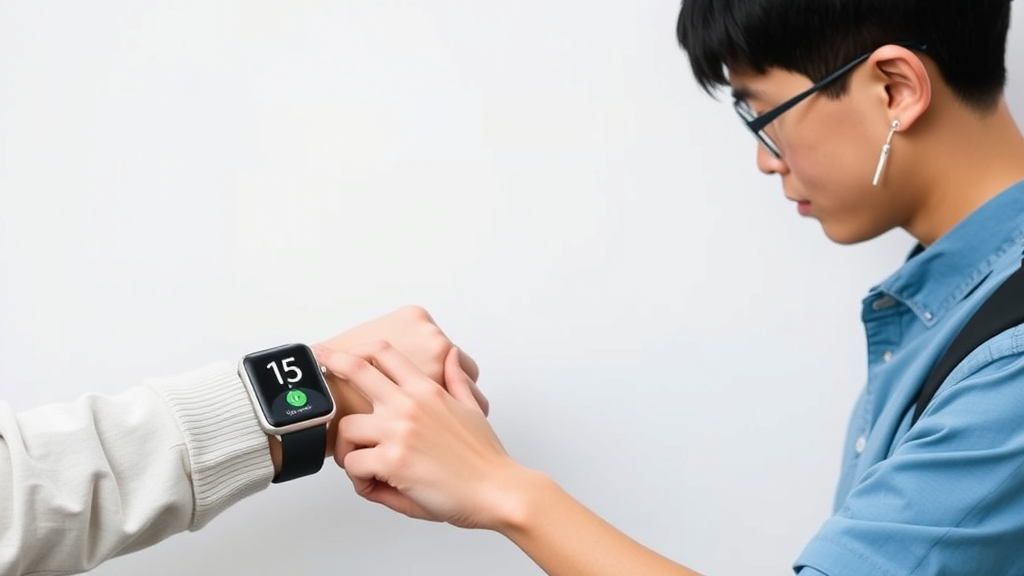
University students are among the most digitally connected people on the planet, yet they are also among the most likely to sleep too little, sit too much, and scroll for hours on end. A research team at the National University of Singapore (NUS) has now laid out an ambitious plan to turn that very connectivity into a health asset. In a protocol published in the Journal of Activity, Sedentary and Sleep Behaviors, the MOVE@NUS pilot study describes a five-month experiment that fuses continuous smartwatch monitoring with a sequence of small, embedded randomised controlled trials, all delivered through a smartphone app. The goal is not simply to track behaviour but to intervene in the moment, when a student is deciding whether to take the stairs, put down the phone, or go to bed. Registered on ClinicalTrials.gov as NCT06597890, the study is designed as a proving ground for a new generation of personalised digital health interventions.
The population under scrutiny is far from arbitrary. First-year undergraduates face a perfect storm of academic pressure, irregular schedules, and newfound independence, and their movement behaviours, meaning sleep, physical activity, and screen time, are tightly interwoven. Insufficient physical activity contributes to obesity and cardiovascular disease over the long term, while poor sleep has been linked to impaired cognition, weaker academic performance, and elevated risks of mental health problems. Excessive screen time, meanwhile, displaces physical activity, disrupts sleep through blue-light exposure and psychological stimulation, and has been associated with poorer mental health in young people. Because these behaviours influence one another throughout the day, the researchers argue that any serious intervention must capture them simultaneously and in real time, rather than relying on retrospective questionnaires that are vulnerable to recall bias.
The technological rationale is compelling. In Singapore, smartphone penetration among people aged 15 to 24 reached 100 percent by 2021, and wearable device use in the general population is estimated at 35 to 55 percent. Modern iPhones and Apple Watches continuously record step counts, stair climbs, heart rate, and time in bed, all retrievable through Apple’s HealthKit framework, which has independently demonstrated validity for measuring gait parameters in adults. The MOVE@NUS team built a dedicated study app on the Cogniss no-code platform, integrating HealthKit data streams with two distinct research tools: ecological momentary assessments, or EMAs, which collect self-reported data in real time, and ecological momentary interventions, or EMIs, which deliver tailored health prompts at the moment they are most likely to matter. Every EMA and EMI is text-based and takes less than two minutes to complete, a deliberate design choice to minimise participant burden.
The study’s architecture is its most distinctive feature. Rather than testing one sprawling multi-component programme, the pilot embeds three sequential randomised controlled trials within a single continuous monitoring cohort. RCT-1 targets sleep, RCT-2 targets physical activity, and RCT-3 targets screen time, each running for two weeks and separated by at least two weeks of passive observation. For every trial, participants are re-randomised in a 1:1:1 ratio into two intervention arms and a control group, with allocation concealed from both the delivery system and the participants themselves. Because each participant serves as their own comparator across phases, and because prior allocation status is modelled statistically as a covariate, the design allows the team to isolate the effect of each intervention while balancing carryover effects across the study population.
The interventions themselves are grounded in behavioural science and tailored to the rhythms of student life. In the sleep trial, one group receives weekly personalised feedback on sleep duration aligned with the recommended seven to nine hours per night for young adults, while a second group selects weekly from evidence-based sleep hygiene strategies, such as avoiding screens before bed or skipping coffee after 3 p.m., with daily reminders tied to their chosen tactics. In the physical activity trial, one arm receives daily nudges to climb stairs instead of taking lifts, with feedback drawn from HealthKit data on flights climbed, while the other is prompted to choose short bursts of vigorous activity, like brisk walks between classes or squats while waiting. The screen time trial contrasts context-aware break reminders, which query current phone usage before suggesting stretches or walks, against a goal-setting arm in which participants set daily reduction targets supported by iOS screen time data.
Feasibility, not definitive effectiveness, is the primary endpoint, and the team measures it from every angle. Recruitment metrics include eligibility, enrolment, and non-response rates. Retention and engagement are tracked through questionnaire completion, EMA burst response rates, and the number of days of valid HealthKit data, with a day counted as valid only if the watch records at least ten hours of wear time. User experience is evaluated through a mixed-methods approach combining short surveys after each trial phase with optional semi-structured interviews, structured by a micro-macro framework that draws on the Technology Acceptance Model, the COM-B model of behaviour, and social and digital determinants of health. This dual lens captures both immediate app-level experiences and the broader contextual factors that shape whether students actually engage with the technology.
Quality assurance receives unusually rigorous treatment for a pilot. The app underwent internal alpha testing to catch functional errors, followed by beta testing with a small independent group of five users who assessed usability, navigation, and system reliability before launch. Intervention delivery fidelity is verified on two axes: notifications must arrive within ten minutes of their programmed schedule, and dynamically personalised content is tested to ensure it parses and displays correctly according to predefined triggers. The team is candid about one technical constraint: because some personalised messages depend on participants manually checking and entering their own Apple Health data, the system functions as an adaptive intervention rather than a fully automated just-in-time adaptive intervention. The main MOVE@NUS cohort is expected to close this gap by integrating real-time HealthKit data directly into the personalisation algorithms.
The analytical plan reflects the complexity of the design. Preliminary effectiveness will be explored separately for each embedded trial using linear mixed-effects models, which handle repeated measures by incorporating random effects for individual participants. Sleep duration is proxied by HealthKit time-in-bed records restricted to nights with valid nocturnal data, physical activity is captured through step counts and flights climbed, and screen time comes from weekly uploads of iOS Settings screenshots. Missingness patterns will be examined across groups, with sensitivity analyses planned if attrition appears linked to intervention allocation, since digital health studies often produce data that are missing not at random. Generalised estimating equations may be deployed for categorical outcomes, and all analyses will be conducted in R with two-sided tests at a five percent significance level.
The researchers are equally transparent about the study’s limitations. Requiring participants to own an iPhone and a recent Apple Watch introduces selection bias that may limit generalisability across socioeconomic groups, and the impossibility of blinding participants to whether they receive daily nudges creates a risk of performance bias and the Hawthorne effect, the well-documented tendency for people to change behaviour when they know they are being observed. Objective HealthKit metrics are less susceptible to this distortion than self-reports, but subjective findings will be interpreted with caution. No formal data monitoring committee or interim stopping rules are in place, reflecting the low-risk, non-invasive nature of the interventions, though the team reviews operational issues every two weeks.
What makes MOVE@NUS more than a campus experiment is its scalability thesis. Smartphones can reach vast populations in naturalistic settings at low marginal cost, and students who learn healthier routines during the transition to independent living will soon carry those habits into the workforce. By demonstrating whether continuous monitoring can be combined with rapid-cycle, embedded trials of personalised nudges, the pilot aims to establish the methodological foundation for a full-scale digital intervention cohort. If it succeeds, the payoff could extend well beyond Singapore’s universities, offering a template for real-time, behaviour-aware health promotion that meets people where they already are: on their phones.
Subject of Research: A pilot digital intervention study using smartwatch monitoring and embedded randomised trials to promote healthy movement behaviours in university students
Article Title: MOVE@NUS digital intervention cohort: protocol of a pilot study to promote healthy movement in university students
Article References: Chen, M., Movia, M., Chua, X. H., Tan, S. Y. X., Zheng, S., Jin, K., Topothai, T., Padmapriya, N., Müller-Riemenschneider, F., & Edney, S. (2026). MOVE@NUS digital intervention cohort: protocol of a pilot study to promote healthy movement in university students. Journal of Activity, Sedentary and Sleep Behaviors, 5(1), Article 5. https://doi.org/10.1186/s44167-026-00097-z
Image Credits: AI Generated
DOI: 10.1186/s44167-026-00097-z
Keywords: digital health, mHealth, ecological momentary intervention, wearable technology, physical activity, sleep, screen time, university students, randomised controlled trial, behaviour change, Apple HealthKit, Singapore
Cite Scienmag News
Glenn Wilkins. (September 24, 2026). Smartwatches and Tiny Trials: Singapore Scientists Test Real-Time Health Nudges for Students. Scienmag. https://scienmag.com/smartwatches-and-tiny-trials-singapore-scientists-test-real-time-health-nudges-for-students/
Glenn Wilkins. "Smartwatches and Tiny Trials: Singapore Scientists Test Real-Time Health Nudges for Students." Scienmag, 24 September 2026, https://scienmag.com/smartwatches-and-tiny-trials-singapore-scientists-test-real-time-health-nudges-for-students/. Accessed 24 September 2026.
Glenn Wilkins. "Smartwatches and Tiny Trials: Singapore Scientists Test Real-Time Health Nudges for Students." Scienmag. September 24, 2026. https://scienmag.com/smartwatches-and-tiny-trials-singapore-scientists-test-real-time-health-nudges-for-students/


