


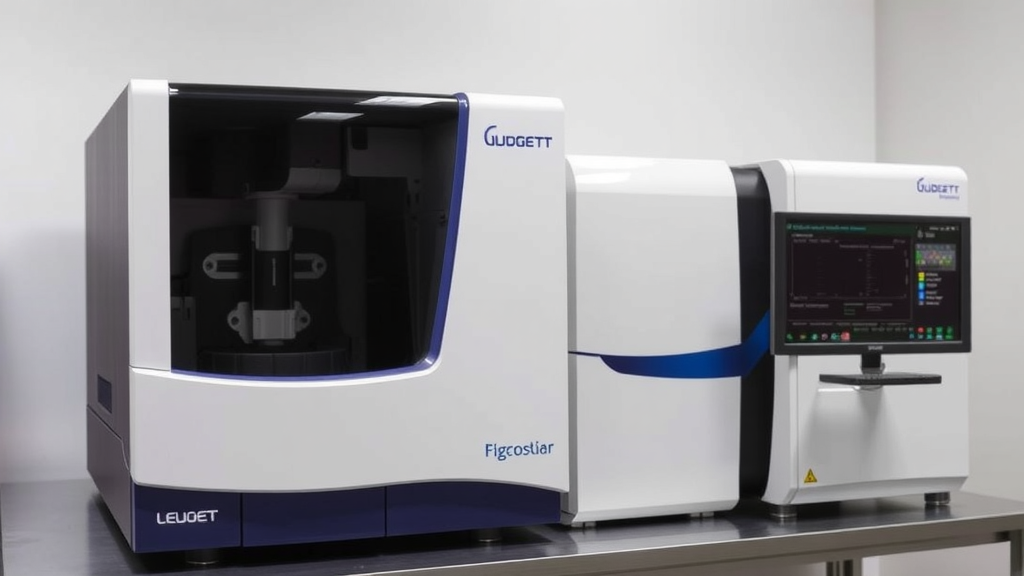
Blood plasma is often described as the most information-rich liquid in the human body, a fluid that carries molecular echoes of nearly every organ and every disease process unfolding somewhere in the circulatory system. It is also, from an analytical chemist’s point of view, one of the most frustrating samples imaginable. A handful of abundant proteins, chiefly albumin and immunoglobulins, account for the overwhelming majority of the protein mass in plasma, while the low-abundance molecules that most interest biomarker hunters, such as signaling proteins, tissue leakage products and disease-specific fragments, are buried beneath them at concentrations many orders of magnitude lower. A new study published in Clinical Proteomics now shows that laboratories working with standard, widely available mass spectrometry equipment can navigate this problem far more effectively than many had assumed, opening the door to plasma proteomics for research groups that cannot afford the newest generation of instruments.
The research, led by Yeongshin Kim, Junho Park, Dongyoon Shin and Youngsoo Kim of CHA University in Seongnam, South Korea, set out to answer a deceptively simple question: do the elaborate plasma preparation platforms that have been benchmarked on cutting-edge mass spectrometers behave the same way when run on more accessible liquid chromatography-mass spectrometry, or LC-MS, instrumentation? The answer matters because most published evaluations of these platforms have relied on next-generation instruments with exceptional sensitivity and speed, leaving a genuine gap in knowledge for the many laboratories around the world that operate older or more modest equipment. If platform performance were fundamentally tied to top-tier hardware, the democratization of plasma biomarker discovery would stall; if not, the field could expand dramatically.
To address the question, the team processed a commercial pooled plasma sample through seven different preparation strategies. These included neat plasma with no treatment at all, serving as the baseline; the Multiple Affinity Removal System Human 14, known as MARS14, an antibody-based column that strips out the fourteen most abundant plasma proteins; and perchloric acid precipitation with neutralization, a chemical approach that preferentially precipitates abundant proteins while leaving many low-abundance species in solution. Alongside these depletion methods, the researchers tested four enrichment platforms: ENRICH-iST, Mag-Net, Proteonano and Proteograph XT. Each of these uses a different physical or chemical principle, from nanoparticle surfaces to specialized capture chemistries, to concentrate the dilute population of low-abundance proteins that standard workflows miss.
All samples were then analyzed in data-independent acquisition, or DIA, mode, a mass spectrometry strategy that systematically fragments all ions within defined mass windows rather than selecting individual precursors. DIA has become the workhorse of modern quantitative proteomics because it produces highly reproducible measurements across large sample cohorts, reducing the stochastic missing values that plague older data-dependent approaches. The choice of DIA was itself significant: it is the acquisition mode most commonly implemented on accessible instrumentation, so any conclusions drawn from the study would apply directly to the laboratories the researchers hoped to reach.
The results were striking. Untreated neat plasma yielded an average of just 777 identified proteins, a figure that captures the brutal reality of plasma’s dynamic range problem. The two depletion platforms performed substantially better, identifying between 1,278 and 1,468 proteins on average. But the enrichment platforms left the depletion approaches behind, with coverage ranging from 1,891 to a remarkable 6,060 proteins. Proteograph XT, the nanoparticle-based platform, delivered the deepest coverage of all and achieved the lowest missing value rate in the study, at just 1.9 percent, meaning that nearly every protein it detected was quantified consistently across the analysis rather than appearing and disappearing between runs.
Yet the study’s most important finding may be the one that complicates the simple narrative that more proteins equals better science. The researchers observed that greater proteome coverage did not always correlate with better quantitative precision. A platform that identifies thousands of additional proteins may do so at the cost of noisier measurements, and a coefficient of variation that looks acceptable for one platform may be unacceptable for another. Because the ultimate goal of plasma proteomics is reliable quantification, particularly when comparing patient cohorts to find proteins that distinguish disease from health, precision matters as much as depth. The study makes clear that platform choice significantly affected both the abundance profiles of the resulting datasets and the coverage of clinically relevant proteins, meaning that laboratories must match their preparation strategy to their biological question rather than simply chasing the largest protein count.
This platform-specific reshaping of the plasma proteome is a phenomenon that has been noted in previous work but never before systematically confirmed on accessible instrumentation. Each preparation method imposes its own bias: antibody-based depletion removes not only its targets but also proteins that travel bound to them, such as carrier proteins shuttling hormones and metabolites; chemical precipitation can lose proteins that co-precipitate with the abundant fraction; and nanoparticle enrichment selects for proteins with affinity for particular surface chemistries, so different particles fish out different, partially overlapping slices of the proteome. The consequence is that two laboratories studying the same plasma pool with different platforms may report substantially different protein abundance profiles, a fact that has major implications for reproducibility and for the design of multi-center biomarker studies.
Crucially, when the researchers compared their results with recent benchmarks generated on next-generation mass spectrometers, the platform-specific differences they observed reproduced those earlier findings. This is the study’s central vindication: the accessible LC-MS setups captured the same key distinctions among preparation platforms that the flagship instruments had revealed. In other words, the relative ranking of platforms, the patterns of proteome reshaping and the qualitative conclusions about which strategies best expose the low-abundance proteome all held true on standard equipment. What the newest instruments add is primarily depth and throughput, not a fundamentally different picture of how the platforms behave.
The practical implications extend well beyond methodological housekeeping. Plasma biomarker discovery has accelerated enormously in recent years, fueled by large-scale efforts such as the Human Plasma Proteome Project and by growing interest in early cancer detection, neurodegenerative disease monitoring and cardiovascular risk prediction. But much of that progress has been concentrated in well-funded centers equipped with the latest triple-TOF or Orbitrap Astral class instruments. If the platform evaluation framework demonstrated here holds, hospital-affiliated laboratories, research institutes in lower-resource settings and clinical translation teams can now participate meaningfully in plasma proteomics using instrumentation they already own. The study’s authors frame this as supporting the broader adoption of plasma proteomics in settings where next-generation instrumentation is not routinely available, and the data appear to justify that framing.
There remain caveats that the field will need to keep in view. The study used a single commercial pooled plasma sample, an excellent control for technical comparison but not a substitute for testing platforms across real patient cohorts with their biological variability, pre-analytical noise and disease-specific matrix effects. The evaluation also reflects one DIA acquisition strategy on one class of accessible instrument, and other configurations could shift the absolute numbers, even if the relative platform behavior is likely to persist. And the finding that coverage and precision can trade off against each other means that no single platform emerges as a universal winner; instead, the study provides something arguably more useful, a rigorous, reproducible map of what each of seven platforms delivers on hardware that most laboratories can access. As plasma proteomics moves from discovery science toward clinical application, that kind of practical, instrument-agnostic evidence may prove to be exactly what the field needs to turn an information-rich body fluid into a routine diagnostic resource.
Subject of Research: Comparative evaluation of plasma preparation platforms for proteomics using accessible liquid chromatography-mass spectrometry instrumentation
Article Title: Comprehensive evaluation of plasma proteomics platforms toward practical applications using accessible mass spectrometry instrumentation
Article References: Kim, Y., Park, J., Shin, D., & Kim, Y. (2026). Comprehensive evaluation of plasma proteomics platforms toward practical applications using accessible mass spectrometry instrumentation. Clinical Proteomics. https://doi.org/10.1186/s12014-026-09631-2
Image Credits: AI Generated
DOI: 10.1186/s12014-026-09631-2
Keywords: plasma proteomics, mass spectrometry, biomarker discovery, data-independent acquisition, protein depletion, nanoparticle enrichment, Proteograph XT, MARS14, LC-MS, proteome coverage, quantitative precision, Clinical Proteomics
Cite Scienmag News
Kenneth Gardner. (September 24, 2026). Budget Mass Spectrometers Can Match the Big Machines in Plasma Proteomics, Study Finds. Scienmag. https://scienmag.com/budget-mass-spectrometers-can-match-the-big-machines-in-plasma-proteomics-study-finds/
Kenneth Gardner. "Budget Mass Spectrometers Can Match the Big Machines in Plasma Proteomics, Study Finds." Scienmag, 24 September 2026, https://scienmag.com/budget-mass-spectrometers-can-match-the-big-machines-in-plasma-proteomics-study-finds/. Accessed 24 September 2026.
Kenneth Gardner. "Budget Mass Spectrometers Can Match the Big Machines in Plasma Proteomics, Study Finds." Scienmag. September 24, 2026. https://scienmag.com/budget-mass-spectrometers-can-match-the-big-machines-in-plasma-proteomics-study-finds/


