


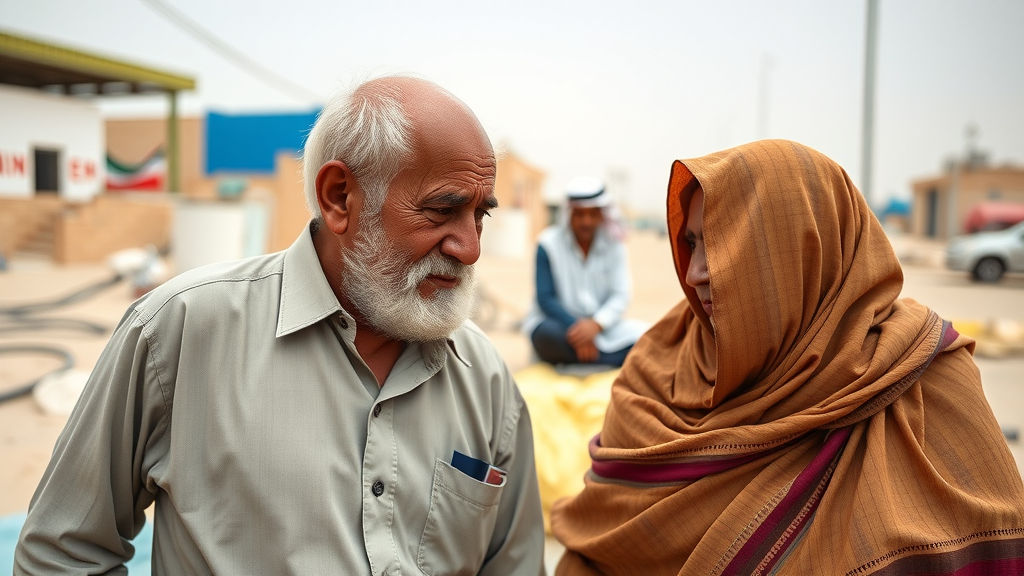
The Middle East and North Africa is ageing faster than most of its governments realise, and the region’s long-term care systems are nowhere near ready. That is the central warning of a new cross-country analysis published in Ageing International by Shereen Hussein of the London School of Hygiene & Tropical Medicine, Mohamed Ismail of the University of Oxford’s Institute of Population Ageing, and Montserrat Pallares-Miralles of the World Bank. But the study carries a strikingly optimistic counterpoint: if governments treat long-term care as economic infrastructure rather than a welfare afterthought, the demographic transition could become a lever for job creation, gender equality and fiscal stability rather than a slow-motion crisis.
The research team examined twenty-two states across the MENA region, from the wealthy Gulf Cooperation Council monarchies to middle-income countries such as Egypt, Morocco and Tunisia, and to fragile or conflict-affected settings including Yemen, Syria and the West Bank and Gaza. Drawing on demographic, economic and labour indicators from global datasets compiled by the United Nations Department of Economic and Social Affairs and the World Bank, the authors synthesised this quantitative picture with the international literature on long-term care models and regional care dynamics. Their conclusion is blunt: population ageing is outpacing the development of formal care systems across the region, and the costs of that gap are being paid invisibly, mostly by women.
The demographic mechanics behind the warning are well established but often misread. Fertility rates across MENA have fallen sharply over recent decades while life expectancy has climbed, producing the classic stages of a demographic transition. For years, the region enjoyed a favourable age structure, with large working-age cohorts supporting relatively few dependents, a dividend that fuelled growth in labour-abundant economies. That window is now closing. As cohorts born during earlier high-fertility eras move into older age, the share of adults over sixty-five is rising rapidly, and the total age dependency ratio, which measures the balance between people typically outside the labour force and those of working age, is shifting in ways that will strain pensions, health systems and household budgets alike.
What makes the MENA case distinctive is the speed and heterogeneity of the transition. The Gulf states face a compressed version of the challenge, where rapid modernisation, large migrant workforces and citizenship-based welfare systems create peculiar fiscal and social geometry. Middle-income countries such as Egypt and Jordan are ageing before they have become rich, leaving little fiscal room for new social programmes. Conflict-affected states face the starkest picture of all; research cited in the study documents how armed conflict in Syria has directly reduced life expectancy, while humanitarian assessments in Yemen describe older populations with minimal formal support. Any regional strategy, the authors argue, must account for this diversity rather than impose a single template.
At the heart of the analysis is the informal care economy, the vast, unrecorded system in which family members, overwhelmingly women, provide daily care for frail older relatives. Cultural norms across the Arab region place strong expectations on families, and particularly on daughters and daughters-in-law, to care for ageing parents at home. This system has historically absorbed demand at zero fiscal cost, but the study shows it is eroding under its own contradictions. Urbanisation is dispersing extended families, smaller family sizes mean fewer adult children per ageing parent, and rising female education and employment aspirations collide with the assumption that women will provide unpaid care indefinitely.
The consequences ripple through the entire economy. Women across MENA already have among the lowest labour force participation rates in the world, and the burden of informal caregiving is a documented barrier to paid work. The study highlights that women also spend more years in ill-health during old age than men, compounding the inequity across the life course. Every hour a woman spends providing unpaid care is an hour not spent in formal employment, not generating taxable income and not building her own pension entitlements. The authors frame this as a hidden economic cost that never appears in national accounts but systematically suppresses productivity, female economic inclusion and the long-term solvency of social insurance systems.
The quality-of-life dimension is equally serious. Without structured services, older people with dementia, disability or chronic multimorbidity depend entirely on relatives who may lack training, respite or support. The literature the authors synthesise points to elevated risks of elder abuse, caregiver burnout and depression among informal carers, and notes that conditions such as dementia are rising in prevalence across the region as populations age. Respite care, home-based health services and day centres remain scarce or absent in most MENA countries, with a few notable experiments such as Oman’s home health care programmes and Saudi Arabia’s expansion of home care under its Vision 2030 reform agenda cited as early signals of change.
The study’s most provocative argument is that this gap is not merely a liability but an opportunity. Formal long-term care is labour-intensive work that cannot be automated away, making it a potent source of employment, particularly for women. International Labour Organization analyses cited in the paper estimate that expanding care services globally generates employment multipliers well above those of comparable investments. The authors propose that MENA governments build regulated care infrastructure through workforce development, dedicated insurance financing models and public-private partnerships, creating decent jobs for care workers while simultaneously freeing other women to enter the labour market. In their framing, care investment functions like roads or power grids: infrastructure that unlocks broader economic activity.
Financing such systems in a region with tight budgets and large informal economies is the obvious objection, and the authors address it directly. They advocate incremental financing mechanisms that expand coverage gradually, learning from international experience including Japan’s long-term care insurance scheme and cash-for-care experiments in Europe, while adapting to regional realities such as the widespread reliance on migrant domestic workers in Gulf households. Formalising caregiving roles, extending social protection to care workers, and aligning long-term care investment with the Sustainable Development Goals are presented as mutually reinforcing priorities. The paper also points to recent pension reform in Saudi Arabia as evidence that structural social protection change is politically achievable in the region.
The study’s bottom line is a reframing. Ageing in MENA has been treated as a distant problem, perpetually deferred by the region’s youth bulge legacy. Hussein and her colleagues argue that the window for proactive policy is closing now, and that governments which integrate long-term care into national development planning, rather than quarantining it in health or welfare ministries, can convert a looming fiscal burden into a driver of equitable growth. The alternative, they warn, is a future in which ageing households are impoverished by care costs, women remain locked out of the labour market by unpaid caring obligations, and governments confront the same demographic pressures a decade later with fewer options and higher price tags. The choice, on their reading of the data, is between building the care economy deliberately or paying for its absence involuntarily.
Subject of Research: Demographic ageing and long-term care policy in the Middle East and North Africa
Article Title: Ageing and Long-Term Care in the Middle East: Towards Inclusive Development Strategies
Article References: Hussein, S., Ismail, M., & Pallares-Miralles, M. (2026). Ageing and Long-Term Care in the Middle East: Towards Inclusive Development Strategies. Ageing International, 51(4), Article 38. https://doi.org/10.1007/s12126-026-09678-4
Image Credits: AI Generated
DOI: 10.1007/s12126-026-09678-4
Keywords: population ageing, long-term care, MENA, informal caregiving, gender inequality, care economy, demographic transition, labour force participation, social protection, economic development, Gulf Cooperation Council, sustainable development goals
Cite Scienmag News
Beatrice Stafford. (September 24, 2026). Middle East Ageing Crisis Could Become an Economic Win, Study Finds. Scienmag. https://scienmag.com/middle-east-ageing-crisis-could-become-an-economic-win-study-finds/
Beatrice Stafford. "Middle East Ageing Crisis Could Become an Economic Win, Study Finds." Scienmag, 24 September 2026, https://scienmag.com/middle-east-ageing-crisis-could-become-an-economic-win-study-finds/. Accessed 4 October 2026.
Beatrice Stafford. "Middle East Ageing Crisis Could Become an Economic Win, Study Finds." Scienmag. September 24, 2026. https://scienmag.com/middle-east-ageing-crisis-could-become-an-economic-win-study-finds/


