


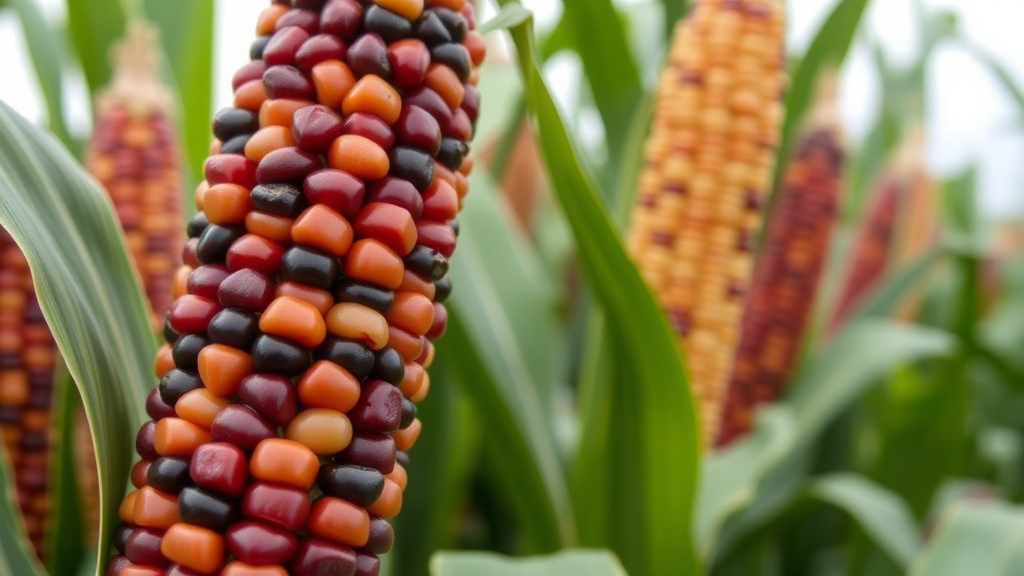
In the humid lowlands of Nigeria, inside the fields of the International Institute of Tropical Agriculture (IITA), a quiet revolution in maize breeding has just been quantified. Researchers there have taken one of the largest collections of short-duration tropical maize ever assembled and subjected it to a genomic audit, using thousands of DNA markers to redraw the breeding maps that guide hybrid development across sub-Saharan Africa. The result, published in BMC Agriculture, is a refined framework for organizing elite inbred lines into heterotic groups, the genetically distinct pools that, when crossed, consistently produce hybrids with exceptional vigor. For a crop that anchors food security for millions of smallholder farmers, the implications are substantial.
The study focused on extra-early and early maturing maize, varieties that complete their life cycle within roughly 80 to 99 days. These short-duration types are increasingly critical in regions where rainfall windows are shrinking or unreliable, and they allow multiple cropping cycles per year in areas with longer rainy seasons. The research team assembled 1,437 elite inbred lines carrying yellow and orange kernels, the latter prized for their provitamin A content and both increasingly demanded by the livestock feed industry. All lines derived from 23 source populations within IITA’s Maize Improvement Program and had been advanced through repeated selfing to near-complete homozygosity, with selection along the way for resistance to the parasitic weed Striga hermonthica and to drought.
Genotyping was carried out using a mid-density DArTag panel of 3,305 single nucleotide polymorphism markers. After rigorous quality control, which removed markers with poor call rates, excessive missing data, high heterozygosity, and low minor allele frequencies, a final set of 2,092 high-quality SNPs remained for analysis. The diversity statistics painted a picture of a richly variable but well-refined germplasm pool: average polymorphism information content of 0.328, minor allele frequency of 0.265, and expected heterozygosity of 0.315. Observed heterozygosity, by contrast, was a mere 0.032, confirming that the inbreeding process had done its job and that these lines are suitable raw material for hybrid formation.
The heart of the study lay in how the team interrogated population structure. Three complementary approaches were deployed. Principal component analysis separated the lines along axes capturing just over half of the total genetic variation. Ancestral admixture analysis, using sparse non-negative matrix factorization, identified three ancestral populations as the best explanation of the data, with a 70 percent membership threshold separating genetically pure lines from admixed ones. Discriminant analysis of principal components, run with cross-validated retention of 150 principal components, likewise resolved three distinct, non-overlapping clusters. A phylogenetic tree built on Gower genetic distances and the Ward clustering algorithm, however, suggested a deeper split into just two major groups, absorbing the third cluster from the other methods as a subgroup of the largest one.
When the assignments from all three methods were compared, they agreed on 73.2 percent of the lines, a level of concordance the authors describe as strong enough to justify adopting the classification into operational breeding pipelines. The most striking biological finding emerged when the clusters were overlaid with kernel color and maturity class. Kernel color, yellow versus orange, showed essentially no correspondence with the genetic groups. Maturity class, on the other hand, aligned tightly with the structure: one admixture subpopulation was 95 percent extra-early lines, another consisted entirely of early lines, and a third entirely of extra-early lines. The conclusion is that decades of breeding for adaptation, not the more recent introgression of provitamin A traits, is what has shaped the deep genetic architecture of this germplasm.
That decoupling of color from structure carries real practical weight. It means breeders do not need to maintain separate heterotic pools for yellow and orange maize. Instead, orange, biofortified lines can be slotted into the existing maturity-based groups and crossed across the main heterotic break to maximize yield while retaining nutritional quality. This simplifies breeding schemes, enlarges the effective selection pool within each maturity class, and should accelerate the deployment of provitamin A-rich hybrids to farmers who need them.
Of course, a genomic map is only as good as its predictions, so the team put their classification to the test in the field. A subset of 214 inbred lines was crossed with standard testers to generate 276 testcross hybrids, which were evaluated alongside four commercial checks over two years at IITA’s Ikenne station in a replicated alpha-lattice design. The results were unambiguous. Hybrids made by crossing between maturity-based heterotic subgroups significantly outperformed hybrids made within subgroups. For extra-early material, between-subgroup hybrids averaged 5,071 kilograms per hectare against 4,097 for within-subgroup crosses; for early material the figures were 5,753 versus 4,635 kilograms per hectare, differences approaching or exceeding a full tonne of grain.
Standard heterosis, measured against the best performing commercial check in each maturity class, told the same story. Between-subgroup extra-early hybrids averaged 45.5 percent heterosis over the best check, Sosani, compared with just 16.2 percent for within-subgroup crosses. In the early class, between-subgroup hybrids delivered 30 percent average heterosis over SAMMAZ 41, against a meager 3.99 percent within groups, with individual crosses reaching as high as 70.7 percent. Statistical testing using the Wilcoxon rank-sum test with false discovery rate correction confirmed these differences were highly significant. The molecular groupings, in other words, are not abstract taxonomy; they translate directly into sacks of harvested grain.
Beyond the headline numbers, the study offers breeders a toolkit for the next generation of hybrids. Ten lines with high average genetic divergence from the main groups, ranging from 0.55 to 0.63, were flagged as promising new testers for classifying future inbreds. The two-pool structure also maps neatly onto three-way hybrid production, a strategy favored in stress-prone tropical environments for its stability: elite single crosses can be built within a subgroup for adaptation, then crossed to a line from the opposing pool to capture maximum heterosis. Meanwhile, the roughly 26 percent of lines with mixed ancestry, too admixed for confident assignment, are not waste material but a reservoir for future selection, particularly for breaking unfavorable correlations between yield and stress tolerance.
The authors also look forward to integrating genomic selection with the refined structure. By training prediction models separately on each heterotic pool and on the historical performance of crosses between them, reciprocal genomic selection could allow breeders to forecast hybrid performance before expensive field trials, shortening breeding cycles. The team acknowledges limitations, including the mid-density marker panel’s limited power to capture rare variants and the single-location validation, and recommends multi-environment testing and higher-resolution genotyping of the admixed fraction. Even so, the core message stands: for tropical maize, the path to higher-yielding, more nutritious hybrids runs through a genome-informed map of who should be crossed with whom, and that map has now been drawn with unprecedented clarity.
Subject of Research: Genomic refinement of heterotic groups in short-duration tropical yellow and orange maize inbred lines
Article Title: Genomic-assisted refinement of heterotic groups in short-duration maturing tropical yellow and orange maize inbred lines
Article References: Genomic-assisted refinement of heterotic groups in short-duration maturing tropical yellow and orange maize inbred lines. (n.d.). https://doi.org/10.1186/s44399-026-00032-2
Image Credits: AI Generated
DOI: 10.1186/s44399-026-00032-2
Keywords: maize, heterotic groups, SNP markers, genetic diversity, hybrid breeding, population structure, provitamin A, sub-Saharan Africa, IITA, maturity groups, genomic selection, biofortification
Cite Scienmag News
Alan Morgan. (September 24, 2026). Genomics Reveals the Hidden Blueprint for Supercharging Tropical Maize Hybrids. Scienmag. https://scienmag.com/genomics-reveals-the-hidden-blueprint-for-supercharging-tropical-maize-hybrids/
Alan Morgan. "Genomics Reveals the Hidden Blueprint for Supercharging Tropical Maize Hybrids." Scienmag, 24 September 2026, https://scienmag.com/genomics-reveals-the-hidden-blueprint-for-supercharging-tropical-maize-hybrids/. Accessed 24 September 2026.
Alan Morgan. "Genomics Reveals the Hidden Blueprint for Supercharging Tropical Maize Hybrids." Scienmag. September 24, 2026. https://scienmag.com/genomics-reveals-the-hidden-blueprint-for-supercharging-tropical-maize-hybrids/


