


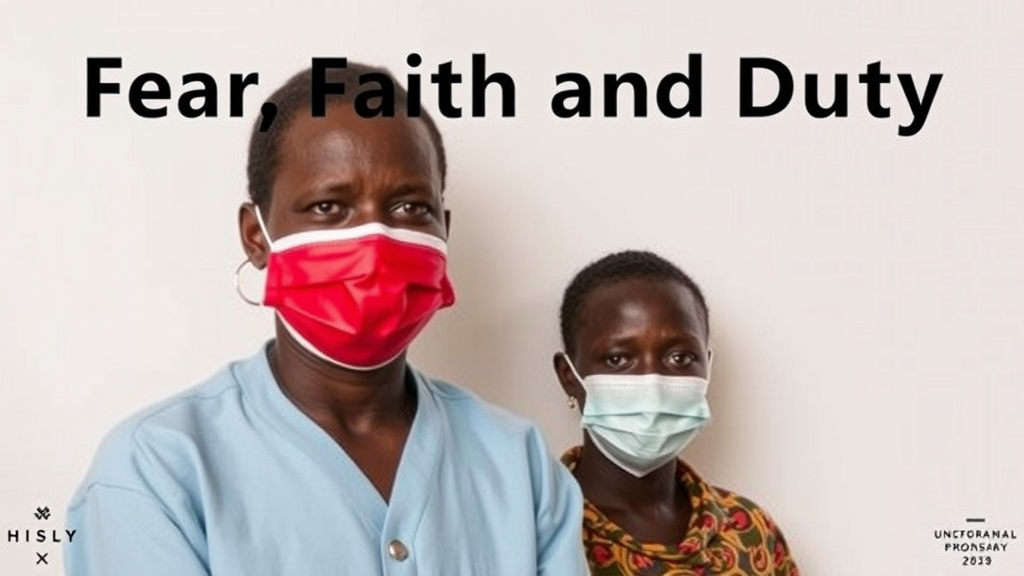
When COVID-19 swept across the world in 2020, much of the global attention focused on wealthy hospitals in Europe and North America. Far less was heard from the health workers who held the line in low- and middle-income countries, often with thinner staffing, scarcer equipment, and less institutional support. A new qualitative study published in BMC Psychology now offers a detailed, ground-level account of what frontline health care workers in northern Tanzania went through while caring for COVID-19 patients and their relatives, and how they managed to keep going when fear, stigma and exhaustion threatened to overwhelm them.
The research team, led by Lisbeth Mhando of KCMC University in Moshi, together with colleagues from the University of Copenhagen, KCMC University and Jimma University, interviewed health workers at Kilimanjaro Christian Medical Centre, a zonal referral hospital serving a wide region of northern Tanzania. The study used a qualitative exploratory descriptive design, a method well suited to capturing the texture and complexity of lived experience that numerical surveys often miss. Participants were purposively selected from hospital departments that had been directly involved in COVID-19 care, meaning that every voice in the study came from someone who had stood on the pandemic’s front line. Rather than asking workers to fill in standardized questionnaires, the researchers conducted qualitative interviews in which participants gave retrospective accounts of their experiences during the pandemic. These accounts were then analyzed thematically, a systematic process in which researchers code the interview material and group recurring ideas into broader themes.
Four key themes emerged from the analysis: the initial response to the COVID-19 pandemic, the psychological impact of the disease, the impact of COVID-19 on professionalism, and the coping strategies that health workers employed during the crisis. Together, these themes trace an arc from the confusion and dread of the pandemic’s arrival, through the grinding psychological toll of sustained emergency work, to the ways in which workers found, or sometimes failed to find, the strength to continue. The findings, the authors conclude, highlight the need for psychological support, effective communication, adequate training and sufficient resources for frontline health care workers before, during and after pandemics.
The psychological dimension of the findings is perhaps the most sobering. Frontline health care workers experienced fear, stress and stigma tied to the risk of infection, the demands of their work, and their interactions with their own families and communities. This triad of pressures is well documented in pandemic research from other settings, but the Tanzanian study shows how it played out in a specific East African context. Fear of infection was not an abstract worry; it was a daily calculation about exposure on the ward and the possibility of carrying the virus home. Stigma added a social layer to that fear, as workers described strained interactions within their families and communities, where being a health worker during the pandemic could mark a person as a potential carrier of disease. The result was a double burden: workers faced the dangers of the ward by day and the anxieties of social rejection outside it.
That burden did not remain purely psychological. The study found that it seeped into professional behavior, with participants reporting thoughts of quitting, absenteeism, and avoidance of COVID-19 duties. These are not minor details. Absenteeism and avoidance in a referral hospital during a pandemic translate directly into thinner coverage for critically ill patients and heavier loads for the colleagues who remain. Thoughts of quitting point to a longer-term risk: that the pandemic may have pushed experienced clinicians toward the exits of a health system that could ill afford to lose them. The authors frame these professional challenges as part of the pandemic’s impact on professionalism, a reminder that workforce morale and patient safety are inseparable. A health worker who is terrified, stigmatized and exhausted cannot deliver the same standard of care as one who is supported, informed and rested.
Against this backdrop, the coping strategies that participants described take on real significance. The study found that these strategies varied widely and included acceptance, faith, family support, rest, and, notably, the use of recreational substances. The range itself is instructive. Acceptance, a psychological process of acknowledging what cannot be changed, helped some workers make peace with the risks of their job. Faith, which occupies a central place in many Tanzanian communities, provided a framework of meaning and comfort. Family support buffered the isolation and stigma that workers felt outside the hospital. Rest, where it could be found, offered physical recovery. The mention of recreational substances, however, signals a coping strategy with a darker edge, one that may provide short-term relief but carries its own risks for health and professional conduct. The authors’ inclusion of this finding reflects the honesty of the qualitative method: workers described what they actually did, not what they thought they should have done.
What makes the study methodologically interesting is its retrospective design. By asking workers to look back on their pandemic experiences, the researchers captured accounts that have been filtered through time, which can bring perspective and coherence that in-the-moment accounts lack. At the same time, retrospective accounts are shaped by memory and by everything that has happened since. The thematic analysis, in which the interview transcripts were systematically coded and the recurring patterns grouped into the four central themes, is the mechanism that turns individual recollections into a structured picture of collective experience. Purposive sampling, meanwhile, ensured that the participants were not a random cross-section of hospital staff but specifically those whose departments had been directly involved in COVID-19 care, sharpening the study’s focus on the true front line.
The study was funded by the Danish International Development Agency under the SCCOPET project, formally titled Strengthening the Capacity of COVID-19 Disease Surveillance, Diagnostics, Vaccination Programs and Promoting Mental Health of Frontline Healthcare Workers. The funders had no role in the design of the study, the data collection, the analysis or the manuscript writing, an arrangement that strengthens the independence of the findings. Ethical approval was granted by the Institutional Review Boards of Kilimanjaro Medical University College, now KCMC University, and the National Institute for Medical Research of Tanzania, and written informed consent was obtained from all participants. The research was conducted in accordance with the Declaration of Helsinki, and the authors declare no competing interests. The article was published open access on 23 September 2026, making the full account freely available to researchers, policymakers and health workers everywhere.
The authors’ conclusions reach beyond the pandemic that prompted the study. They argue that the experiences of infection prevention, resilience and the rapidly changing demands of COVID-19 highlight the importance of preparedness for future public health emergencies. In practice, that means building systems of psychological support that exist before a crisis begins, not after burnout has already taken hold. It means communicating clearly and honestly with health workers so that uncertainty does not breed rumor and panic. It means training staff in infection prevention and the clinical management of emerging diseases, and it means supplying the resources, from personal protective equipment to adequate staffing, that make safe care possible. The Tanzanian findings suggest that when these supports are missing, the costs appear in predictable places: in fear and stigma, in thoughts of quitting and absenteeism, and in coping strategies that range from the constructive to the harmful.
For a global audience, the study is a corrective to a narrative that has often centered the pandemic’s health workforce story in high-income countries. The frontline health care workers of a zonal hospital in northern Tanzania faced the same fundamental pressures as their counterparts in New York, Milan or Delhi: fear of infection, the weight of critical illness, the strain on families, and the erosion of professional reserves. But they faced them in a health system with fewer buffers, and their coping strategies, from faith to family to acceptance, reflect both the strengths and the strains of that context. As health systems worldwide take stock of the pandemic and prepare for the next one, the voices gathered in this study make a clear argument: protecting the mental health and professional integrity of frontline health care workers is not a luxury to be addressed after the emergency passes, but a core component of emergency preparedness itself. The workers who staff the front lines in the next crisis will bring the same humanity, the same fears and the same need for support that this Tanzanian study has documented so carefully.
Subject of Research: Experiences and coping strategies of frontline health care workers during the COVID-19 pandemic in northern Tanzania
Article Title: “Experiences, impacts, and coping strategies during COVID-19: a qualitative study of frontline health care workers in a zonal hospital in northern Tanzania”
Article References: “Experiences, impacts, and coping strategies during COVID-19: a qualitative study of frontline health care workers in a zonal hospital in northern Tanzania”. (n.d.). https://doi.org/10.1186/s40359-026-05671-3
Image Credits: AI Generated
DOI: 10.1186/s40359-026-05671-3
Keywords: COVID-19, frontline health care workers, qualitative research, mental health, coping strategies, Tanzania, occupational stress, stigma, pandemic preparedness, BMC Psychology, psychological impact, health workforce
Cite Scienmag News
Glenn Wilkins. (September 24, 2026). Fear, Faith and Duty: How Tanzanian Frontline Health Workers Endured COVID-19. Scienmag. https://scienmag.com/fear-faith-and-duty-how-tanzanian-frontline-health-workers-endured-covid-19/
Glenn Wilkins. "Fear, Faith and Duty: How Tanzanian Frontline Health Workers Endured COVID-19." Scienmag, 24 September 2026, https://scienmag.com/fear-faith-and-duty-how-tanzanian-frontline-health-workers-endured-covid-19/. Accessed 6 October 2026.
Glenn Wilkins. "Fear, Faith and Duty: How Tanzanian Frontline Health Workers Endured COVID-19." Scienmag. September 24, 2026. https://scienmag.com/fear-faith-and-duty-how-tanzanian-frontline-health-workers-endured-covid-19/


