


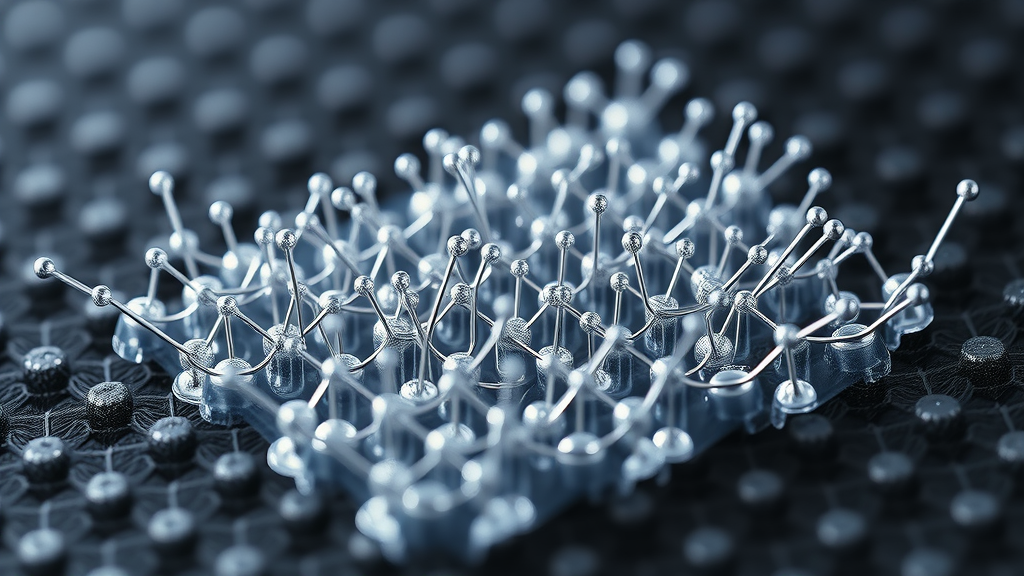
Platinum may be the undisputed champion of oxygen reduction catalysis, but it has an Achilles’ heel: it falls apart. In the acidic, high-potential environment of a fuel cell cathode, the tiny platinum nanoparticles that do the electrochemical heavy lifting gradually dissolve, migrate, and clump together, while the carbon black that carries them slowly corrodes away. A team of Chinese researchers led by Jicheng Shi of Dalian Jiaotong University now reports a strategy that attacks both problems at once, growing ultrathin platinum nanowires directly on a composite support that blends corrosion-resistant titanium dioxide with conductive acetylene black. Their results, published in Discover Electrochemistry, show a catalyst that outlasts and, per platinum atom, dramatically outperforms the commercial benchmark in accelerated stress testing.
The synthesis itself is a piece of carefully choreographed solution chemistry. The researchers combined titanium dioxide nanoparticles with BP2000 acetylene black in a three-to-seven mass ratio, dispersed the composite in a mixture of ethylene glycol and dimethylformamide, and added chloroplatinic acid and potassium hydroxide before sealing everything in a reactor at 170 degrees Celsius for 40 hours. Each ingredient plays a distinct role. Ethylene glycol acts as a mild reducing agent, slowly converting platinum(IV) ions into metallic platinum atoms. Dimethylformamide serves as a co-reductant and a structure-directing capping agent: as it decomposes, it releases dimethylamine and carbon monoxide, which preferentially adsorb on certain platinum crystal facets and suppress growth in all directions, forcing the metal to elongate anisotropically. The alkaline environment created by potassium hydroxide speeds up the reduction by deprotonating ethylene glycol intermediates and converting the platinum precursor into more readily reduced hydroxy-complexes, while simultaneously promoting the formation of platinum-hydroxide adlayers that further steer one-dimensional growth.
The support is not a passive bystander. Its high-surface-area carbon phase offers abundant heterogeneous nucleation sites, and the hydroxyl groups on the titanium dioxide surfaces anchor the growing wires in place, ensuring they crystallize on the support rather than aggregating freely in solution. Over the long reaction time, the initial platinum clusters attach along a preferred crystallographic direction and ripen into micrometer-long wires with diameters of only five to ten nanometers. Transmission electron microscopy confirmed the outcome: the nanowires grew smoothly on the composite support, with diffraction analysis revealing that their surfaces are dominated by the (111) and (200) crystal planes, the two most intense reflections of face-centered cubic platinum. Notably, when the same chemistry was attempted on pure titanium dioxide or pure acetylene black, the results diverged sharply: wires formed on the oxide, while the carbon alone yielded near-spherical particles.
The secret to the catalyst’s resilience lies in the partnership between the two support components. Acetylene black forms a continuous, highly conductive phase that compensates for the semiconducting nature of titanium dioxide, which the team measured at a modest 2.92 x 10^-3 millisiemens per centimeter. The titanium dioxide nanoparticles, dispersed uniformly within that carbon matrix, serve as corrosion-resistant anchoring points. X-ray photoelectron spectroscopy provided direct evidence of a strong metal-support interaction: the binding energies of the platinum 4f peaks were shifted upward by 0.57 and 0.9 electronvolts relative to metallic platinum, indicating electron transfer from platinum to titanium atoms at the interface. Because each wire is held by multiple oxide anchors distributed along its length, the chain-like structures resist the dissolution, Ostwald ripening, and detachment that plague spherical nanoparticles, which typically touch the carbon support at only a few points.
Stress testing laid the durability advantage bare. In accelerated degradation tests involving tens of thousands of potential cycles in 0.1 M perchloric acid, both catalysts lost active surface area rapidly during the first 10,000 cycles and then stabilized. After 50,000 cycles, the platinum nanowire catalyst retained 57.1 percent of its initial electrochemically active surface area, compared with 48.7 percent for commercial platinum on carbon, an 8.4 percentage-point margin. The raw surface areas themselves told a different story: the nanowires started at just 38 square meters per gram of platinum against 158 for the commercial catalyst, roughly one-quarter of the benchmark. That gap is a geometric consequence of wire diameter, and the authors argue that thinner wires could close it, but the retention figures demonstrate that what activity the nanowires do have is far harder to destroy.
Where the nanowires truly shine is in how efficiently they use the surface they possess. Measured at 0.9 volts against a reversible hydrogen electrode using the Koutecky-Levich analysis of rotating disk electrode data, the mass-specific activity of the new catalyst was roughly twice that of commercial platinum on carbon, and its area-specific activity was about six times higher. The researchers attribute this to the uniform, single-crystalline character of the wire surfaces. Cyclic voltammograms of the commercial catalyst show a double-peaked hydrogen desorption region, the fingerprint of at least two distinct types of catalytic sites, whereas the nanowires exhibit a single peak, indicating one dominant, highly active site structure. Electron transfer numbers calculated from the Koutecky-Levich slopes came out near four for both catalysts, confirming that oxygen reduction proceeds by the efficient four-electron pathway to water.
To see how these laboratory metrics translate to a working device, the team mounted both catalysts in the air cathode of an aluminum-acid battery, a setup whose gas-liquid-solid triple-phase interface mimics the mass transfer conditions of a fuel cell cathode far more faithfully than a beaker experiment. Below a current density of 111 milliamperes per square centimeter, the nanowire cell delivered higher discharge voltage and power than the commercial catalyst cell, consistent with its superior intrinsic activity. Beyond that threshold, however, the ordering flipped: the commercial catalyst, with its far greater surface area and its thin, porous catalyst layer, could feed oxygen to many more accessible sites once the reaction became transport-limited.
The durability gap in the battery tests was even more striking than the polarization curves. Discharged galvanostatically at 50 milliamperes per square centimeter, the cell containing commercial platinum on carbon saw its voltage collapse to 0.2 volts within 24 minutes, while the nanowire cell held a stable discharge for 66 minutes before decaying to 0.42 volts. Cumulative discharge energy told the same story: after an initial six-minute advantage for the commercial catalyst, the nanowire battery pulled ahead and widened its lead continuously, reflecting the gradual loss of active sites in the conventional catalyst and the anchored chain-like framework’s resistance to structural degradation.
The study is candid about its limitations and its path forward. The very length of the nanowires, reaching into the micrometer range, causes them to curl and entangle into thicker, denser catalyst layers that obstruct oxygen diffusion at high current densities. The authors propose shrinking the wire diameter, shortening their length to optimize the aspect ratio, doping the titanium dioxide anchors to improve their conductivity, and systematically investigating how the solvent chemistry shapes wire morphology. The broader lesson, they argue, is that catalyst evaluation cannot rest on intrinsic activity alone: the macroscopic architecture of the catalyst layer, its porosity, wettability, and thickness, matters just as much. An ideal oxygen reduction catalyst needs both strong active sites and open roads for oxygen to reach them, and this work shows that anchoring single-crystal platinum nanowires to a hybrid oxide-carbon scaffold is a credible way to buy the durability half of that bargain.
Subject of Research: Durable platinum nanowire electrocatalysts on a TiO2–carbon composite support for the oxygen reduction reaction
Article Title: Achieving enhanced durability in oxygen reduction catalysis with platinum nanowires on a TiO2–C composite support
Article References: Shi, J., Deng, H., Qiu, J., Wu, H., Yang, H., Wang, S., & Xu, F. (2026). Achieving enhanced durability in oxygen reduction catalysis with platinum nanowires on a TiO2–C composite support. Discover Electrochemistry, 3(1), Article 66. https://doi.org/10.1007/s44373-026-00154-x
Image Credits: AI Generated
DOI: 10.1007/s44373-026-00154-x
Keywords: platinum nanowires, oxygen reduction reaction, titanium dioxide support, electrocatalysis, fuel cells, aluminum-air battery, catalyst durability, solvothermal synthesis, carbon corrosion, mass activity, X-ray photoelectron spectroscopy, Achieving
Cite Scienmag News
Faith Mcneil. (September 23, 2026). Platinum Nanowires on a Titanium Oxide–Carbon Support Promise Longer-Lasting Fuel Cell Catalysts. Scienmag. https://scienmag.com/platinum-nanowires-on-a-titanium-oxide-carbon-support-promise-longer-lasting-fuel-cell-catalysts/
Faith Mcneil. "Platinum Nanowires on a Titanium Oxide–Carbon Support Promise Longer-Lasting Fuel Cell Catalysts." Scienmag, 23 September 2026, https://scienmag.com/platinum-nanowires-on-a-titanium-oxide-carbon-support-promise-longer-lasting-fuel-cell-catalysts/. Accessed 23 September 2026.
Faith Mcneil. "Platinum Nanowires on a Titanium Oxide–Carbon Support Promise Longer-Lasting Fuel Cell Catalysts." Scienmag. September 23, 2026. https://scienmag.com/platinum-nanowires-on-a-titanium-oxide-carbon-support-promise-longer-lasting-fuel-cell-catalysts/


