


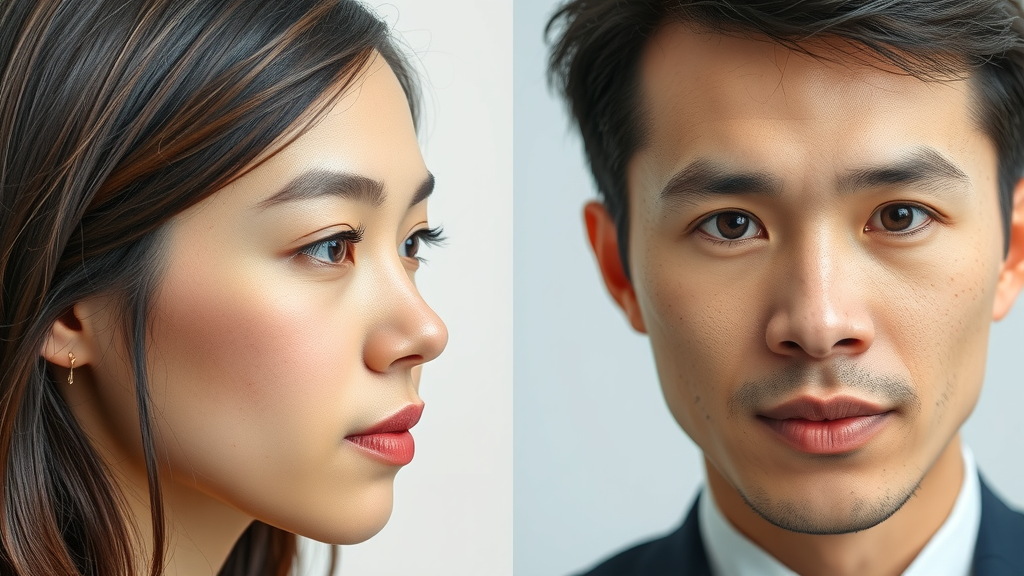
Facial expression recognition has long been one of the most deceptively difficult problems in computer vision. While humans read emotions from faces almost instantaneously, machines struggle with the sheer variability of real-world conditions: heads tilt, light shifts, glasses glint, hands partially cover mouths, and every face is unique. A new study published in Multimedia Tools and Applications by Abderrahim Ouza and Ali Choukri of Ibn Tofail University in Kenitra, Morocco, together with Mohamed El Ghmary of Mohammed V University in Rabat, tackles precisely these weaknesses. The team has built a hybrid deep learning architecture that combines two classic convolutional neural network backbones with attention-driven modules, and the results are striking. Across multiple benchmark datasets, including RAF-DB, FER2013 and CK+, the model reaches an accuracy of 95.87 percent, while showing markedly stronger resilience to occlusions and head pose changes than conventional approaches, even when tested on data drawn from a different dataset than the one used in training.
The central insight behind the work is that robust expression recognition requires two complementary kinds of visual understanding. The first is local: emotions are encoded in subtle movements of specific facial regions, such as the slight raising of the inner eyebrows that signals worry, or the tightening of the muscles around the eyes that distinguishes a genuine smile from a polite one. The second is global: the spatial arrangement of the entire face, the relationships between regions, and the overall configuration of features all contribute to how an expression is perceived. Most existing architectures emphasize one of these dimensions at the expense of the other. Purely convolutional pipelines excel at extracting local texture patterns but can miss long-range dependencies, while transformer-style models capture global context yet sometimes overlook the fine-grained local cues that carry the emotional signal.
To resolve this tension, the researchers designed a hybrid model that mixes several ResNet-50 branches with VGG-16 backbones. ResNet-50, with its residual connections, allows very deep networks to be trained without the vanishing gradient problems that once stalled deep learning, and it produces rich hierarchical feature maps. VGG-16, an older but still powerful architecture, is prized for its simple stack of small convolution filters that systematically capture texture at fine scale. By fusing representations from both families of networks, the model inherits the strengths of each: the depth-adapted abstractions of ResNet-50 and the fine-textured detail of VGG-16. The authors then attach two purpose-built modules on top of this fused backbone to refine what the networks see and how they interpret it.
The first of these is the Local Feature Enhancement, or LFE, module. Its role is to amplify the subtle variations that occur in the principal facial regions most relevant to emotional expression. In practical terms, the module learns to weight the feature maps so that informative local patterns, such as the curvature of the lips or the degree of eyelid opening, are emphasized while less relevant background or redundant information is suppressed. This kind of learned emphasis matters enormously in expression recognition, where the difference between two emotions can hinge on a few pixels. Without such focusing, a network may spread its capacity evenly across the image and fail to register the discriminative details that separate sadness from neutrality in a low-resolution photograph.
The second component, the Global Information Association, or GIA, module, works at the opposite end of the spatial scale. It captures the global structure of the face, modeling how distant regions of the image relate to one another. An expression is not merely a sum of parts; a raised mouth corner reads as joy only in combination with relaxed eyes, whereas the same mouth movement alongside furrowed brows may indicate a different state entirely. By associating information across the whole face, the GIA module gives the network a holistic understanding of the expression, allowing it to integrate the locally enhanced features into a coherent global interpretation.
Between these two modules, the architecture deploys a multi-scale convolutional design together with a self-attention-based approach known as ACMix. Multi-scale convolution means that the network examines the face simultaneously at several receptive field sizes, from small windows that catch fine wrinkles to larger windows that span whole facial regions. This mirrors the way human vision processes faces at multiple resolutions, and it helps the model remain accurate when faces appear at different sizes or distances. The self-attention mechanism, meanwhile, allows every part of the feature representation to dynamically attend to every other part, computing relevance weights on the fly. ACMix blends convolutional inductive biases with attention-style global reasoning, which improves the model’s stability under the challenging conditions, such as unusual illumination or partial occlusion, that routinely break less flexible architectures.
Evaluation was carried out on three of the most widely used benchmarks in the field. RAF-DB contains thousands of real-world, in-the-wild faces annotated with expressions, capturing the messy variety of unconstrained photography. FER2013, the dataset used for training and evaluation, is freely available through Kaggle and comprises more than 35,000 grayscale images cataloged across seven emotion categories: anger, disgust, fear, happiness, sadness, surprise and neutral expressions, including multiple views of the same subjects, making it the largest such resource of its kind. CK+ offers carefully controlled laboratory sequences with well-defined expressions, providing a complementary test of discriminative power. Achieving 95.87 percent accuracy across these tests places the hybrid model among the strongest performers reported in the literature, and the authors emphasize that its advantage grows when conditions become difficult, such as when glasses, scarves or hands obscure parts of the face, or when the head is rotated away from the camera.
Particularly notable is the model’s behavior in cross-dataset testing, one of the most demanding evaluations in expression recognition. A system trained on one dataset and tested on another must cope with differences in lighting, demographics, image quality and labeling conventions, and accuracy typically drops sharply in such settings. The Moroccan team reports that their model shows superior robustness under exactly these conditions, suggesting that the combination of local enhancement, global association and attention produces features that generalize rather than merely memorize dataset-specific quirks. This generalization is precisely the property that separates laboratory demonstrations from technology that can function reliably outside controlled environments, and it is a key reason the authors argue their approach is suited to real-world applications.
The potential applications span several domains where reading a face accurately is not a luxury but a safety requirement. In healthcare, precise identification of emotions can support monitoring of patients who cannot communicate verbally, alerting clinicians to pain or distress. In driver monitoring systems, a camera that reliably detects fatigue, distraction or confusion even when the driver’s face is partly occluded or turned could help prevent accidents. The authors point to these use cases, where missing a critical emotional state carries real consequences, as the natural fit for their architecture. The work was conducted with institutional resources at Ibn Tofail University and Sidi Mohamed Ben Abdellah University in Morocco, without external funding, and the datasets underpinning the study are openly available under appropriate licenses, which should make it straightforward for other research groups to reproduce and extend the results.
As facial expression recognition moves from the research bench into cars, clinics and everyday devices, studies like this one illustrate the recipe that is emerging as the field’s consensus: hybrid backbones that unite complementary convolutional designs, explicit modules for local detail and global context, and attention mechanisms that let the network decide what matters in each image. By combining ResNet-50 and VGG-16 with the LFE, GIA and ACMix components, the Moroccan team has demonstrated that this layered strategy can push accuracy toward 96 percent while keeping the model dependable when the real world, with its shadows, angles and obstructions, refuses to cooperate. The full details of the architecture and experiments are available in the article published in Multimedia Tools and Applications, volume 85, article number 775.
Subject of Research: Hybrid deep learning with attention mechanisms for robust facial expression recognition
Article Title: Hybrid convolutional neural network with attention mechanism to provide robust face expression recognition
Article References: Ouza, A., Ghmary, M. E., & Choukri, A. (2026). Hybrid convolutional neural network with attention mechanism to provide robust face expression recognition. Multimedia Tools and Applications, 85(10), Article 775. https://doi.org/10.1007/s11042-026-21933-z
Image Credits: AI Generated
DOI: 10.1007/s11042-026-21933-z
Keywords: facial expression recognition, deep learning, convolutional neural networks, attention mechanism, ResNet-50, VGG-16, multi-scale convolution, occlusion, pose variation, RAF-DB, FER2013, computer vision
Cite Scienmag News
Blake Davidson. (September 23, 2026). Hybrid AI With Attention Achieves Record Face Expression Recognition Accuracy. Scienmag. https://scienmag.com/hybrid-ai-with-attention-achieves-record-face-expression-recognition-accuracy/
Blake Davidson. "Hybrid AI With Attention Achieves Record Face Expression Recognition Accuracy." Scienmag, 23 September 2026, https://scienmag.com/hybrid-ai-with-attention-achieves-record-face-expression-recognition-accuracy/. Accessed 23 September 2026.
Blake Davidson. "Hybrid AI With Attention Achieves Record Face Expression Recognition Accuracy." Scienmag. September 23, 2026. https://scienmag.com/hybrid-ai-with-attention-achieves-record-face-expression-recognition-accuracy/


